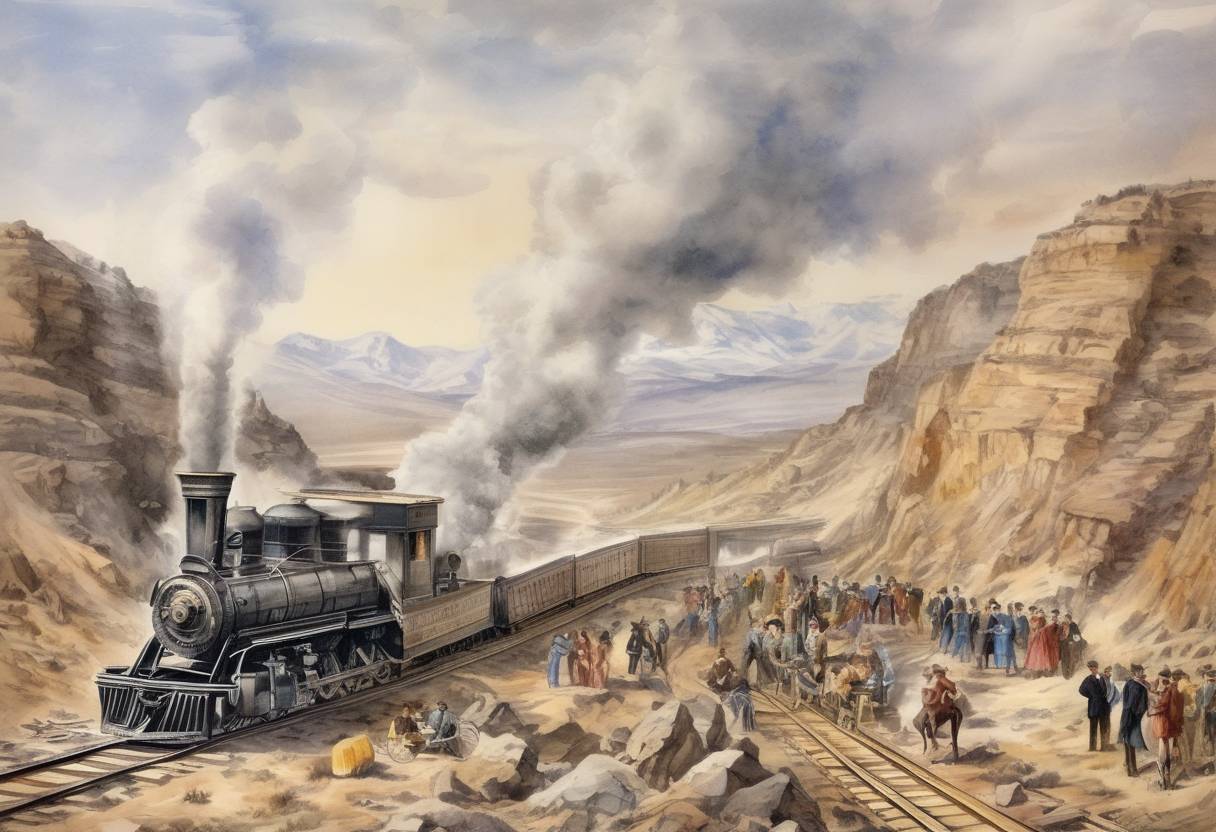
Completion of the First Transcontinental Railroad
Date: May 10, 1869
Overview
On May 10, 1869, a significant milestone in American history was achieved with the completion of the First Transcontinental Railroad. This monumental event was marked by the ceremonial driving of the “Golden Spike” at Promontory Summit, Utah. This achievement symbolized the unification of the United States from coast to coast, revolutionizing transportation and commerce in the country.
Background
Legislation and Construction: The Pacific Railway Act of 1862, signed by President Abraham Lincoln, authorized the construction of the transcontinental railroad. The project was a joint effort between two companies:
- Union Pacific Railroad: Built westward from Omaha, Nebraska.
- Central Pacific Railroad: Built eastward from Sacramento, California.
Challenges: The construction faced numerous challenges, including difficult terrain, harsh weather conditions, and labor shortages. The Union Pacific largely employed Irish immigrants, while the Central Pacific relied heavily on Chinese laborers, who played a crucial role in overcoming the formidable Sierra Nevada mountains.
The Ceremony
- Location: Promontory Summit, Utah.
- Golden Spike: The ceremonial spike was made of 17.6-karat gold and was driven into a polished laurel tie. It was a symbolic gesture, as the actual spikes used in the railroad were made of iron.
- Dignitaries: The event was attended by prominent figures, including Leland Stanford, president of the Central Pacific Railroad, and Thomas Durant, vice president of the Union Pacific Railroad.
Significance
- Economic Impact: The railroad significantly reduced travel time across the country from several months to just about a week, facilitating commerce and the movement of people.
- Cultural and Social Impact: It played a crucial role in the westward expansion of the United States, contributing to the settlement and development of the American West.
- Technological Achievement: The completion of the railroad was a testament to the engineering prowess and determination of the era, showcasing the potential of industrial advancements.
Aftermath
- Expansion: The success of the transcontinental railroad led to further expansion of the rail network across the United States, fostering economic growth and integration.
- Native American Displacement: The railroad’s construction and subsequent westward expansion had severe consequences for Native American tribes, leading to displacement and conflicts.
Legacy
The completion of the First Transcontinental Railroad stands as a pivotal moment in American history, symbolizing progress and the transformative power of technology. It remains a testament to the collaborative efforts and resilience of the diverse workforce that made it possible.