Slavery Abolition Act 1833: Abolition and Aftermath
Overview
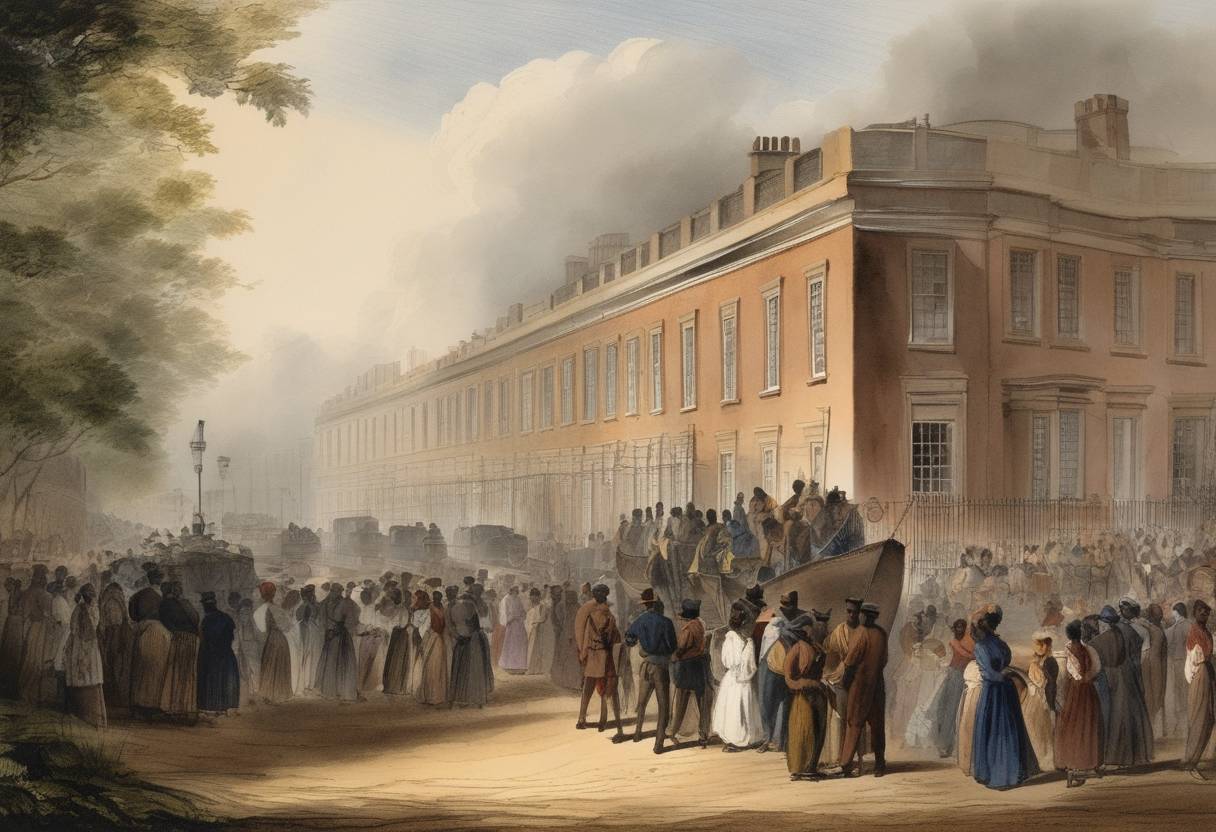
On July 31, 1834, the Slavery Abolition Act of 1833 came into full effect, marking a pivotal moment in history as Britain legally abolished slavery throughout most of the British Empire. This legislation ended centuries of forced labor and set free over 800,000 enslaved people in the Caribbean, South Africa, and Canada, amongst other territories.
Background
The movement to abolish slavery had gained momentum in Britain during the late 18th and early 19th centuries, driven by abolitionists who highlighted the moral, humanitarian, and economic arguments against the institution. The abolition of the slave trade in 1807 was one significant milestone, but it took an additional 26 years of campaigning, debate, and gradual legislative progress to address the issue of slavery itself.
Key Provisions
While the Slavery Abolition Act was a groundbreaking law, it simultaneously introduced an “apprenticeship” system. This system required freed individuals to work as “apprentices” for their former owners for four to six years in agricultural and domestic settings. This requirement was justified by the British government as a transitional phase for the economy and the newly emancipated individuals, allowing both parties to adjust to the new social and economic realities.
Implementation and Effects
The implementation of the Act varied across the Empire. Some territories and plantation owners resisted compliance or sought loopholes to delay or undermine the emancipation process. The Act did not apply to territories controlled by the East India Company, or to the island of Ceylon (modern-day Sri Lanka) and St. Helena, until the laws were extended in subsequent years.
The apprenticeship system faced criticism and resistance from both former slaves, who argued that it perpetuated aspects of slavery, and abolitionists, who campaigned for an end to the system. Consequently, it was eventually abolished two years earlier than initially planned, in 1838.
Broader Implications
The abolition of slavery in the British Empire was a major step towards global emancipation efforts throughout the 19th century. It highlighted the power of sustained advocacy and political action in challenging entrenched social systems. The Act’s legacy spurred further emancipatory movements and legislative changes across other colonial powers and influenced global dialogues about human rights.
Despite its shortcomings, including the contentious apprenticeship system and compensation to slave owners rather than the enslaved, the Slavery Abolition Act of 1833 remains a landmark in British legislative and humanitarian history.