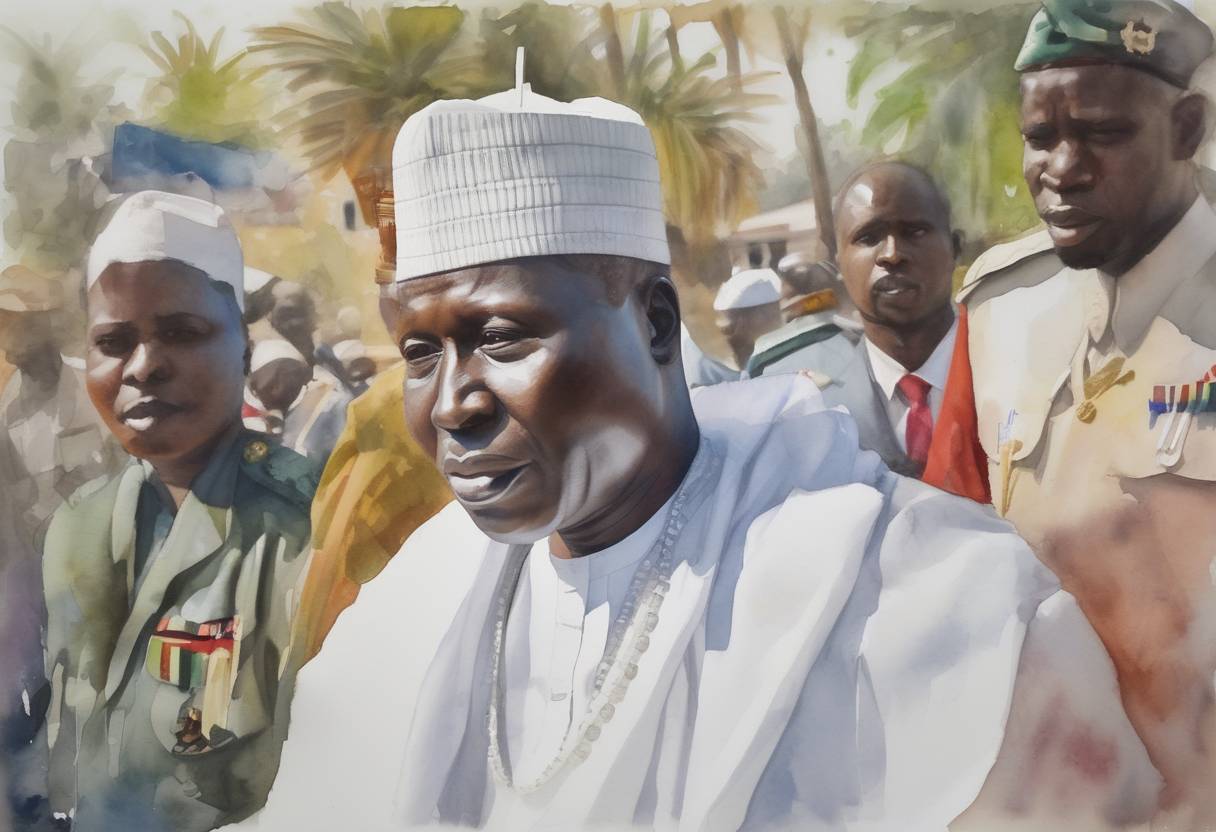
State of Emergency in The Gambia: January 17, 2017
On January 17, 2017, Yahya Jammeh, the then-President of The Gambia, declared a state of emergency in the country. This declaration came amidst a significant political crisis following Jammeh’s refusal to step down after losing the presidential election held in December 2016.
Background
- Yahya Jammeh’s Rule: Yahya Jammeh had been in power since 1994, following a military coup. His rule was marked by allegations of human rights abuses and authoritarian governance.
- 2016 Presidential Election: The election, held on December 1, 2016, resulted in a surprising victory for opposition candidate Adama Barrow. Initially, Jammeh conceded defeat, which was seen as a positive step towards democratic transition.
- Reversal of Concession: On December 9, 2016, Jammeh reversed his concession, citing voting irregularities and calling for a new election. This move was widely condemned both domestically and internationally.
Declaration of State of Emergency
- Reasons Cited: Jammeh declared the state of emergency citing “extraordinary” foreign interference in the electoral process and the need to prevent a power vacuum.
- Implications: The declaration granted Jammeh extensive powers, including the ability to make arrests without warrants and impose restrictions on movement and assembly. It heightened tensions within the country and increased the risk of conflict.
International and Regional Response
- ECOWAS Involvement: The Economic Community of West African States (ECOWAS) played a crucial role in mediating the crisis. They had previously urged Jammeh to respect the election results and threatened military intervention if he did not step down.
- International Pressure: The United Nations, African Union, and various countries supported ECOWAS’s stance, emphasizing the importance of respecting democratic processes.
Resolution
- Military Intervention: On January 19, 2017, ECOWAS forces entered The Gambia to enforce the election results and ensure a peaceful transition of power.
- Exile of Jammeh: Under mounting pressure, Jammeh agreed to step down and went into exile in Equatorial Guinea on January 21, 2017.
- Inauguration of Adama Barrow: Adama Barrow was inaugurated as President of The Gambia on January 19, 2017, at the Gambian embassy in Senegal, and later returned to The Gambia to assume office.
Aftermath and Significance
- Democratic Transition: The peaceful resolution of the crisis marked a significant moment for democracy in The Gambia and West Africa. It demonstrated the effectiveness of regional cooperation in upholding democratic norms.
- Reforms and Challenges: President Barrow’s administration faced the challenge of rebuilding institutions and addressing the human rights abuses of the previous regime.
The events surrounding the state of emergency in The Gambia in January 2017 highlight the complexities of political transitions in authoritarian contexts and the critical role of regional and international actors in supporting democratic governance.