Fall of Baghdad: April 8, 2003
2003 · Baghdad, Iraq
Baghdad fell to American forces during the Iraq War, marking a significant moment in the conflict as the regime of Saddam Hussein began to collapse.
March 19, 2003
The United States, along with coalition forces, launched a military invasion of Iraq, marking the beginning of the Iraq War. The invasion aimed to dismantle alleged weapons of mass destruction and end Saddam Hussein's regime.
Baghdad, Iraq | United States Armed Forces
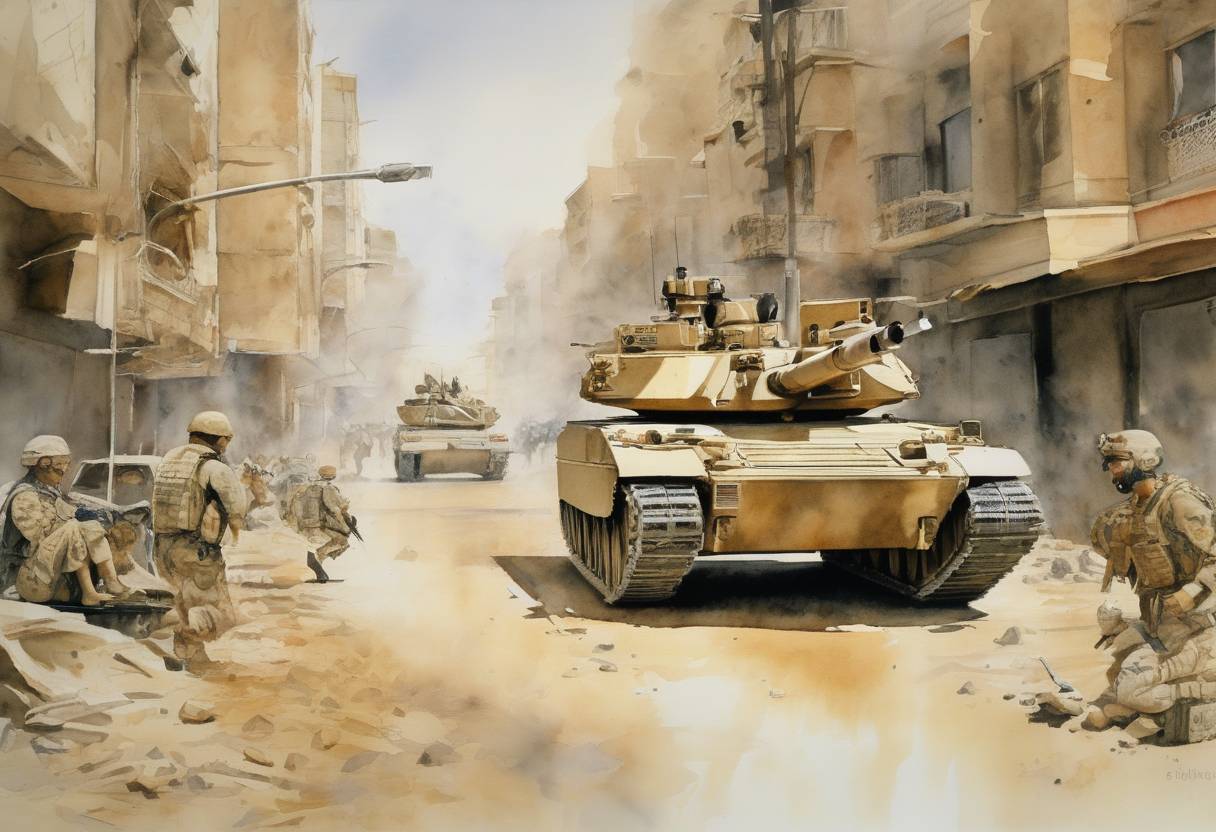
On March 19, 2003, the United States, along with a coalition of allied nations, initiated a military invasion of Iraq. This marked the beginning of the Iraq War, a significant and controversial conflict in early 21st-century geopolitics.
The invasion was primarily justified by the U.S. government under President George W. Bush, which claimed that Iraq possessed weapons of mass destruction (WMDs) that posed a significant threat to international security. The Bush administration also aimed to dismantle Saddam Hussein’s regime, which it accused of supporting terrorism and violating numerous United Nations resolutions.
Post-9⁄11 Security Concerns: Following the September 11, 2001, terrorist attacks, the U.S. heightened its focus on global terrorism and perceived threats, leading to the “War on Terror.”
UN Security Council Resolutions: Iraq had been under scrutiny since the Gulf War in 1991, with several UN resolutions demanding disarmament and inspections. Resolution 1441, passed in November 2002, offered Iraq a final opportunity to comply with disarmament obligations.
Diplomatic Efforts and Tensions: Despite diplomatic efforts and weapons inspections led by the United Nations, the U.S. and its allies argued that Iraq was not fully cooperating, leading to increased tensions.
The military operation, known as “Operation Iraqi Freedom,” began with a series of airstrikes aimed at decapitating the Iraqi leadership. This was followed by a ground invasion involving approximately 160,000 troops from the U.S., the United Kingdom, Australia, and Poland.
The Iraq War had profound implications for international relations, U.S. foreign policy, and the Middle East’s geopolitical landscape. It sparked widespread debate over military intervention, intelligence assessments, and the balance between national security and international law.
The conflict remains a pivotal moment in recent history, influencing subsequent military and diplomatic strategies and shaping public opinion on government transparency and accountability.
Source: www.britannica.com