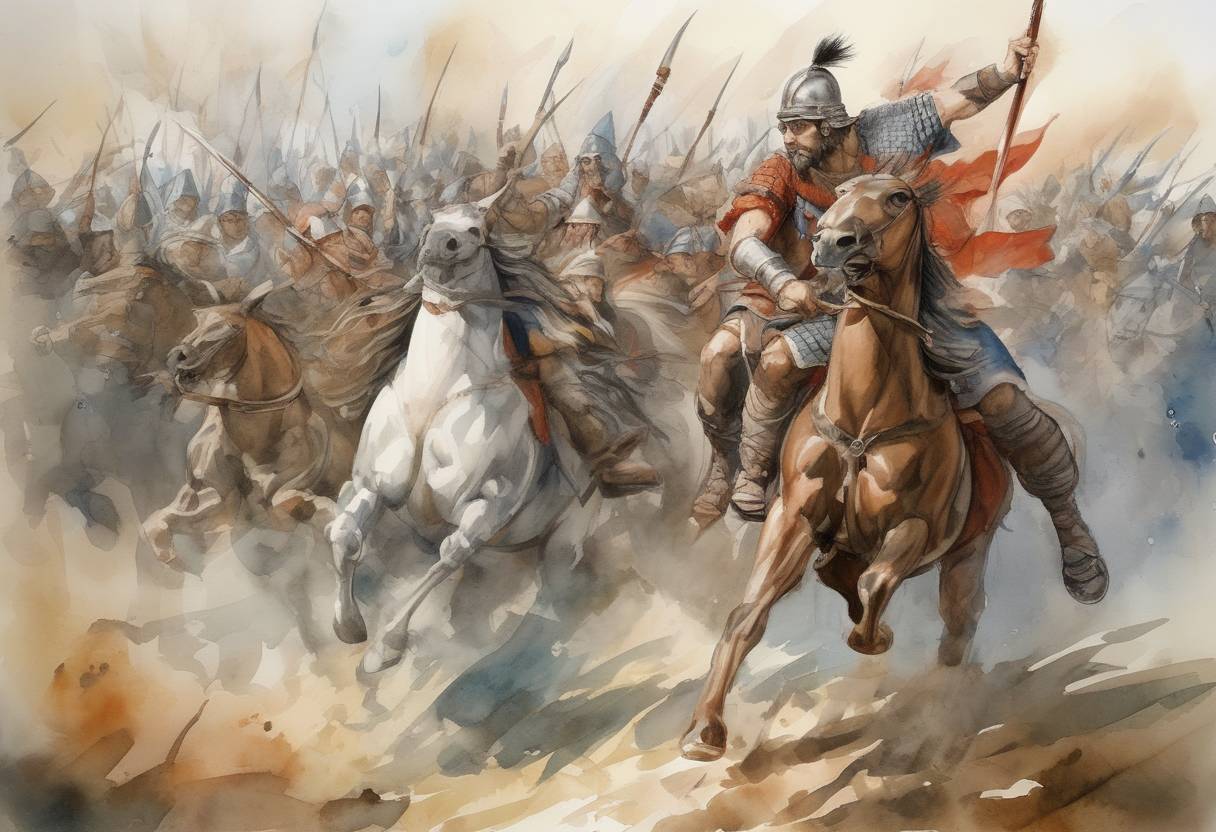
Attila the Hun Invades Gaul - April 7, 451
On April 7, 451, Attila the Hun, one of history’s most formidable military leaders, initiated his invasion of Gaul, marking a pivotal moment in the Hunnic invasions of Europe. This event is significant not only for its immediate impact but also for its broader implications on the Roman Empire and European history.
Context Leading to the Invasion
The Huns’ Rise to Power: The Huns, a nomadic group from Central Asia, had been exerting pressure on the Roman Empire for decades. Under Attila’s leadership, they became a formidable force, known for their swift cavalry and ruthless tactics.
Roman Empire’s Vulnerability: By the mid-5th century, the Western Roman Empire was in decline, weakened by internal strife, economic troubles, and pressure from various barbarian groups. This vulnerability made it an attractive target for Attila.
Diplomatic Tensions: Prior to the invasion, Attila had engaged in complex diplomatic relations with the Romans, often using threats of invasion to extract tribute and concessions. The breakdown of these negotiations contributed to his decision to invade Gaul.
The Invasion of Gaul
Strategic Objectives: Attila aimed to expand his influence in Western Europe by conquering Gaul, a region that was crucial for its wealth and strategic location. His campaign was characterized by rapid movements and devastating attacks on cities.
Coalition Against Attila: In response to the invasion, a coalition of Roman and Visigothic forces, led by the Roman general Flavius Aetius and the Visigothic king Theodoric I, was formed to counter the Hunnic threat. This alliance was crucial in organizing a defense against Attila’s forces.
The Battle of the Catalaunian Plains
Climactic Encounter: The invasion culminated in the Battle of the Catalaunian Plains (also known as the Battle of Chalons) in June 451. This battle is considered one of the last major military operations of the Western Roman Empire and a significant confrontation between the Huns and the Roman-Visigothic alliance.
Outcome: Although the battle was indecisive, it effectively halted Attila’s advance into Gaul. The Huns suffered significant losses, and Attila was forced to retreat, marking a turning point in his campaign.
Aftermath and Historical Significance
Impact on the Roman Empire: The successful defense of Gaul preserved the remnants of Roman authority in the region, albeit temporarily, and demonstrated the potential of Roman-barbarian alliances.
Attila’s Legacy: Despite the setback in Gaul, Attila remained a feared figure until his death in 453. His invasions highlighted the vulnerabilities of the Roman Empire and foreshadowed its eventual collapse.
Long-term Consequences: The events of 451 underscored the shifting power dynamics in Europe, as barbarian groups increasingly asserted their influence over Roman territories. The battle also set the stage for future conflicts and the eventual transformation of the Western Roman Empire into a patchwork of barbarian kingdoms.
In summary, Attila the Hun’s invasion of Gaul on April 7, 451, was a critical event in the history of the Hunnic invasions and the broader narrative of the late Roman Empire. It exemplified the challenges faced by the Romans and the complex interplay of forces that shaped the transition from antiquity to the medieval period.