President Andrew Jackson's Veto of the Recharter Bill for the Second Bank of the United States
1832 · Washington, D.C., United States
President Andrew Jackson vetoes the bill to recharter the Second Bank of the United States.
November 24, 1832
The Nullification Crisis in the United States escalates as South Carolina passes the Ordinance of Nullification, declaring the Tariffs of 1828 and 1832 null and void within state borders.
Columbia, United States | South Carolina State Legislature
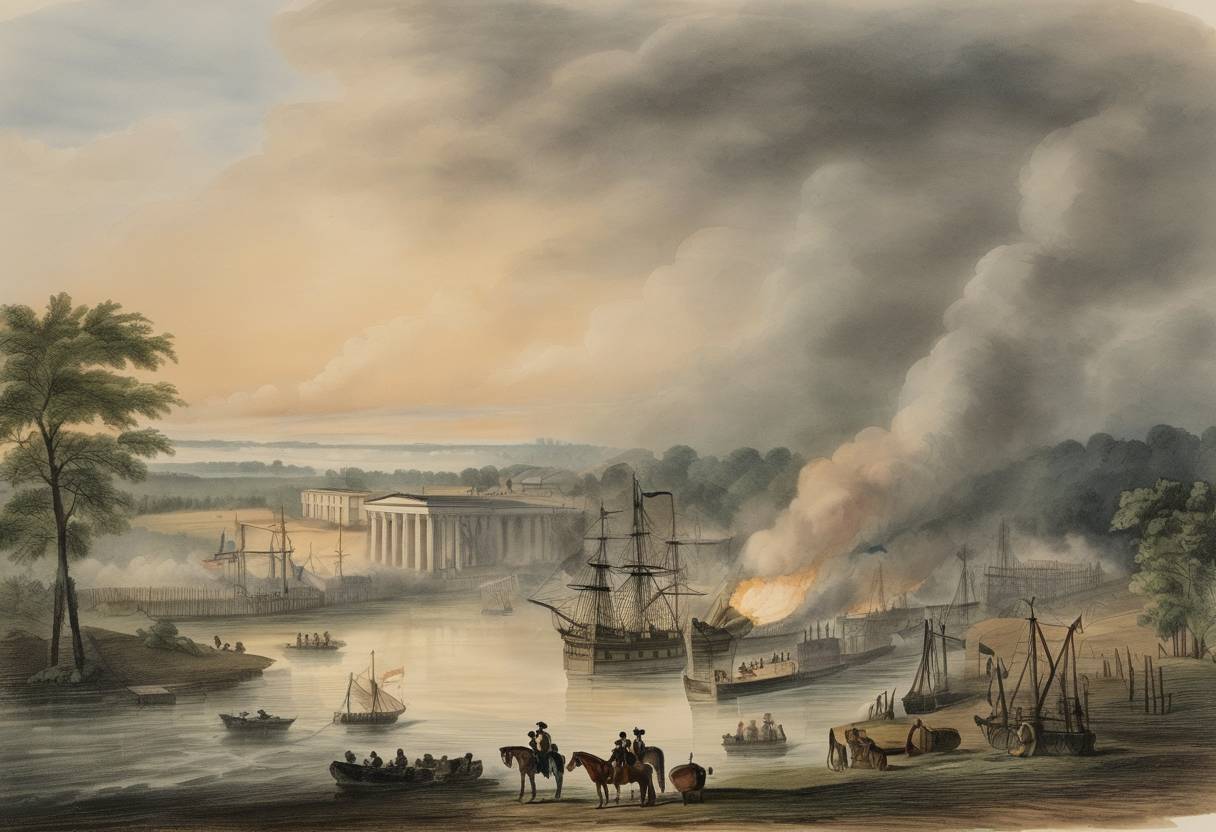
On November 24, 1832, the political conflict known as the Nullification Crisis reached a critical juncture when South Carolina passed the Ordinance of Nullification. This pivotal document declared the federal Tariffs of 1828 and 1832 to be unconstitutional, rendering them null and void within the state’s borders. The crisis highlighted the tension between state sovereignty and federal authority, a recurring theme in American history.
The seeds of the Nullification Crisis were sown with the passage of protective tariffs by the federal government, designed to support American industry by taxing imports. The Tariff of 1828, derogatorily referred to as the “Tariff of Abominations” by its Southern detractors, imposed heavy duties which disproportionately affected the Southern economy, reliant on agriculture and trade. The Tariff of 1832, intended as a compromise, failed to alleviate Southern concerns.
South Carolina, under the vocal leadership of Vice President John C. Calhoun, argued that each state had the right to nullify federal laws deemed unconstitutional, invoking the principles of states’ rights and strict interpretation of the Constitution.
The Ordinance explicitly stated that the enforcement of the tariff laws would be prohibited in South Carolina post-February 1, 1833. It also warned that any attempt by the federal government to enforce these tariffs would lead to the state’s secession from the Union. This drastic move put South Carolina at odds with President Andrew Jackson, who was a staunch unionist with little patience for dissent from federal authority.
President Jackson responded forcefully to South Carolina’s ordinance by issuing a Proclamation to the People of South Carolina on December 10, 1832, asserting the primacy of federal law and warning that disunion by armed force was treason. He also sought congressional approval for a Force Bill, allowing the use of military action to ensure compliance with federal tariffs.
The crisis de-escalated when Congress passed the Compromise Tariff of 1833, crafted by Henry Clay and other moderates, which gradually reduced tariff rates. Faced with this compromise and Jackson’s stern stance, South Carolina rescinded its ordinance in March 1833, but the incident set a precedent for the conflict of interests between states and the federal government, foreshadowing the secessionist impulses that would eventually lead to the Civil War.
The Nullification Crisis underscored the fragility of the United States’ union and the ongoing sectional tensions between North and South. It reinforced federal authority over states while also highlighting the Southern states’ reliance on the doctrine of nullification and states’ rights to protect their interests. The resolution, while temporarily peaceful, failed to address the underlying issues, leaving the seeds of discord to grow in the ensuing decades.
Source: www.loc.gov