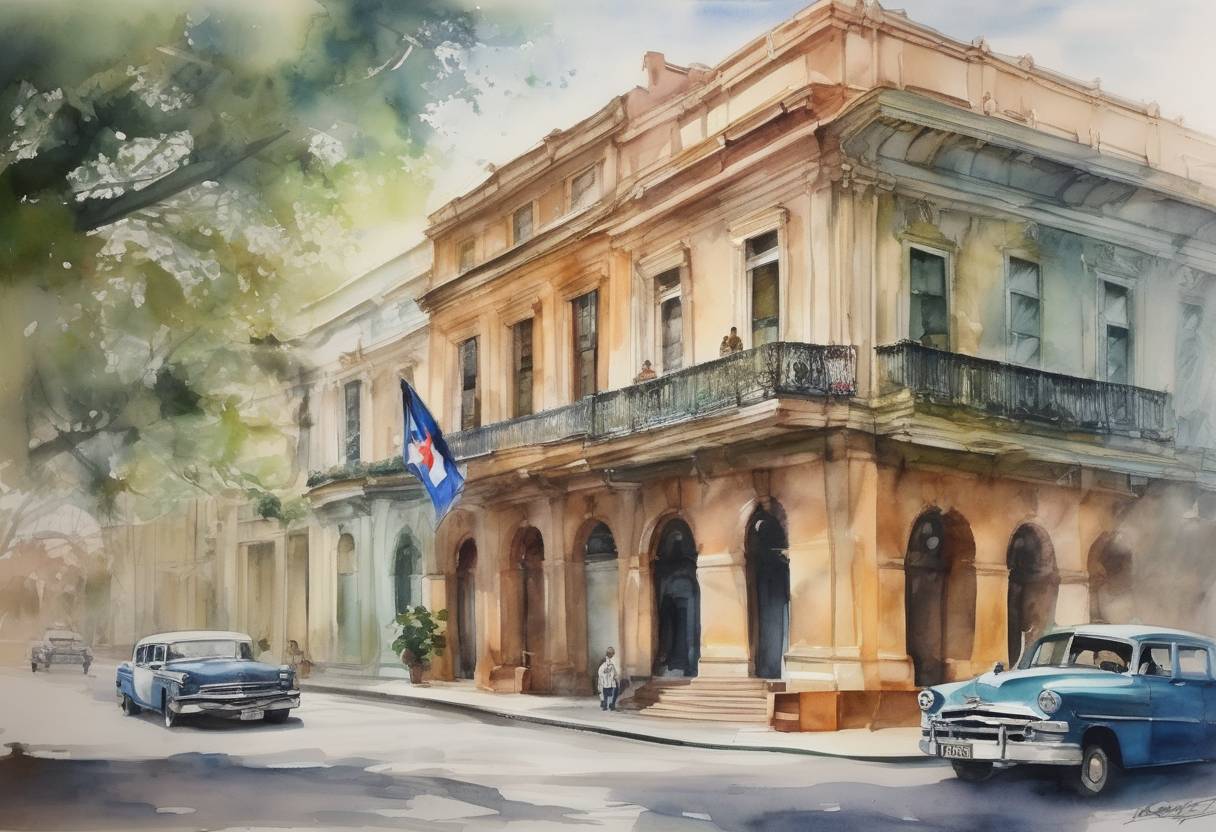
Restoration of Diplomatic Relations Between the United States and Cuba
On June 30, 2015, a significant milestone was reached in international diplomacy as the United States and Cuba agreed to reopen embassies in each other’s capitals. This event marked the restoration of diplomatic relations after more than five decades of hostility, a period that began during the Cold War.
Historical Context
The diplomatic freeze between the United States and Cuba began in 1961, following the Cuban Revolution led by Fidel Castro. The revolution resulted in the overthrow of the U.S.-backed dictator Fulgencio Batista and the establishment of a communist government in Cuba. The U.S. government, concerned about the spread of communism so close to its shores, severed diplomatic ties and imposed a trade embargo on Cuba.
Tensions escalated during the Cuban Missile Crisis in 1962, when the Soviet Union placed nuclear missiles in Cuba, bringing the world to the brink of nuclear war. Although the crisis was resolved, the embargo and diplomatic isolation persisted for decades.
Steps Toward Reconciliation
The thaw in relations began in December 2014, when U.S. President Barack Obama and Cuban President Raúl Castro announced a historic agreement to restore diplomatic ties. This agreement was the result of secret negotiations facilitated by the Vatican and Canada.
Key steps leading to the reopening of embassies included:
- Prisoner Exchange: Both countries agreed to a prisoner exchange, which included the release of American contractor Alan Gross and three Cuban intelligence officers.
- Removal from Terrorism List: In May 2015, the U.S. removed Cuba from its list of state sponsors of terrorism, a significant barrier to normalizing relations.
- Diplomatic Talks: High-level talks were held between U.S. and Cuban officials to address various issues, including human rights, trade, and travel restrictions.
The Reopening of Embassies
On July 20, 2015, the embassies were officially reopened, with the U.S. embassy in Havana and the Cuban embassy in Washington, D.C., resuming operations. This event was symbolized by the raising of the Cuban flag at its embassy in Washington, D.C., and the American flag at its embassy in Havana.
Significance and Aftermath
The restoration of diplomatic relations was a pivotal moment in U.S.-Cuba relations, signaling a shift towards engagement and dialogue. It opened the door for increased travel, cultural exchanges, and economic interactions between the two nations. However, the U.S. trade embargo on Cuba remained in place, requiring congressional action to be lifted.
The move was met with mixed reactions. Supporters viewed it as a pragmatic step towards modernizing U.S. foreign policy and fostering change in Cuba through engagement. Critics argued that it rewarded a regime with a poor human rights record without securing significant concessions.
In the years following the reopening of embassies, the relationship between the two countries experienced fluctuations, influenced by changes in U.S. administration policies and ongoing political dynamics in Cuba.
The restoration of diplomatic ties between the United States and Cuba remains a significant chapter in the history of both nations, reflecting broader themes of reconciliation and the complexities of international diplomacy.