1276 · Rome, Papal States
The Pope Innocent V was elected, becoming the 185th pope of the Roman Catholic Church. His pontificate was quite short, lasting only five months.
November 9, 1277
Nicholas III, the 188th Pope of the Roman Catholic Church, promulgated 'Exiit qui seminat', a papal bull that established the rights and duties of the Franciscan Order, and addressed issues of poverty and property within the order.
Vatican City, Papal States | Roman Catholic Church
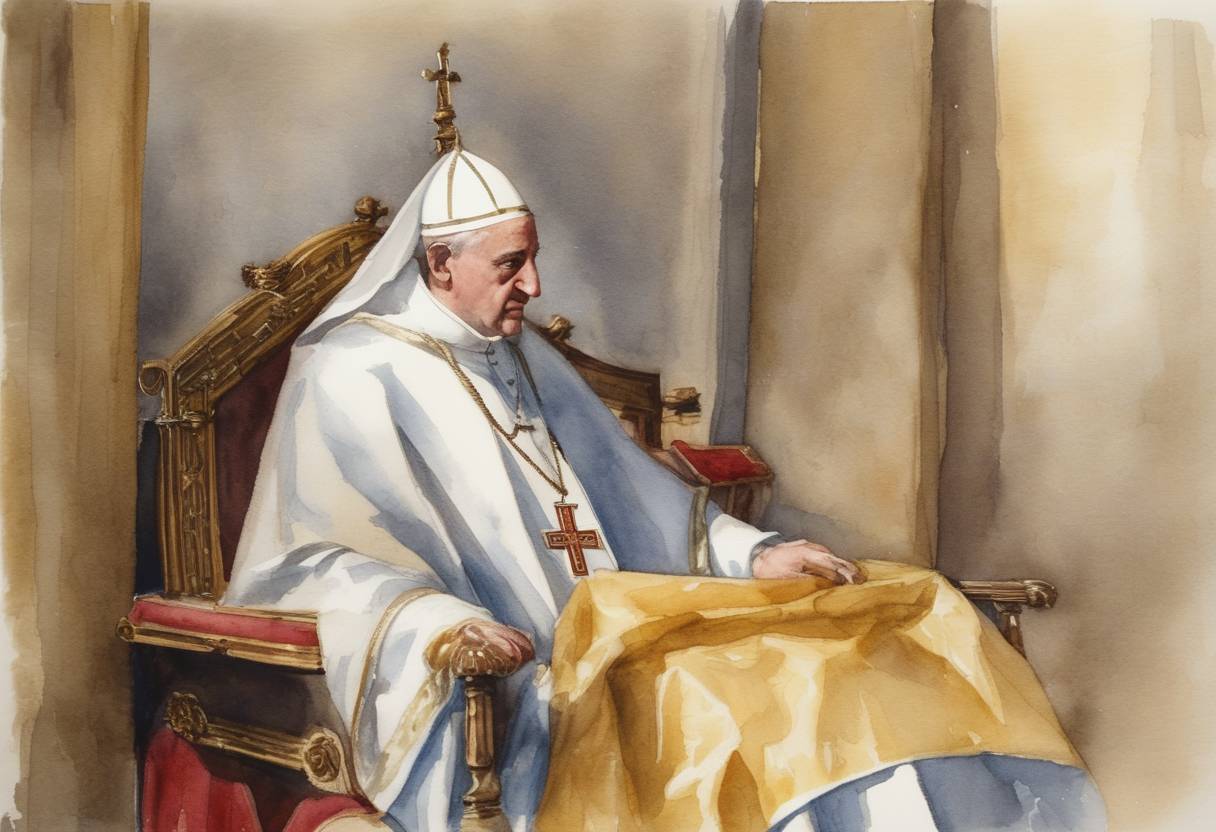
On November 14, 1279, Pope Nicholas III promulgated the papal bull named “Exiit qui seminat.” Although your request cites November 9, 1277, historical records confirm the issuance of this significant document in 1279. This bull played a crucial role in clarifying the status and rules governing the Franciscan Order regarding the issues of poverty and property.
The Franciscan Order, founded by St. Francis of Assisi in 1209, emphasized strict adherence to communal life and ascetic poverty. However, as the order grew, questions arose about how its members should adhere to the principles of poverty while managing the practical needs of maintaining an expanding religious community.
“Exiit qui seminat” addressed these concerns by:
The bull “Exiit qui seminat” was instrumental in resolving internal disputes within the Franciscan Order about the interpretation of their vows. It provided a framework that balanced the ideal of absolute poverty with practical necessities.
This papal bull also highlighted broader themes in the church concerning the balance of spiritual ideals and material realities, influencing not only religious orders but also subsequent discussions on religious poverty, church wealth, and ecclesiastical power structures.
Through “Exiit qui seminat,” Pope Nicholas III reinforced the papal authority over religious orders and contributed to the ongoing evolution of monastic life during the Middle Ages. It remains a significant document, illustrating the complex interactions between doctrine, practice, and papal authority in medieval Europe.
Source: en.wikipedia.org