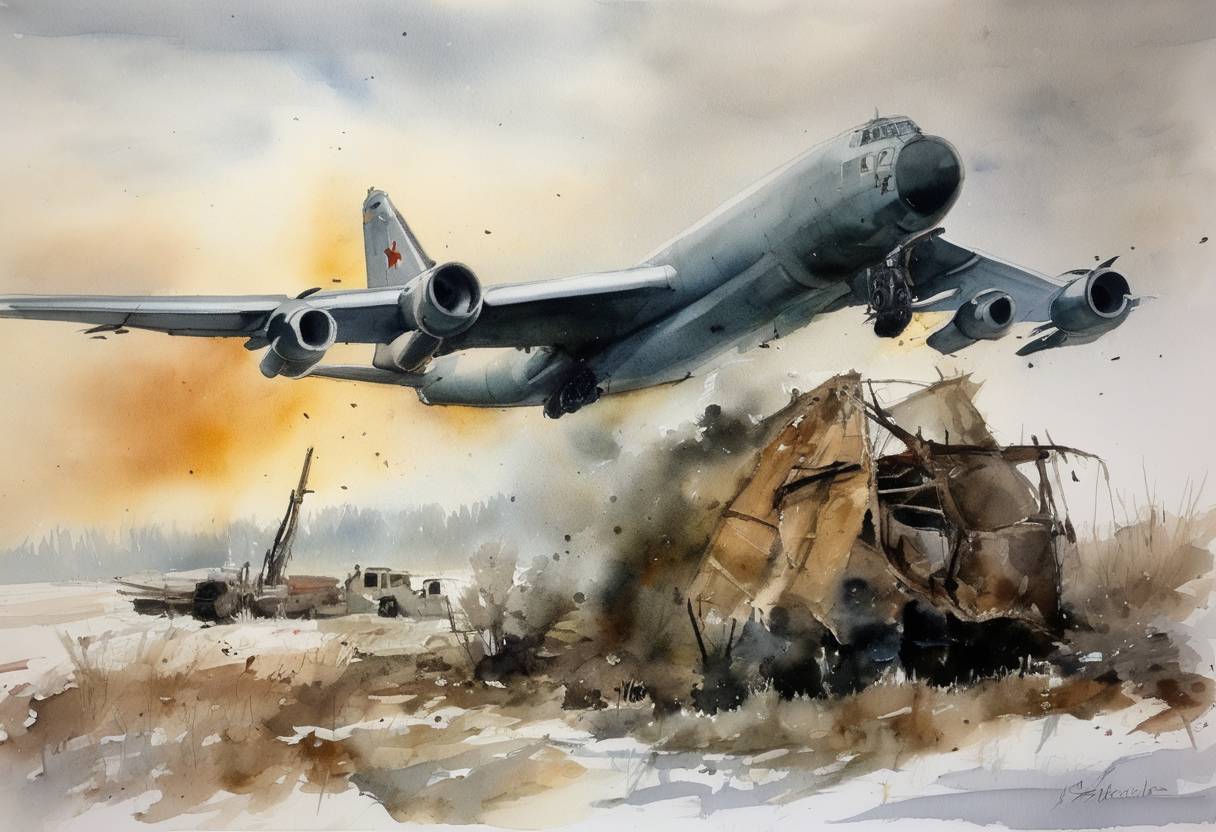
The Smolensk Air Disaster - April 10, 2010
On April 10, 2010, a tragic air disaster occurred involving a Polish Air Force Tu-154 aircraft. The crash near Smolensk, Russia, resulted in the deaths of all 96 people on board, including Polish President Lech Kaczyński, his wife Maria Kaczyńska, and numerous high-ranking Polish officials.
Context and Background
The Polish delegation was en route to Russia to attend a ceremony at Katyn, commemorating the 70th anniversary of the Katyn massacre, where thousands of Polish officers were executed by the Soviet secret police in 1940. This visit was a significant moment in Polish-Russian relations, as it aimed to honor the victims and address historical grievances between the two nations.
The Crash
The aircraft, a Tupolev Tu-154M, took off from Warsaw and was scheduled to land at Smolensk North Airport. However, due to dense fog and limited visibility, the crew made several unsuccessful attempts to land. During the final approach, the plane clipped tree tops, crashed in a forest short of the runway, and broke into pieces, leading to the immediate loss of all lives on board.
Notable Passengers
In addition to President Lech Kaczyński and First Lady Maria Kaczyńska, several distinguished members of Poland’s political and military leadership were among the deceased:
- Ryszard Kaczorowski, the last President of the Polish government-in-exile
- Franciszek Gągor, Chief of the General Staff of the Polish Armed Forces
- Andrzej Przewoźnik, Secretary of the Council for the Protection of Struggle and Martyrdom Sites
- Numerous government ministers, parliamentarians, and military commanders
Aftermath and Impact
The crash plunged Poland into mourning and had profound implications for its national politics and international relations. The loss of so many key leaders necessitated a swift political response in Poland, including the appointment of a new acting president and reorganization within the government and military.
In Russia, the tragedy became an unexpected moment of empathy and solidarity, temporarily easing historical tensions between the two countries. However, the investigation into the crash became a point of contention. While initial reports attributed the accident to human error under challenging weather conditions, subsequent inquiries and public discourse raised questions about equipment failure, airport readiness, and diplomatic protocol, fueling ongoing debates and conspiracy theories.
Legacy
The Smolensk air disaster remains a somber chapter in Polish history. It is commemorated annually, serving as a reminder of the fragility of life and the enduring impact of historical and political events on international relations. The tragedy has left an indelible mark on Polish society and continues to influence the nation’s political landscape and its relations with Russia.