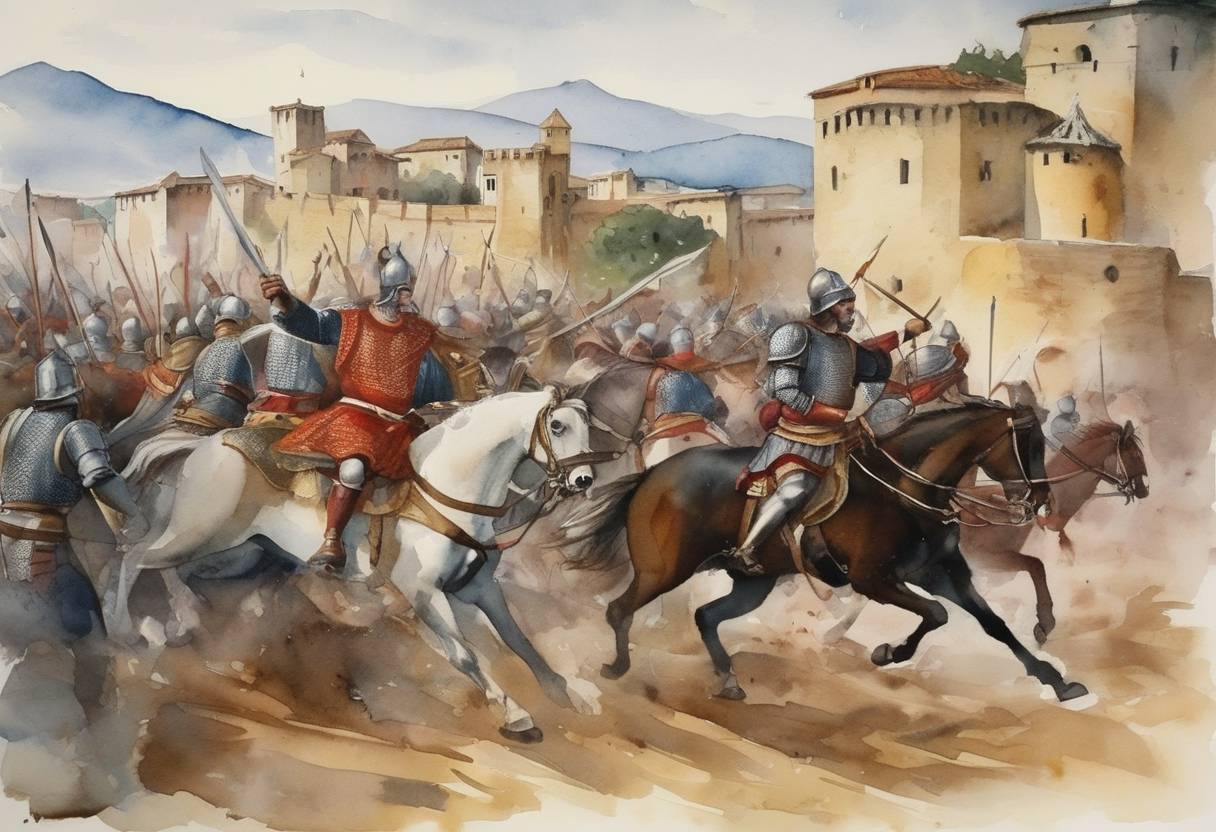
The Battle of Rignano - October 30, 1137
The Battle of Rignano, fought on October 30, 1137, was a pivotal conflict during the Middle Ages involving key figures in the Italo-Norman conflicts of Southern Italy. This confrontation took place near the town of Rignano Garganico in the southern part of the Italian Peninsula and was part of the ongoing struggle for power in the region.
Key Players
Roger II of Sicily: The Norman King of Sicily, known for consolidating Norman control over southern Italy and Sicily. His prowess in both administration and warfare was notable, facilitating the spread of Norman influence across the Mediterranean.
Ranulf II of Alife: A Norman count and a significant challenger to Roger II. Ranulf II was part of the local nobility opposed to Roger’s centralizing efforts, leading various rebellions against his rule.
Background
Roger II of Sicily, crowned just a few years earlier in 1130, was actively expanding his influence across the southern Italian territories. His attempts to centralize and extend his dominion faced considerable resistance from local Norman lords and the Papacy, which sought to limit his power. One of his main adversaries, Ranulf II, joined forces with other disgruntled nobles and received support from the Holy Roman Emperor Lothair III, contributing to a more extended conflict in the region.
The Battle
The confrontation at Rignano was not merely a clash of armies but also a meeting of strategic military minds. Roger II’s forces, despite facing a formidable alliance under Ranulf II, managed to secure a decisive victory. The battle demonstrated Roger’s ability to maintain control over his territories, reaffirming his military prowess.
Consequences
The victory at Rignano solidified Roger II’s authority over southern Italy and weakened his adversaries significantly. This defeat undermined the regional opposition against him, allowing Roger to continue with his plans to centralize Norman rule further.
Roger II’s success at Rignano also bolstered his position in international politics, diminuting the influence of his opponents over the Papacy and the Holy Roman Empire. It marked a turning point in the Italo-Norman period, where Roger reaffirmed his dominance and continued to shape the politics of the Mediterranean.
Historical Significance
The Battle of Rignano underscores the complexities of Norman politics in Italy, showcasing the challenges of governance amid competing noble interests. It reflects the broader narrative of Medieval European power struggles and exemplifies the fluctuating dynamics between local sovereignty and centralized power during the era. Roger’s victories, including Rignano, laid the groundwork for the eventual establishment of a strong, united kingdom in Southern Italy under Norman rule.