The First Performance of Mozart's Opera "The Magic Flute"
1791 · Vienna, Austria
The first performance of Mozart's opera 'The Magic Flute' takes place in Vienna, Austria.
January 27, 1756
Wolfgang Amadeus Mozart, one of the most influential composers of the Classical era, is born.
Salzburg, Holy Roman Empire
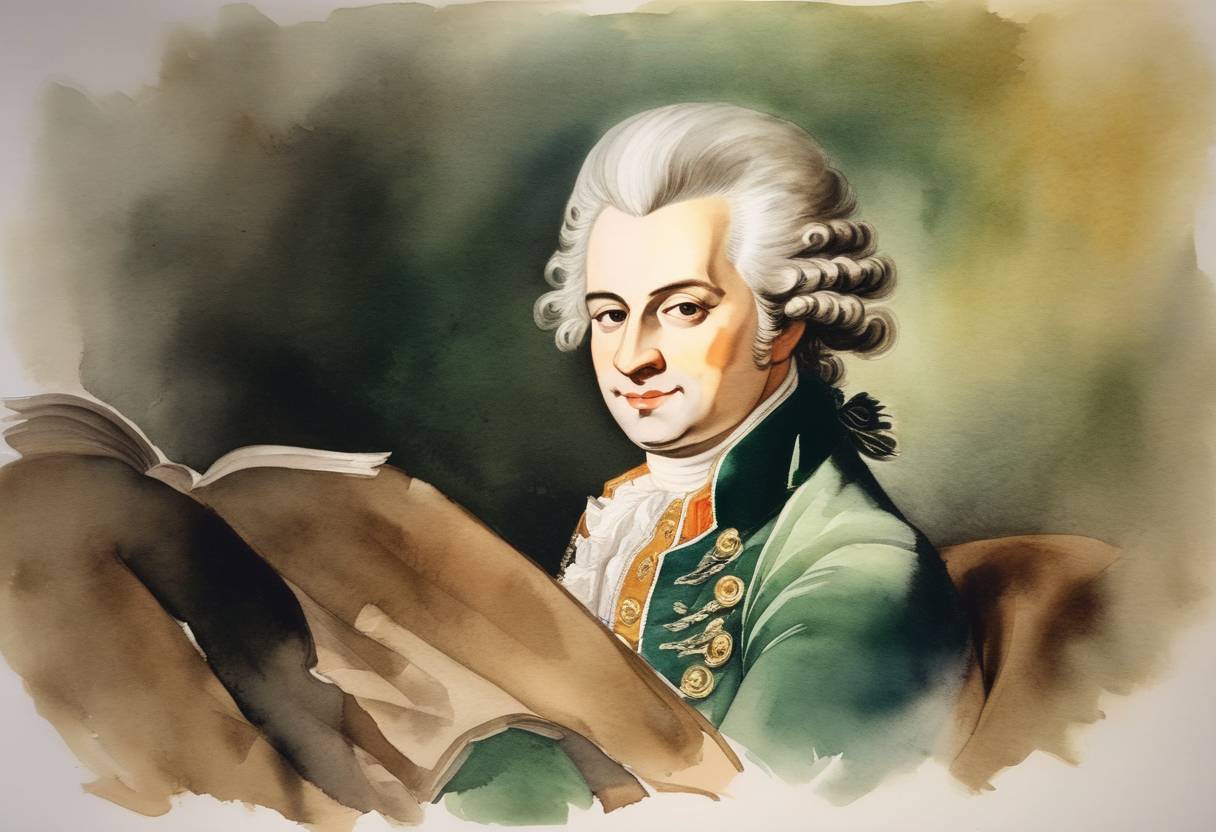
Date: January 27, 1756
Location: Salzburg, Prince-Archbishopric of Salzburg, within the Holy Roman Empire (present-day Austria)
Wolfgang Amadeus Mozart, whose full baptismal name was Johannes Chrysostomus Wolfgangus Theophilus Mozart, was born on January 27, 1756, to Leopold Mozart and Anna Maria Pertl. His birth took place in Salzburg, a city renowned at the time for its ecclesiastical leadership and cultural richness.
Leopold Mozart, his father, was a notable composer and music teacher employed by the Prince-Archbishop of Salzburg. Recognizing his son’s prodigious talents very early on, Leopold greatly influenced and nurtured Wolfgang’s musical journey. Wolfgang was the youngest of seven children, though only he and his sister Maria Anna “Nannerl” survived infancy.
Mozart demonstrated extraordinary musical ability from a young age. By the age of three, he had begun playing the harpsichord and by five, he composed his first pieces. Wolfgang and his sister Nannerl toured extensively through Europe during his childhood, performing for various royal courts and garnering wide acclaim for his prolific talents.
Mozart’s contributions to music span over 600 works, including symphonies, operas, chamber music, piano concertos, and choral music. His ability to convey emotion, complexity, and elegance within his compositions has placed him among the most revered classical composers in history. His work not only epitomized the Viennese Classical style but also significantly influenced future generations of musicians and composers.
Mozart’s birth on January 27, 1756, marks the arrival of one of the most significant figures in Western music, whose legacy continues to resonate centuries later. His compositions remain some of the most performed and studied in the classical repertoire, a testament to his enduring genius and impact on the musical arts.
Source: en.wikipedia.org