Battle of Naas - June 11, 1798
1798 · Naas, Ireland
The Irish Rebellion of 1798, also known as the United Irishmen Rebellion, experiences the Battle of Naas.
May 24, 1798
The Irish Rebellion of 1798 against British rule began with the Battle of Carlow.
Carlow, Ireland | United Irishmen
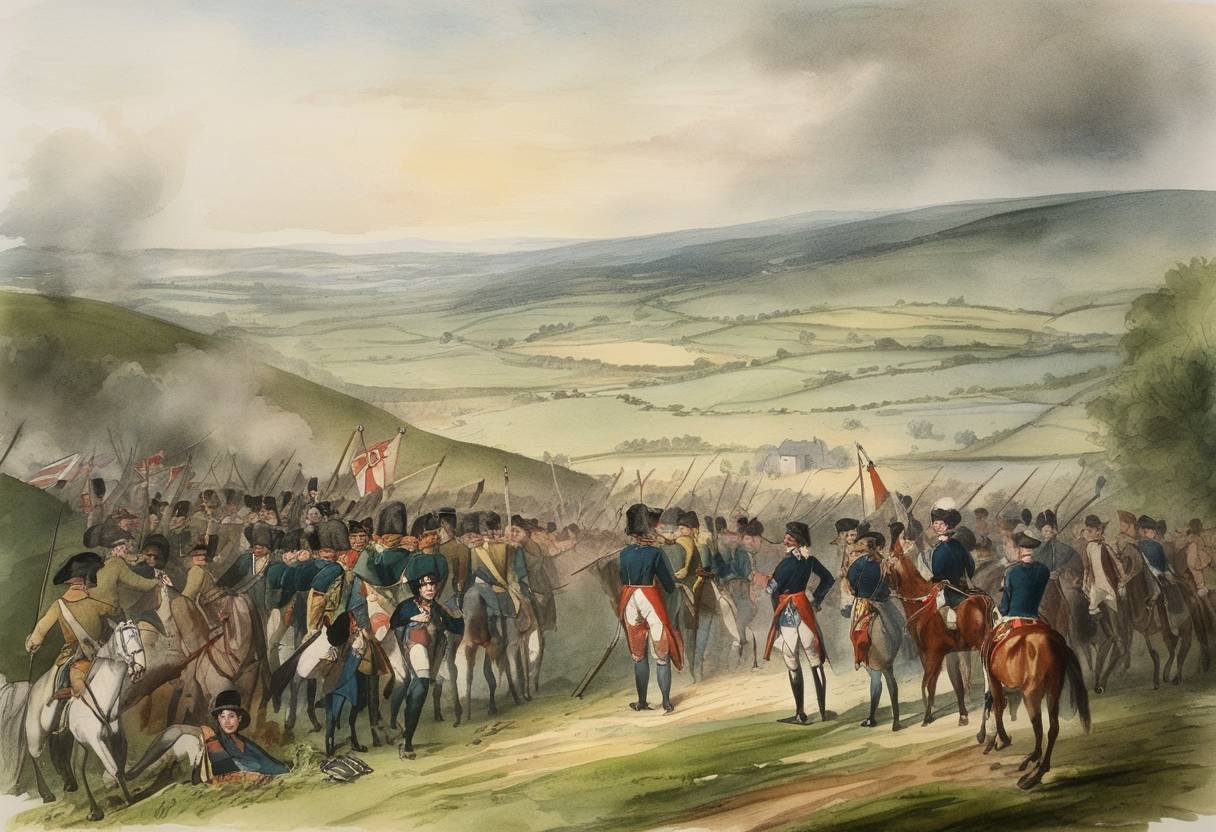
On May 24, 1798, significant events unfolded as part of the larger Irish Rebellion against British rule. This colonial struggle, influenced by the revolutionary spirit of the late 18th century, sought to end British dominance over Ireland. One notable clash occurred in Carlow, where the United Irishmen engaged in what became known as the Battle of Carlow.
The Rebellion of 1798 was largely driven by the United Irishmen, a group inspired by the Enlightenment and the success of the American and French Revolutions. Founded initially as a reformist organization in the 1790s, it evolved towards militant republicanism, advocating for the end of British monarchical control and religious discrimination.
On that day, around 1,100 insurgents entered Carlow town, hoping to capture it as a strategic position. The leadership comprised figures like Mick Heydon and Father John Murphy, who rallied the predominantly Catholic peasant class. Their aim was to overcome the local garrison and establish control.
However, the plan was betrayed and the British forces, consisting of militia, yeomanry, and regular troops, were prepared. Familiar with the town’s layout, the British quickly set up ambushes. As the rebels made their way into the streets, they were met with devastating volleys of gunfire.
The clash in Carlow ended tragically for the insurgents; approximately 500 were killed. Many perished due to being trapped in burning buildings, set alight as a tactic by the well-prepared garrison. This setback was emblematic of the broader struggles the rebels faced across Ireland, as they contended against better-armed and organized British forces.
The events in Carlow highlighted the severe challenges faced by the Irish insurgents, marked by a lack of coordinated leadership and betrayal within their ranks. The rebellion, while ultimately a military failure, was crucial in fostering a sense of Irish nationalism and set the stage for future movements advocating for independence and reform.
The Battle of Carlow and the 1798 Rebellion are remembered as significant expressions of defiance against imperial rule, with its legacy continuing to influence Irish identity and the country’s path towards eventual autonomy.
Source: www.historyireland.com