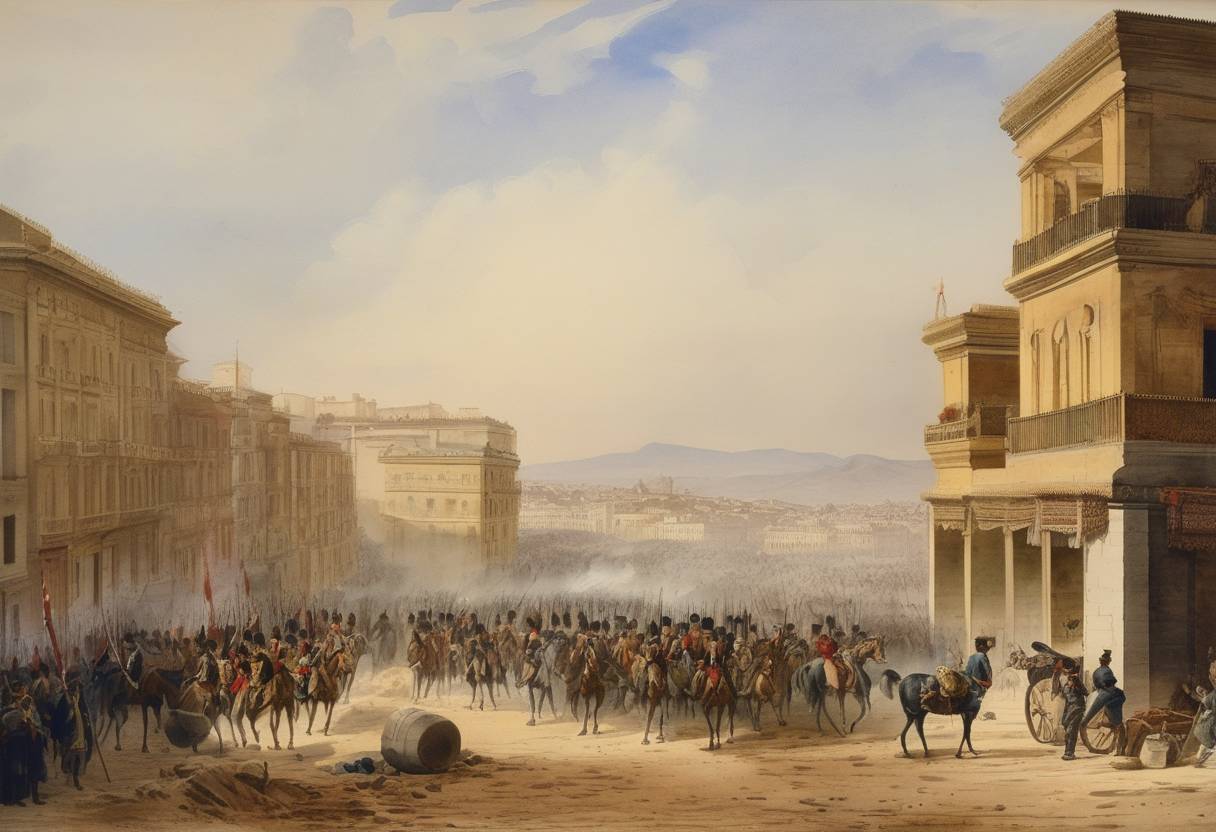
Spanish-Moroccan War (War of Africa) Declaration
On October 22, 1859, Spain officially declared war on Morocco, marking the beginning of the Spanish-Moroccan War, also known as the War of Africa. This conflict arose from a series of territorial and sovereignty disputes between Spain and Morocco, primarily centered around the Spanish enclaves on the North African coast.
Background
The conflict’s roots lay in longstanding tensions over Spanish territories such as Ceuta and Melilla, which, although claimed by Spain, were surrounded by Moroccan land. The immediate cause of the war was an attack by Moroccan tribesmen on the border of Ceuta, which Spain viewed as a violation of its territory and sovereignty.
Key Events Leading Up to the Declaration
- Border Incidents: Prior to the declaration, there were escalating skirmishes and raids by Moroccan tribesmen against Spanish holdings. This unrest prompted the Spanish government to bolster its military presence in the area.
- Diplomatic Tensions: Spain demanded compensation and assurances from the Moroccan government for the protection of its territories, which Morocco refused. The diplomatic strife only added fuel to growing hostilities.
- Spanish Nationalism: Riding on a wave of nationalistic fervor and a desire to reassert its former colonial glory, Spain was eager to respond to Morocco’s perceived provocations, further hastening the call for military engagement.
- War Declaration: On October 22, 1859, the Spanish government, led by Queen Isabella II and her Prime Minister Leopoldo O’Donnell, formally declared war on Morocco.
- Initial Military Movements: Spain mobilized its army and navy, organizing a large-scale expeditionary force to launch a series of assaults on Moroccan positions. The Spanish forces, better equipped and organized, quickly advanced into Moroccan territory.
Significance and Consequences
- Military Campaigns: The war showcased the disparity in military strength between Spain and Morocco. Spain’s modernized forces captured key Moroccan strongholds, including the strategic port city of Tetuan.
- Treaty of Wad-Ras: The conflict concluded with the Treaty of Wad-Ras in April 1860, which led to Moroccan reparations and the recognition of Spanish territorial claims over certain disputed enclaves.
- Impact on Both Nations: For Spain, the war was a manifestation of its imperial ambitions and a demonstration of military capability. For Morocco, the defeat highlighted the vulnerabilities in its defenses and intensified internal pressures for reforms.
Through the declaration and subsequent actions, the Spanish-Moroccan War spotlighted the complex dynamics of colonial ambition, territorial integrity, and national pride in 19th-century geopolitics.