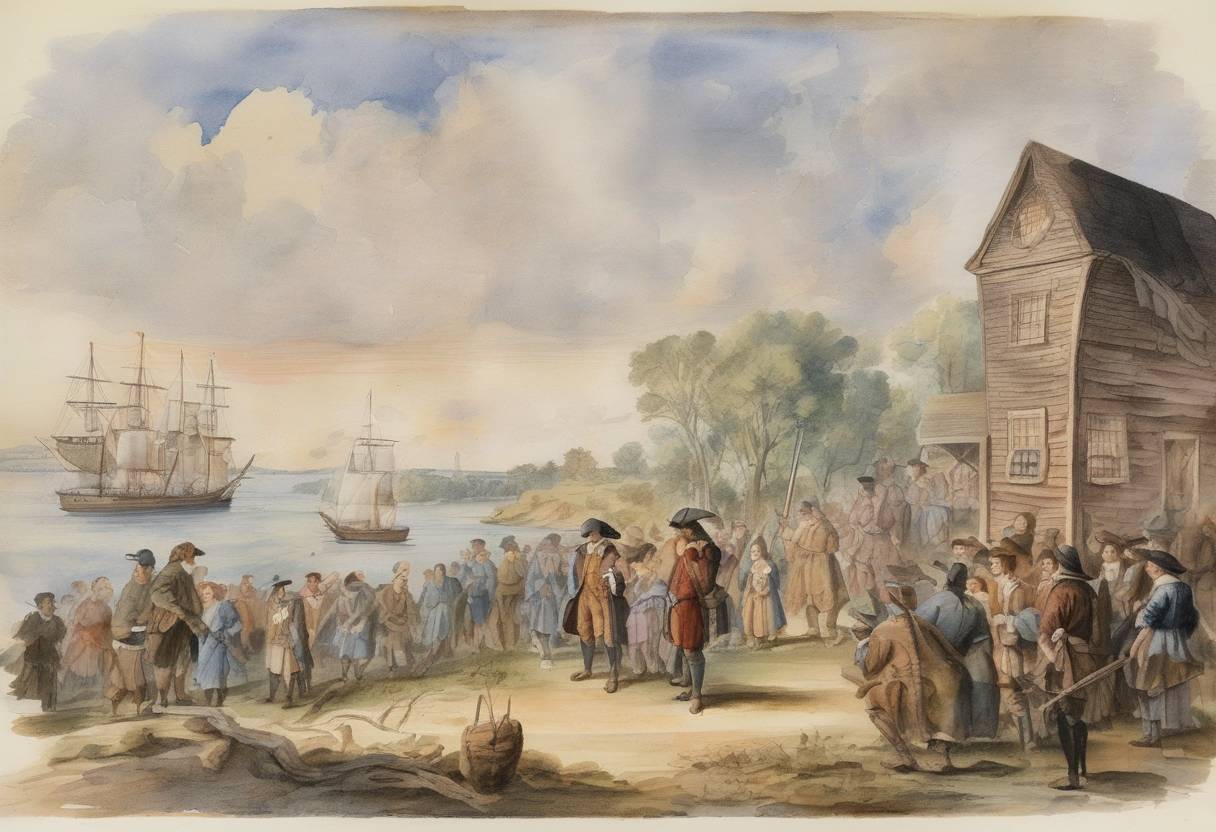
Roger Williams Banished from Massachusetts Bay Colony
On October 9, 1635, Roger Williams, a Puritan minister, was formally banished from the Massachusetts Bay Colony due to his controversial religious views and advocacy for the separation of church and state. This event was a pivotal moment in early American history, leading to the founding of Rhode Island, a haven for religious freedom.
Background
Roger Williams arrived in the Massachusetts Bay Colony in 1631, seeking religious freedom. However, his radical ideas soon put him at odds with the colony’s leadership. Williams was a staunch advocate for:
- Separation of Church and State: He believed that civil authorities should not enforce religious laws, a view that challenged the theocratic nature of the colony.
- Religious Freedom: Williams argued for the freedom of individual conscience and opposed the mandatory attendance of church services.
- Fair Treatment of Native Americans: He criticized the colonists’ seizure of Native American lands without fair compensation.
Key Events Leading to Banishment
Williams’ beliefs and outspoken nature led to increasing tension with the colony’s leaders, including Governor John Winthrop. His views were seen as a threat to the social and religious order of the colony. In 1635, the General Court of Massachusetts summoned Williams to answer for his “new and dangerous opinions.”
- Trial and Conviction: On October 9, 1635, Williams was convicted of sedition and heresy. The court ordered his banishment, giving him six weeks to leave the colony.
Aftermath and Founding of Rhode Island
Faced with imminent arrest, Williams fled the colony in the harsh winter of 1636. He found refuge with the Narragansett tribe, who provided him shelter. With their help, Williams established a new settlement called Providence, which later became part of the Colony of Rhode Island and Providence Plantations.
- Rhode Island’s Charter: Williams secured a charter for Rhode Island in 1644, ensuring the colony’s commitment to religious freedom and separation of church and state. This made Rhode Island a unique refuge for dissenters and those seeking religious tolerance.
Historical Significance
Roger Williams’ banishment and the subsequent founding of Rhode Island had lasting impacts on American history:
- Religious Freedom: Rhode Island became a model for religious tolerance, influencing the development of religious freedom as a fundamental American principle.
- Separation of Church and State: Williams’ ideas contributed to the eventual establishment of the separation of church and state in the United States Constitution.
Roger Williams’ legacy is celebrated as a pioneering advocate for liberty of conscience and the rights of individuals to practice their faith without government interference.