The Battle of Nashville: Conclusion and Aftermath
1864 · Nashville, United States
The Battle of Nashville in the American Civil War ends as the Union defeat the Confederate Army under Lieutenant General John Bell Hood.
October 5, 1864
The Battle of Allatoona took place during the American Civil War, where Union forces successfully defended the Allatoona Pass against a Confederate attack.
Allatoona, United States | Union Army
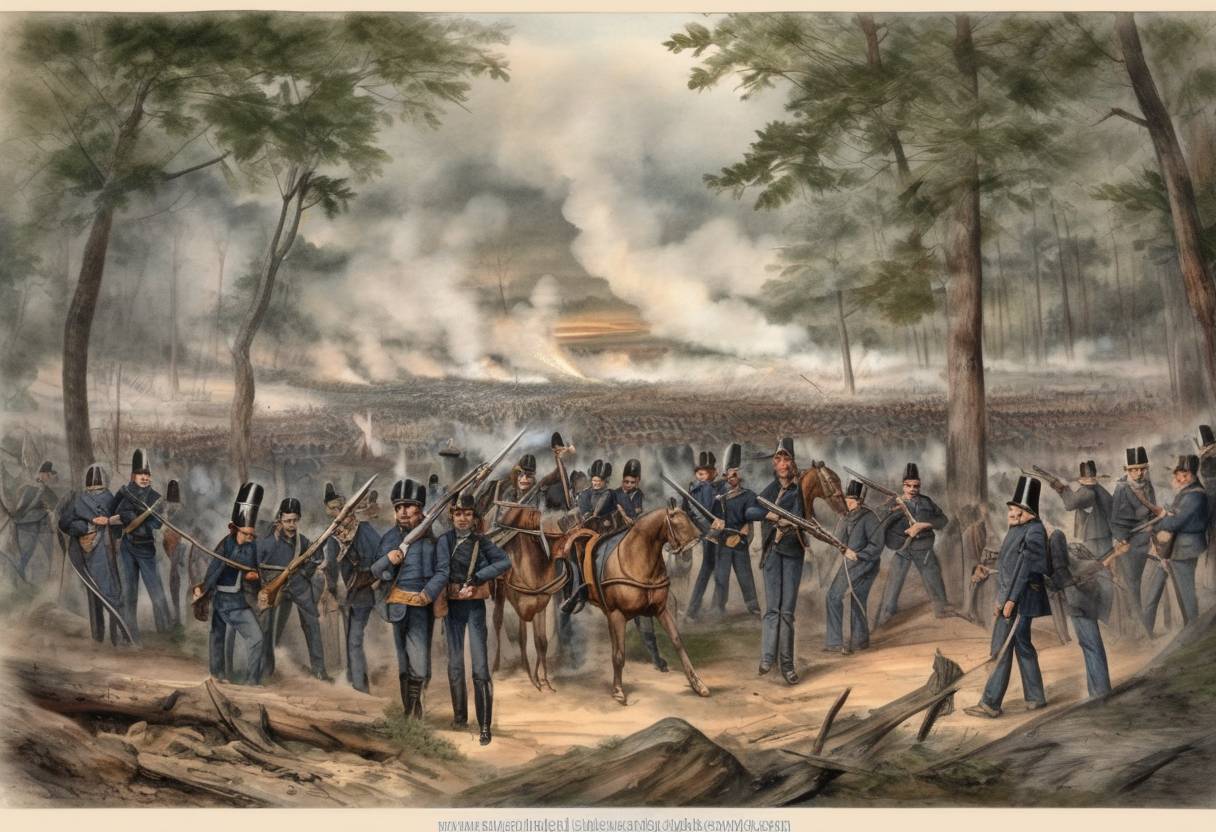
The Battle of Allatoona Pass was a significant engagement during the American Civil War, occurring on October 5, 1864. It was part of the larger Atlanta Campaign and took place in Bartow County, Georgia. This battle is notable for the Union forces’ successful defense against a Confederate attack, despite being heavily outnumbered.
The battle was set against the backdrop of Union General William T. Sherman’s Atlanta Campaign, which aimed to capture the strategic city of Atlanta, a crucial transportation hub for the Confederacy. After the fall of Atlanta on September 2, 1864, Sherman turned his attention to disrupting Confederate supply lines.
Confederate General John Bell Hood, seeking to draw Sherman away from Atlanta, launched a series of attacks on Union supply lines. The Allatoona Pass, a narrow gorge through which the Western & Atlantic Railroad ran, was a vital supply route for Sherman’s forces. Recognizing its importance, Hood ordered Major General Samuel G. French to capture the Union garrison stationed there.
On the morning of October 5, 1864, French’s division, consisting of approximately 3,276 men, attacked the Union garrison at Allatoona, which was defended by about 2,025 Union soldiers under the command of Brigadier General John M. Corse. The Union forces were fortified in a series of earthworks and blockhouses.
Despite being outnumbered, the Union defenders utilized their strong defensive positions to withstand the Confederate assault. The battle was fierce and bloody, with both sides suffering significant casualties. General Corse, who was wounded during the fighting, famously signaled to Sherman, “I am short a cheekbone and an ear, but am able to whip all hell yet.”
The Union’s successful defense of Allatoona Pass ensured that Sherman’s supply lines remained intact, allowing him to continue his operations in Georgia. The battle demonstrated the strategic importance of railroads and supply lines in the Civil War and highlighted the determination and resilience of Union forces.
The Battle of Allatoona Pass also had a lasting cultural impact, inspiring the hymn “Hold the Fort,” written by Philip P. Bliss. The phrase “Hold the fort, for I am coming,” attributed to Sherman’s signal to Corse, became emblematic of steadfastness and perseverance.
In summary, the Battle of Allatoona Pass was a crucial Union victory that helped maintain the momentum of Sherman’s campaign in the South, contributing to the eventual Union victory in the Civil War.
Source: en.wikipedia.org