October 23, 1956

The Hungarian Revolution of 1956 began as a nationwide revolt against the Soviet-imposed policies of the People's Republic of Hungary.


Budapest, Hungary | Hungarian Revolutionaries
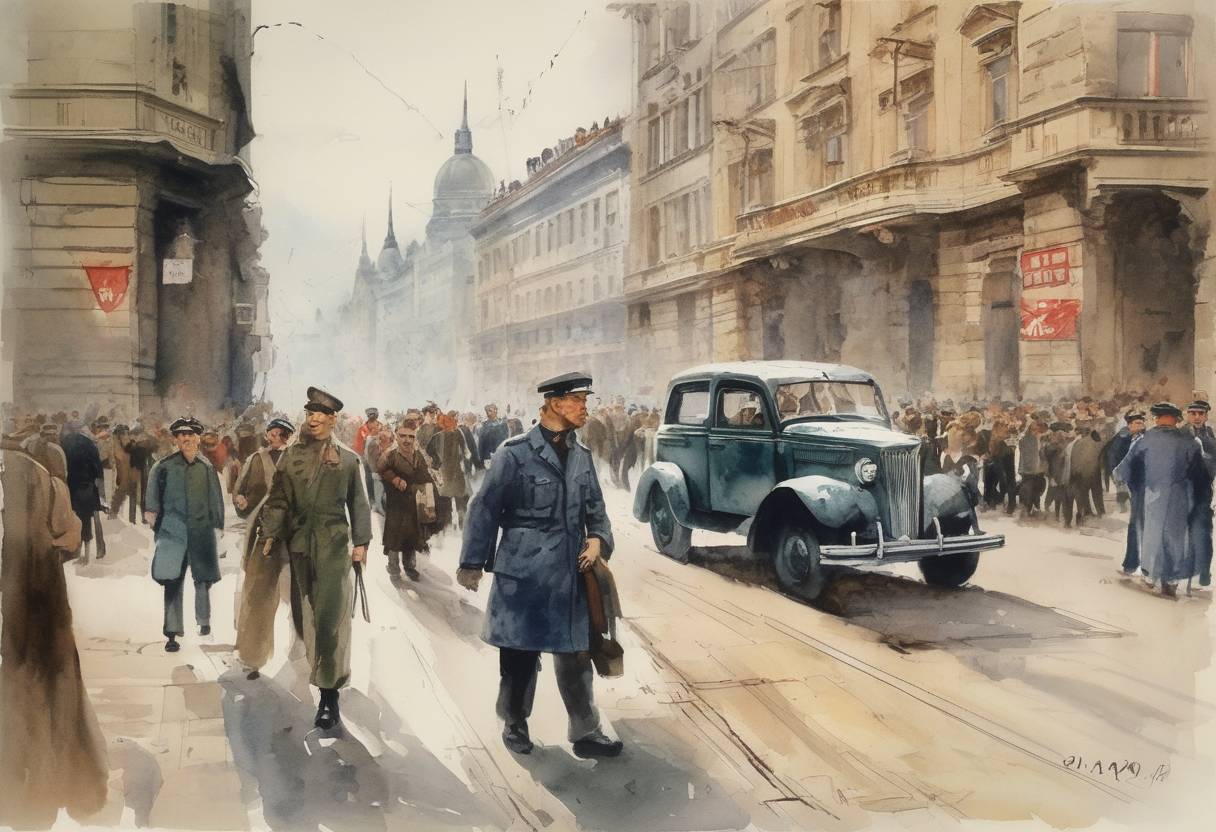
Watercolor painting based depiction of The Hungarian Revolution of 1956 began as a nationwide revolt against the Soviet-imposed policies of the People's Republic of Hungary. (1956)

The Hungarian Revolution of 1956

Background

The Hungarian Revolution of 1956 was a pivotal moment in Cold War history, representing a bold challenge to Soviet authority in Eastern Europe. Post-World War II, Hungary fell under Soviet influence, and a communist government was established. By the mid-1950s, dissatisfaction with the repressive regime, economic hardships, and lack of political freedoms fueled public discontent.

Key Events Leading Up to October 23, 1956

  • Stalin’s Death and Khrushchev’s Reforms: The death of Joseph Stalin in 1953 and the subsequent de-Stalinization policies under Nikita Khrushchev inspired hope for political reform across the Eastern Bloc.
  • Polish October: In 1956, Poland experienced its own wave of protests, leading to the rise of a more reformist government. This emboldened Hungarian reformers.
  • Intellectual and Student Movements: Hungarian intellectuals and students began to openly criticize the government, demanding greater freedoms and the withdrawal of Soviet troops.

October 23, 1956: The Outbreak of Revolution

On October 23, 1956, a peaceful student demonstration in Budapest escalated into a full-scale revolt. The students marched through the streets, demanding reforms such as:

  • The withdrawal of Soviet troops from Hungary.
  • The establishment of a multi-party political system.
  • Greater freedom of speech and press.

As the demonstration grew, thousands of citizens joined, and the protest turned violent when state security forces opened fire on the crowd. This sparked widespread uprisings across the country.

Key Figures

  • Imre Nagy: A reformist politician who became a symbol of the revolution. He was reinstated as Prime Minister during the uprising and attempted to negotiate with the Soviets.
  • János Kádár: Initially a supporter of the revolution, he later aligned with the Soviets and played a crucial role in suppressing the uprising.

Aftermath and Consequences

  • Soviet Intervention: Initially, the Soviet Union appeared willing to negotiate, but by early November, they launched a massive military intervention to crush the revolution.
  • Casualties and Repression: Thousands of Hungarians were killed, and many more were arrested or fled the country as refugees.
  • Long-term Impact: The revolution was ultimately suppressed, but it exposed the vulnerabilities of Soviet control in Eastern Europe and inspired future movements for independence and reform.

Historical Significance

The Hungarian Revolution of 1956 highlighted the deep-seated desire for freedom and autonomy within Soviet-controlled Eastern Europe. Although it was unsuccessful, it set the stage for future uprisings and contributed to the eventual weakening of Soviet influence in the region.

The events of October 23, 1956, remain a powerful symbol of resistance against oppression and the enduring human spirit’s quest for freedom.