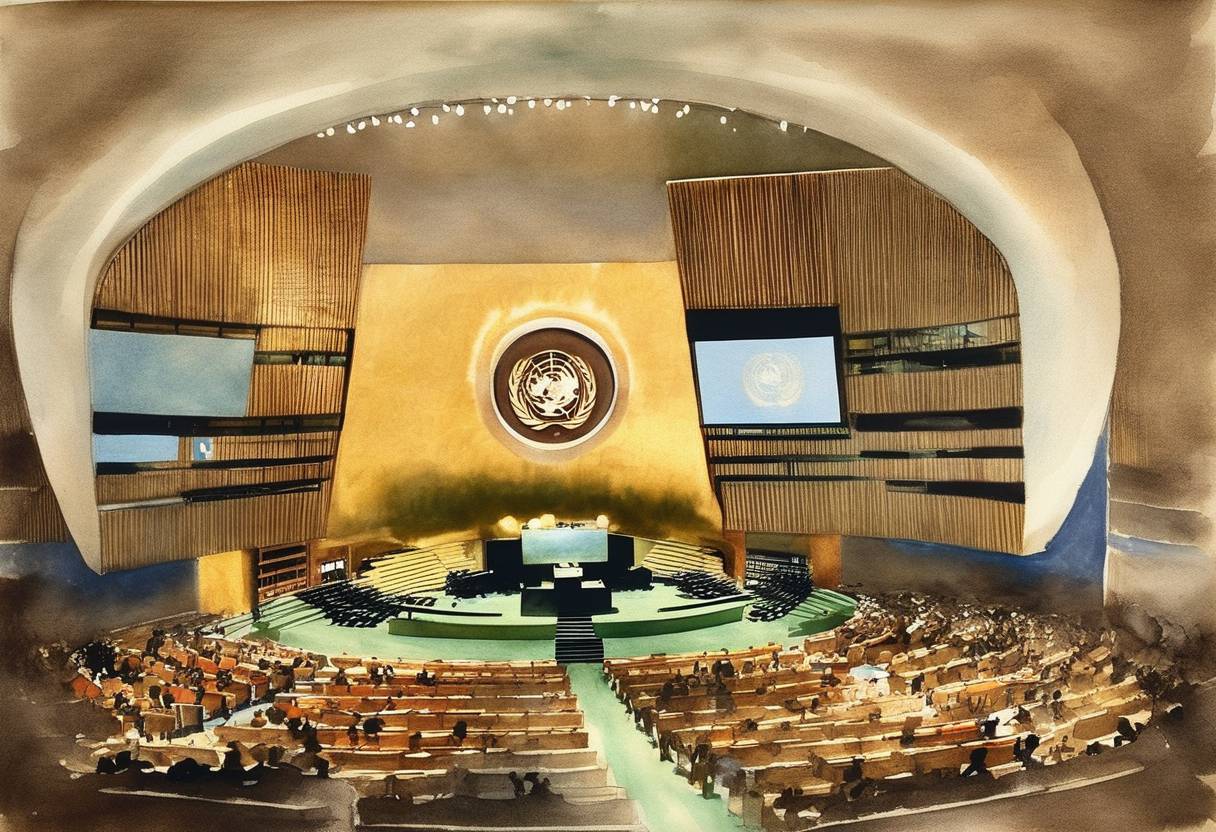
United Nations General Assembly Resolution 377
On October 7, 1950, the United Nations General Assembly passed Resolution 377, widely known as the “Uniting for Peace” resolution. This decision marked a significant development in the procedural processes of the United Nations amidst the tense geopolitical climate of the early Cold War period.
Context and Background
The resolution emerged during the Korean War, a critical period when tensions between the Western bloc, led by the United States, and the Eastern bloc, dominated by the Soviet Union, were intensifying. In the backdrop was the frequent use of the veto power by the Soviet Union in the Security Council, which often resulted in deadlocks preventing timely and decisive actions on international conflicts.
Key Provisions of the Resolution
Resolution 377 established a mechanism allowing the General Assembly to recommend collective measures, including the use of armed forces, in cases where the Security Council, due to the lack of unanimity, failed to maintain international peace and security. The resolution authorized the General Assembly to convene an Emergency Special Session within 24 hours to address threats to peace if the Security Council was unable to act.
Impact and Historical Significance
The adoption of the “Uniting for Peace” resolution significantly empowered the General Assembly, shifting some of the responsibility for maintaining global peace from the Security Council. It was particularly significant in enabling swift action in situations where the Security Council was paralyzed due to vetoes.
Over the years, Resolution 377 has been invoked in various global crises, allowing the General Assembly to issue recommendations and to facilitate international dialogue and resolution of conflicts. Despite its ambition, the resolution has sparked debate over the balance of power within the UN structure and the practical authority of the General Assembly in conflict resolution.
In essence, the “Uniting for Peace” resolution underscored the United Nations’ commitment to adapting its functions to ensure the maintenance of peace and security worldwide, reflecting the complexities and challenges of international governance during the Cold War era.