Emmanuel Macron's Victory in the 2017 French Presidential Election
2017 · Paris, France
Emmanuel Macron won the French presidential election, defeating Marine Le Pen and becoming the youngest President in French history.
April 19, 2022
In France, the Constitutional Council confirmed that Emmanuel Macron and Marine Le Pen would face off in the second round of the presidential election after results showed they received the highest votes in the first round held on April 10, 2022. This set up a rematch of the 2017 presidential election runoff.
Paris, France | French Constitutional Council
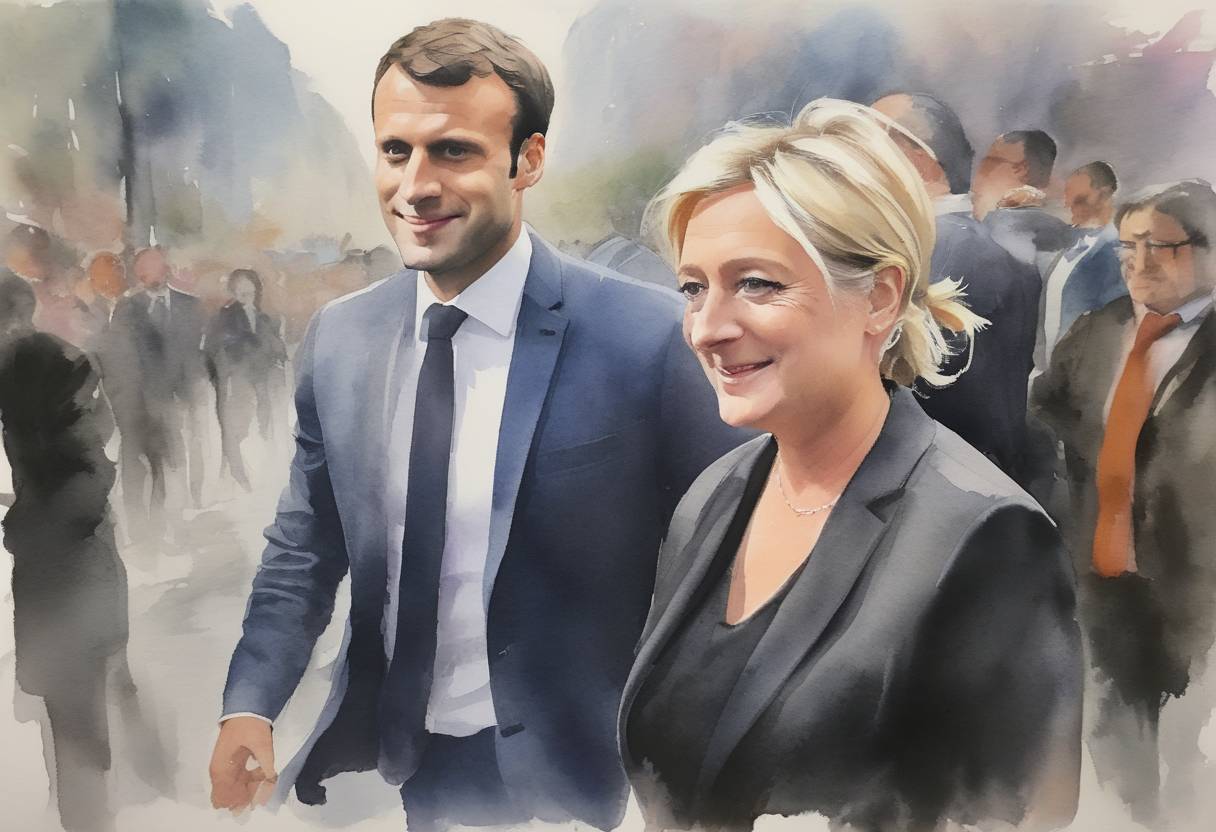
On April 19, 2022, the French Constitutional Council officially confirmed the results of the first round of the presidential election, which took place on April 10, 2022. The announcement declared that the incumbent president, Emmanuel Macron, and far-right candidate Marine Le Pen received the highest number of votes among all candidates, securing their positions in the second round of the election. This decision set the stage for a decisive runoff on April 24, 2022, mirroring the 2017 presidential election’s final contest between these two candidates.
The French presidential election process involves two rounds. If no candidate secures an outright majority in the first round, a second round is held between the top two candidates. Emmanuel Macron, representing La République En Marche!, sought a second term, building his campaign around a centrist and pro-European platform. Marine Le Pen, head of the National Rally (formerly known as the National Front), ran on a platform emphasizing national sovereignty, immigration reform, and a critical stance on European Union policies.
First Round Results: On April 10, 2022, Macron garnered approximately 28% of the vote, while Marine Le Pen captured nearly 23%. This outcome put them ahead of other major candidates, such as Jean-Luc Mélenchon of La France Insoumise, who received about 22%.
Political Landscape: The election was marked by an electorate concerned with economic issues, security, and the handling of international relations. The ongoing COVID-19 pandemic and its repercussions were also focal points.
Civic Response: Voter turnout was a topic of discussion, with participation levels being closely monitored given decreasing civic engagement in recent years.
The 2022 election was significant for its reflection of enduring political divisions within France, particularly in the context of economic and social challenges. The repeat runoff between Macron and Le Pen symbolized a continued ideological struggle between centrist policies and far-right populism in France—a dynamic playing out in various forms across Europe and the world. The outcome was anticipated to influence France’s domestic policies and its role in broader European and global geopolitics.
The confirmation by the Constitutional Council paved the way for intensified campaigning between Macron and Le Pen in the weeks leading up to the second round. Both candidates focused on expanding their voter bases, with Macron emphasizing continuity and stability, while Le Pen concentrated on appealing to dissatisfaction and calls for change. The outcome of the second round would determine the strategic direction of France for the subsequent five years, impacting not only national governance but also European Union policy and international alliances.
Source: www.conseil-constitutionnel.fr