The Capture of Granada: January 2, 1492
1492 · Granada, Spain
The Catholic Monarchs Ferdinand II of Aragon and Isabella I of Castile captured Granada from the Nasrid dynasty, marking the end of the Reconquista.
January 6, 1492
Ferdinand and Isabella entered Granada, completing the Reconquista of Spain.
Granada, Spain | Kingdom of Castile and Aragon
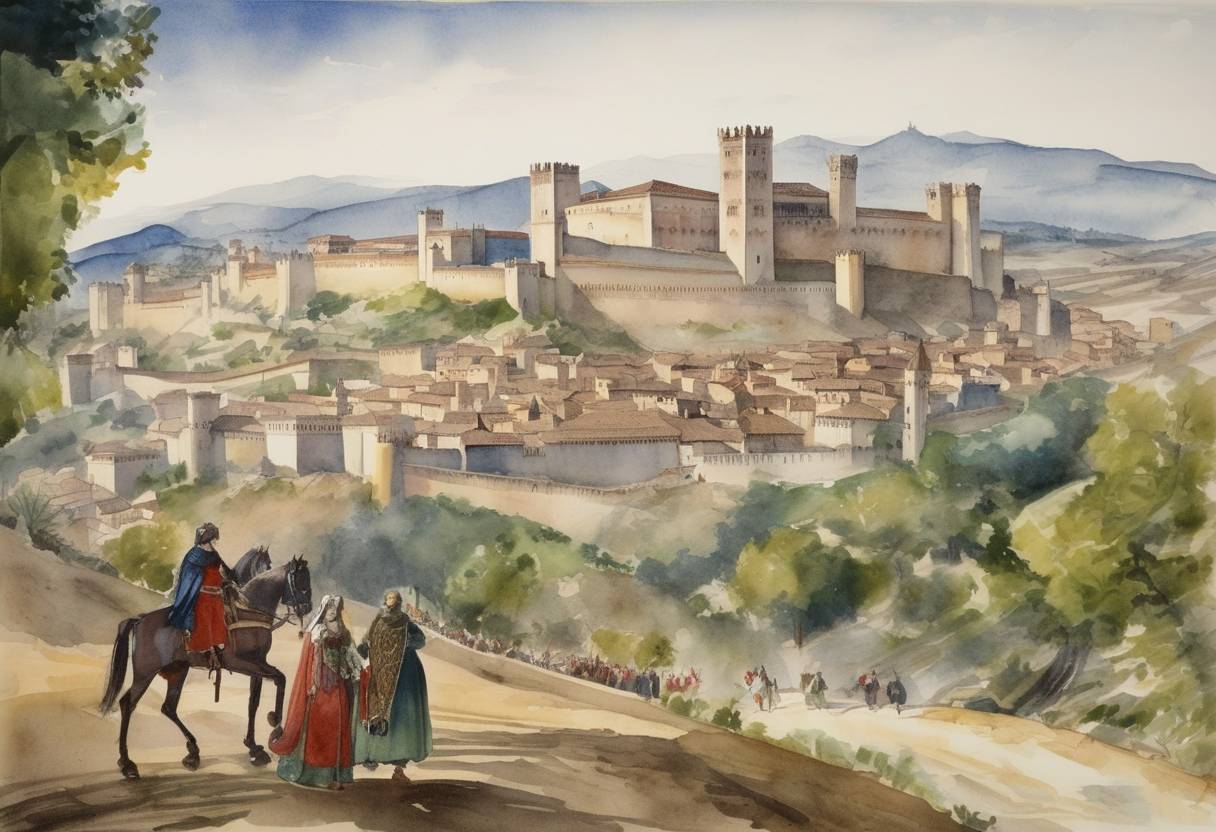
On January 6, 1492, the Catholic Monarchs, King Ferdinand II of Aragon and Queen Isabella I of Castile, made a victorious entrance into the city of Granada, marking the culmination of the Reconquista. This event effectively concluded a series of military campaigns, begun in the 8th century, aimed at reclaiming the Iberian Peninsula from Muslim rule.
The Reconquista was a pivotal historical process in which Christian states in medieval Spain sought to reconquer territories controlled by Moors (Muslims of North African and Arab descent). This lengthy struggle was fueled by a combination of religious zeal, political ambition, and territorial expansion.
The strategic location and cultural significance of Granada as the last Islamic stronghold in Spain made it a critical target for Ferdinand and Isabella. The fall of Granada was not just a military victory but also a symbolic triumph over centuries of Islamic presence in the region.
The siege of Granada began in 1491, following a decade-long conflict characterized by periodic truces and fierce battles. The Catholic Monarchs strategically tightened their control around the city, cutting off resources and applying military pressure.
On November 25, 1491, terms of surrender were negotiated through the Treaty of Granada, which promised religious tolerance and the protection of rights for the Muslim inhabitants of the city under Christian rule. This agreement led to the formal surrender of the city.
On January 6, 1492, Ferdinand and Isabella entered Granada with a grand procession, symbolizing the complete unification of Spain under Christian leadership. This event was celebrated throughout Christendom as a victory of Christianity over Islam and represented the final chapter of the Reconquista.
Their entry into Granada was meticulously orchestrated to display royal power and the triumphal return of Christian rule. Ferdinand and Isabella’s victory procession included members of the clergy, nobles, and their army, making a lasting impression on both the local population and onlookers worldwide.
The capture of Granada had profound implications for Spain and the wider world:
Religious Transformation: The fall of Granada paved the way for efforts to convert the Muslim population to Christianity. Over time, this led to the enforcement of religious uniformity with policies that included the Alhambra Decree, which mandated the expulsion or conversion of Jews and Muslims.
Expansion of Spanish Influence: The newfound unity and peace allowed Ferdinand and Isabella to turn their attention to other ventures, notably the sponsorship of Christopher Columbus’s 1492 voyage, which opened the New World to European exploration and colonization.
Cultural Exchange and Synthesis: While the Reconquista ended Islamic political dominance in Spain, the blending of Christian and Muslim cultures continued to enrich Spanish art, architecture, and scholarship.
The entry of Ferdinand and Isabella into Granada marked a turning point in Spanish history, setting the stage for Spain’s emergence as a major European power and initiating an era of exploration and empire-building.