Theodosius I Proclaimed Co-Emperor of the Eastern Roman Empire
379 · Sirmium, Roman Empire
Theodosius I is proclaimed co-emperor of the Eastern Roman Empire by Emperor Gratian.
November 17, 0375
Emperor Valentinian I dies of a stroke at Brigetio (modern-day Szőny, Hungary) while negotiating with the Quadi, a Germanic tribe.
Brigetio, Roman Empire | Roman Empire
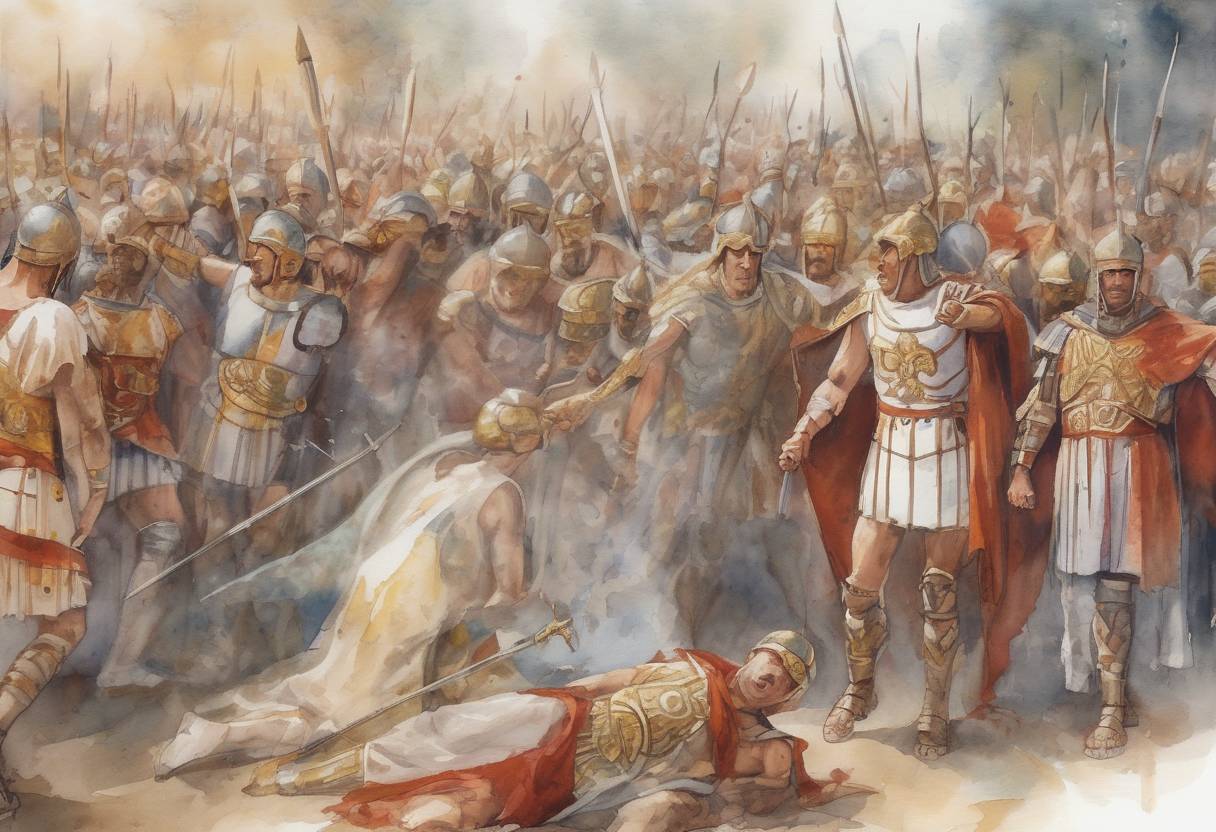
On November 17, 375, Emperor Valentinian I, a significant figure in the late Roman Empire, died of a stroke at Brigetio, located in modern-day Szőny, Hungary. His death occurred during a critical moment while he was engaged in negotiations with the Quadi, a Germanic tribe.
Valentinian I, born in 321, rose to prominence through the military ranks, eventually becoming emperor in 364. His reign was marked by efforts to stabilize and defend the Western Roman Empire against various external threats, including Germanic tribes and internal usurpers. Valentinian was known for his military prowess and administrative reforms, which aimed to strengthen the empire’s defenses and improve governance.
In the years leading up to 375, tensions between the Roman Empire and the Quadi had escalated. The Quadi, along with other Germanic tribes, were increasingly pressing against the Roman frontiers. Valentinian’s military campaigns were focused on securing the empire’s borders and maintaining peace through both force and diplomacy.
In 375, Valentinian embarked on a campaign to address the unrest caused by the Quadi. During negotiations at Brigetio, an incident occurred that reportedly enraged the emperor. Accounts suggest that the Quadi’s perceived insolence or a breach of protocol during the talks triggered Valentinian’s fatal stroke.
Valentinian’s sudden death left the Western Roman Empire in a precarious position. His sons, Gratian and Valentinian II, were left to inherit the throne. Gratian, who was already co-emperor, assumed greater responsibility, while Valentinian II, still a child, was elevated to the position of co-emperor under the guardianship of his mother, Justina.
The power vacuum and the subsequent division of authority contributed to political instability within the empire. The challenges of defending the empire’s borders persisted, and the internal struggles for power among Roman elites continued to weaken the empire’s cohesion.
Valentinian I’s reign is often noted for its military focus and attempts at administrative reform. His death marked a turning point in the late Roman Empire, as it struggled to maintain its territorial integrity and political stability in the face of increasing external pressures and internal divisions. The events surrounding his death underscore the complexities of Roman-Germanic relations during this period and the challenges faced by Roman emperors in managing both diplomacy and military affairs.
Valentinian’s legacy is a testament to the difficulties of ruling an empire under constant threat, and his efforts to fortify the empire’s defenses had lasting impacts on the Roman military structure.
Source: en.wikipedia.org