Establishment of the March of Dimes
1938 · Washington D.C., United States
The March of Dimes was established by President Franklin D. Roosevelt as the National Foundation for Infantile Paralysis, aimed at combating polio.
June 10, 1935
Alcoholics Anonymous was founded in Akron, Ohio, by Bill Wilson and Dr. Bob Smith.
Akron, United States | Alcoholics Anonymous
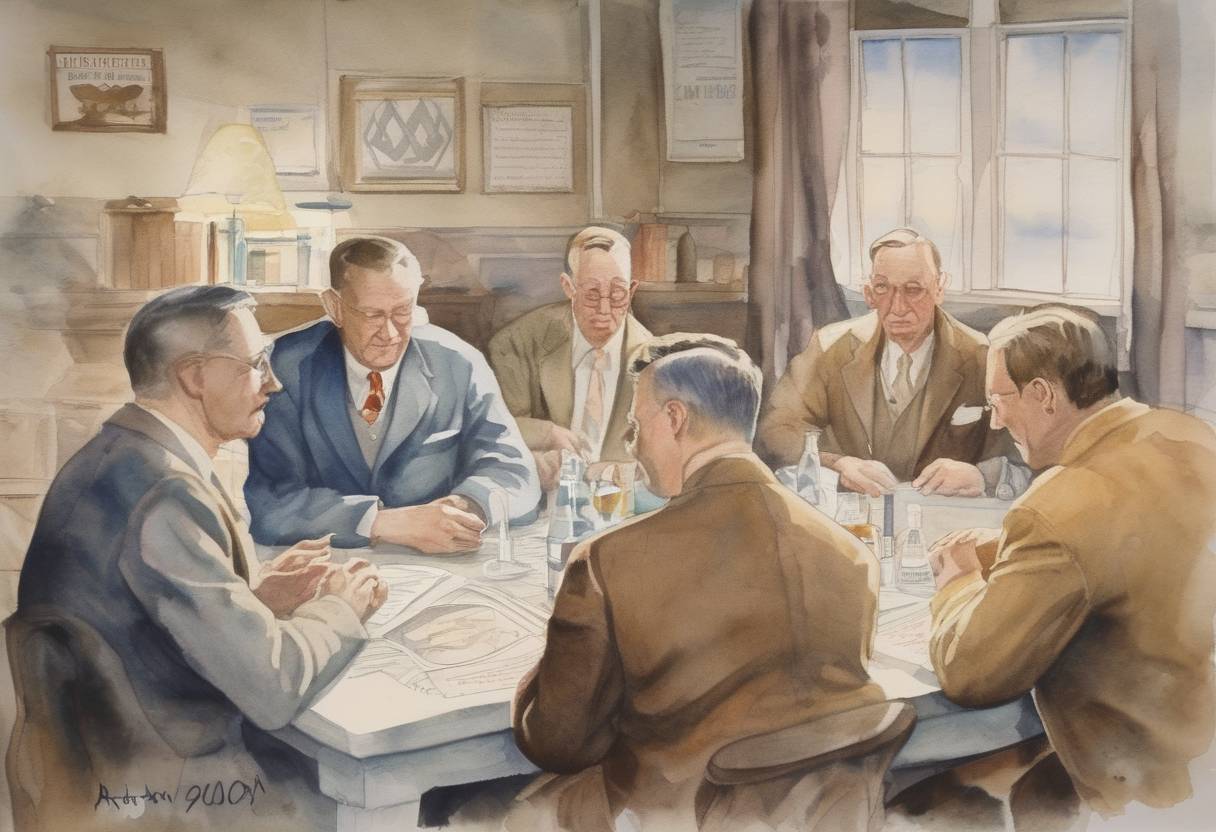
On June 10, 1935, Alcoholics Anonymous (AA) was founded in Akron, Ohio, marking a pivotal moment in the history of addiction recovery. This organization was established by Bill Wilson, a New York stockbroker, and Dr. Robert Smith, a surgeon from Akron, who were both struggling with alcoholism. Their collaboration laid the groundwork for what would become a global fellowship dedicated to helping individuals achieve sobriety.
Bill Wilson: Known as “Bill W.,” Wilson had experienced repeated failures in maintaining sobriety despite various attempts. His turning point came in December 1934, when he underwent a spiritual experience during a hospital stay, which he credited with helping him stay sober. He realized the importance of sharing his experiences with others facing similar struggles.
Dr. Bob Smith: Known as “Dr. Bob,” Smith had battled alcoholism for years, affecting his medical practice and personal life. He met Wilson in May 1935, through a mutual acquaintance, Henrietta Seiberling, who believed that Wilson’s experience could help Smith.
First Meeting: The first meeting between Wilson and Smith took place on May 12, 1935. During this meeting, Wilson shared his own story of recovery, emphasizing the importance of one alcoholic helping another. This conversation marked the beginning of their partnership.
June 10, 1935: This date is considered the founding of Alcoholics Anonymous because it marks the day Dr. Bob had his last drink, achieving sobriety with Wilson’s support. This event symbolized the effectiveness of their mutual aid approach.
The Twelve Steps: Over time, Wilson and Smith developed the Twelve Steps, a set of guiding principles for recovery. These steps emphasize personal accountability, spiritual growth, and mutual support.
The Big Book: In 1939, Wilson authored “Alcoholics Anonymous,” commonly referred to as “The Big Book.” This publication outlined the Twelve Steps and shared personal stories of recovery, serving as a foundational text for the organization.
Global Impact: From its humble beginnings in Akron, AA has grown into a worldwide fellowship with millions of members. Its model has inspired numerous other support groups addressing various addictions and compulsive behaviors.
Cultural Influence: AA has significantly influenced the perception and treatment of alcoholism, promoting the idea that it is a disease requiring ongoing support and community.
Legacy: The founding of AA marked a shift towards peer-led recovery, emphasizing the power of shared experiences and mutual aid in overcoming addiction.
The establishment of Alcoholics Anonymous on June 10, 1935, represents a landmark in the history of addiction recovery, offering hope and support to countless individuals worldwide.
Source: en.wikipedia.org