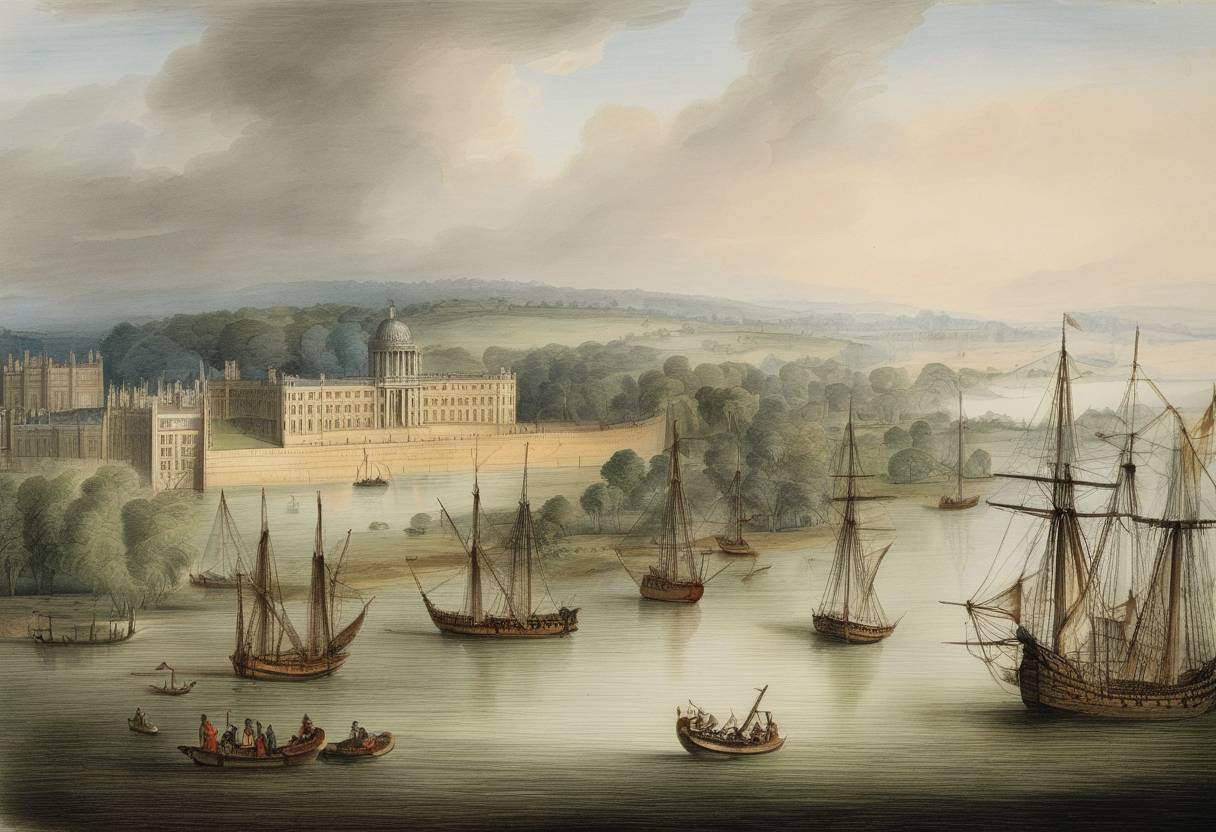
James Oglethorpe Granted Royal Charter for Georgia
On June 9, 1732, a significant event took place in the history of colonial America: James Oglethorpe was granted a royal charter by King George II to establish the colony of Georgia. This charter marked the beginning of the last of the original Thirteen Colonies and was founded for several notable reasons, including as a haven for debtors and as a buffer state.
Background
In the early 18th century, Britain was interested in expanding its colonial holdings in North America. The area that would become Georgia was strategically important, situated between the English colony of South Carolina and Spanish Florida. The British crown was motivated to create a buffer zone to protect South Carolina from Spanish incursions and to promote economic growth in the region.
James Oglethorpe, a British general and Member of Parliament, was deeply concerned about the plight of Britain’s poor, particularly those imprisoned for debt. He envisioned the new colony as an opportunity to provide a fresh start for these individuals, advocating for the settlement of worthy but impoverished Britons on the new land.
The Royal Charter
The charter granted on June 9, 1732, established the colony of Georgia, named in honor of King George II. It provided for the creation of a trustee-governed settlement, with Oglethorpe as one of the key trustees. The charter outlined:
- Territorial Limits: The colony was bounded by the Savannah River to the north and the Altamaha River to the south, with the Atlantic Ocean as its eastern boundary.
- Governance: It uniquely vested power in a board of trustees rather than direct royal governance. This board had control over all legislative and executive functions, with an initial prohibition against slavery to promote work among settlers.
- Objectives: The colony was intended as a place resettled by British citizens, particularly those imprisoned for debt, and as a bulwark against Spanish expansion from Florida.
Historical Significance
The colony of Georgia would play a crucial role in the colonial era and beyond. Oglethorpe’s vision of a debtor-friendly colony largely influenced its early laws and governance, although the prohibition against slavery was lifted by 1751 due to economic pressures and settlers’ demands.
As a military frontier, Georgia served its intended defensive role during conflicts such as the War of Jenkins’ Ear between Britain and Spain. Over time, the colony developed economically, ultimately becoming one of the Southern states’ leading agricultural producers.
Aftermath
The founding of Georgia completed the chain of British colonies along the North American eastern seaboard. Over the subsequent decades, Georgia would evolve, contributing to the economic and political development of what would become the United States. Its charter and foundation are significant exemplars of the interplay between humanitarian efforts and strategic military planning in colonial America.