The Laying of the United States Capitol Cornerstone
1793 · Washington, D.C., United States
The cornerstone of the United States Capitol is laid by George Washington.
March 11, 1789
Benjamin Banneker and Pierre Charles L'Enfant begin to lay out plans for Washington D.C.
Washington D.C., United States | United States Government
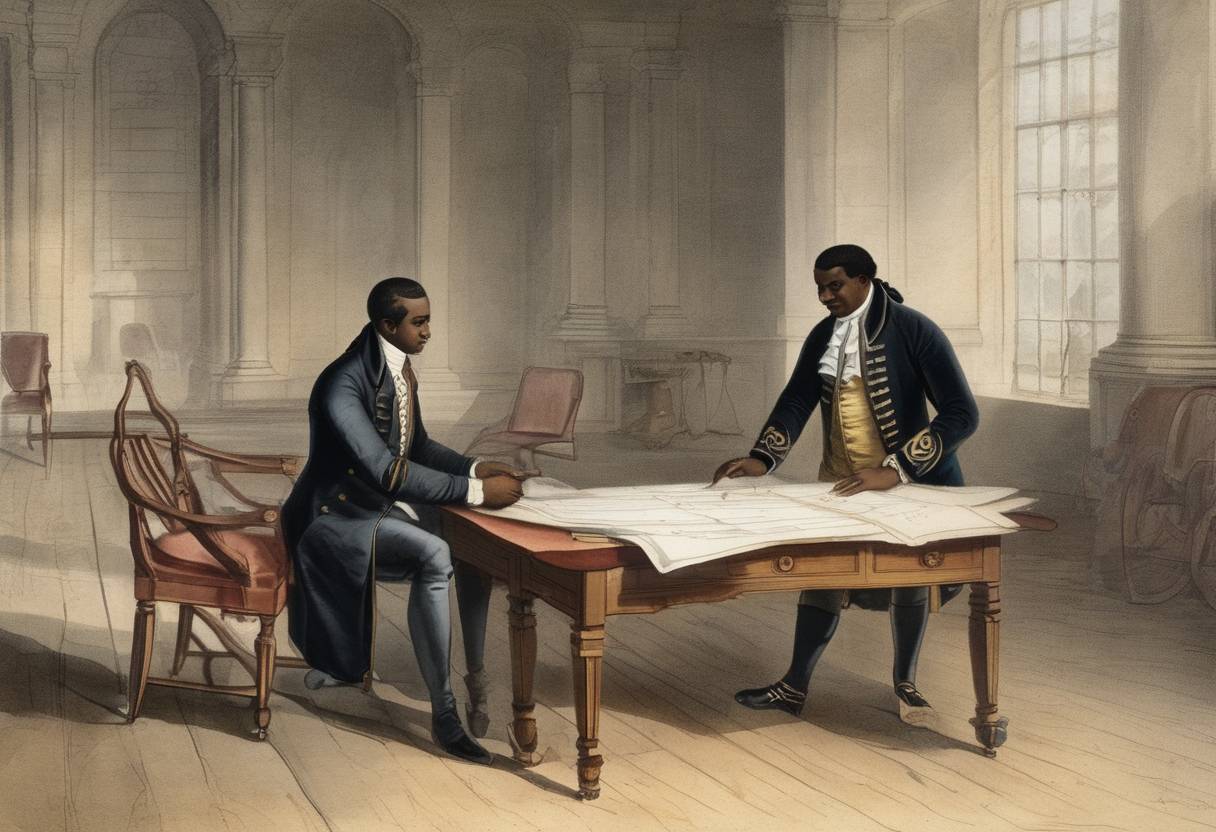
On March 11, 1789, a significant event in the development of the United States’ capital took place as surveyors began their work on the plans for Washington D.C. While the involvement of notable figures like Benjamin Banneker and Pierre Charles L’Enfant often anchors this narrative, it is essential to note that the actual beginning of their involvement in the layout of Washington D.C. took place later in the year. However, March 1789 signifies the preliminaries leading to the establishment of the capital city.
In 1789, the United States was under the leadership of its first President, George Washington, and the need for a permanent capital became increasingly pressing. The Residence Act of 1790 later authorized the establishment of a capital along the Potomac River. This location was chosen as a political compromise, balancing the interests of both northern and southern states.
Pierre Charles L’Enfant was a French-born architect and civil engineer who was commissioned by President George Washington to design the layout of the new federal city. L’Enfant was renowned for his vision to create a grand design that would reflect the ideals and future aspirations of the United States.
Benjamin Banneker, an African American self-taught astronomer, mathematician, and surveyor, played a crucial role in the surveying team. Appointed as an assistant to Major Andrew Ellicott, Banneker’s work ensured the meticulous establishment of the boundaries for the federal district.
Though the formal task of planning Washington D.C. did not begin on March 11, 1789, the groundwork for establishing a new national capital was being deliberated. The decisions and discussions during this period laid the foundation for the later detailed planning which unfolded in the following years.
L’Enfant’s bold and ambitious design would eventually be adopted, characterized by broad avenues, ceremonial spaces, and grand estates designed to symbolize democracy and freedom. Banneker’s contributions included extensive calculations and observations that were essential in determining the layout’s geographical orientation.
The planning and execution of the design for Washington D.C. stand as a testament to early American ingenuity and vision. L’Enfant’s design set the stage for the city’s growth, influencing its development as both the political heart of the nation and a symbol of democratic governance. Banneker’s participation highlights the crucial contributions of African Americans to early American science and architecture, challenging the racial norms of the era.
Though March 1789 marks only the beginning of a decisive period in capital planning, the eventual collaboration between L’Enfant, Banneker, and other key figures led to the creation of a city that remains vital to the functioning of the United States.
Source: www.whitehousehistory.org