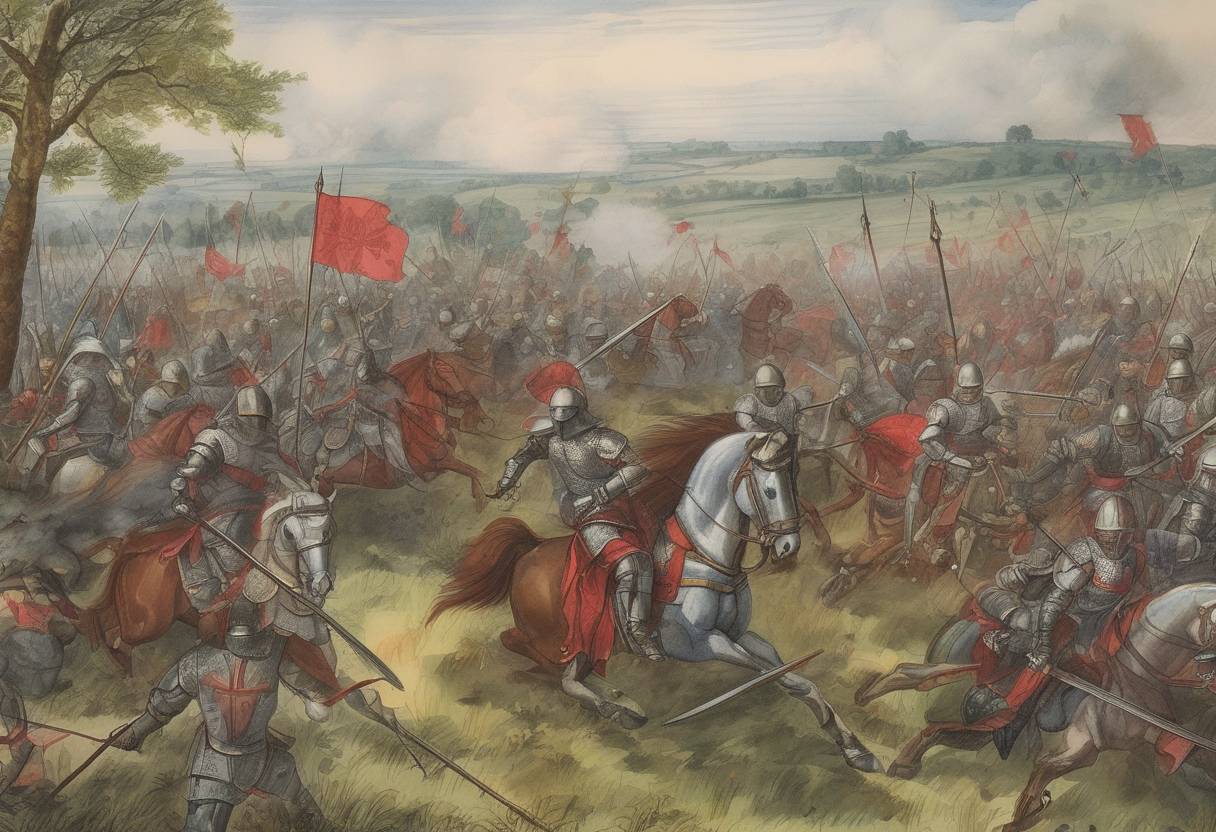
The Battle of Edgecote Moor: July 26, 1469
The Battle of Edgecote Moor, fought on July 26, 1469, was a significant engagement during the Wars of the Roses, a series of dynastic conflicts that plagued England in the 15th century. This battle marked a victory for the forces led by Richard Neville, the Earl of Warwick, a key figure in the conflict.
Context and Background
Wars of the Roses: The Wars of the Roses were fought between the rival houses of Lancaster and York, both of which laid claim to the English throne. The conflict was named after the symbols of the two houses: the red rose of Lancaster and the white rose of York.
Richard Neville, Earl of Warwick: Known as the “Kingmaker,” Warwick was initially a supporter of the Yorkist cause and played a crucial role in the ascension of Edward IV to the throne. However, by 1469, Warwick had grown disillusioned with Edward IV due to political disagreements and the king’s marriage to Elizabeth Woodville, which Warwick opposed.
Rebellion Against Edward IV: Warwick’s dissatisfaction led him to support a rebellion against Edward IV. He allied with Edward’s brother, George, Duke of Clarence, and orchestrated uprisings in the north of England.
The Battle
Location: The battle took place near Edgecote Moor, close to Banbury in Oxfordshire.
Forces Involved: Warwick’s forces were led by Sir John Conyers, while the royal army was commanded by William Herbert, Earl of Pembroke, and Humphrey Stafford, Earl of Devon.
Course of the Battle: The battle began with skirmishes and escalated into a full-scale engagement. Warwick’s forces, bolstered by local support and the element of surprise, managed to overwhelm the royal army.
Outcome: The battle resulted in a decisive victory for Warwick’s forces. Both the Earl of Pembroke and the Earl of Devon were captured and executed shortly after the battle.
Aftermath and Significance
Capture of Edward IV: Following the victory at Edgecote Moor, Warwick captured King Edward IV, effectively placing him under house arrest. This demonstrated Warwick’s significant influence and power over the English throne.
Temporary Shift in Power: Although Warwick’s control over Edward IV was short-lived, the battle highlighted the instability of Edward’s reign and the ongoing factional struggles within the English nobility.
Continued Conflict: The victory at Edgecote Moor did not bring an end to the Wars of the Roses. Instead, it set the stage for further conflicts, as Edward IV eventually regained his freedom and power, leading to continued battles between the Yorkists and Lancastrians.
The Battle of Edgecote Moor was a pivotal moment in the Wars of the Roses, illustrating the volatile nature of English politics during this period and the significant role played by powerful nobles like Richard Neville, the Earl of Warwick.