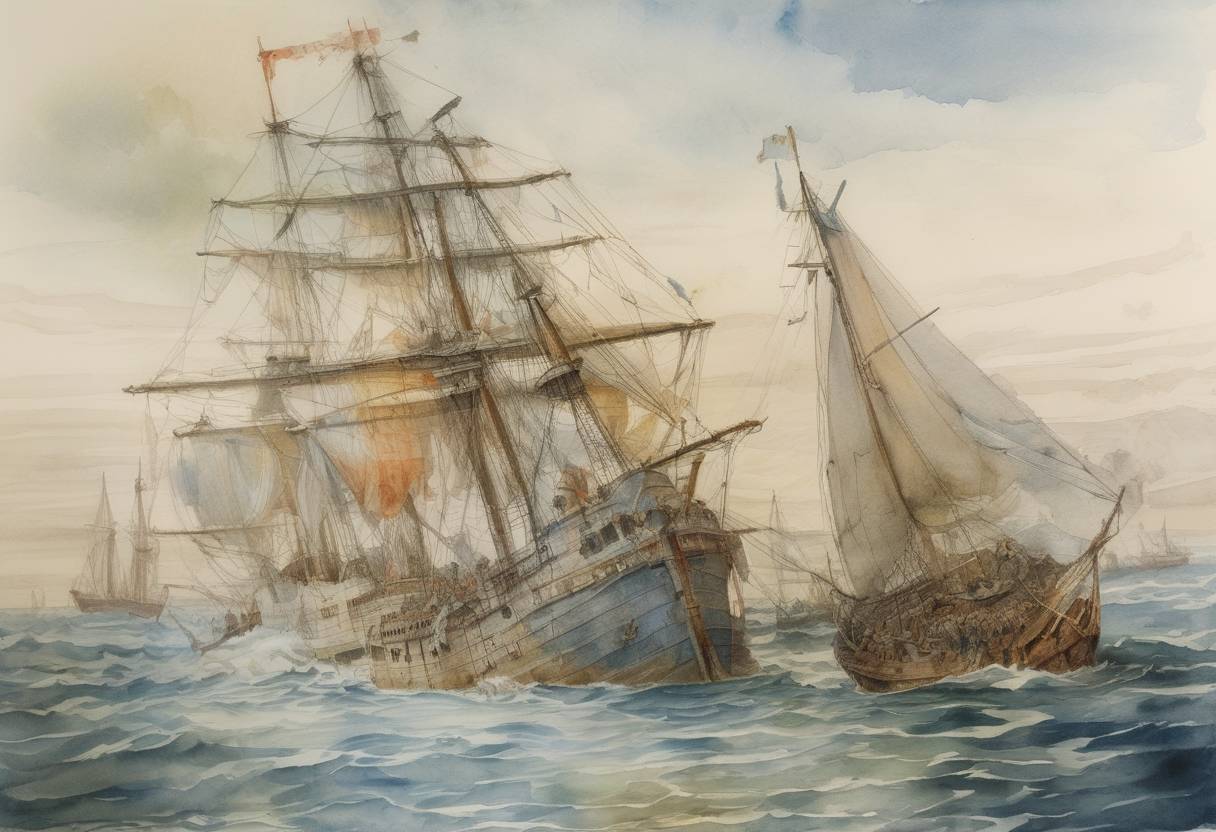
The Sinking of the White Ship: November 25, 1120
On November 25, 1120, a maritime disaster occurred that had profound implications for the English monarchy. The White Ship, a vessel carrying many members of the Anglo-Norman nobility, sank in the English Channel near Barfleur, Normandy. Among the passengers was William Adelin, the only legitimate son and heir of King Henry I of England.
Background
- King Henry I: The youngest son of William the Conqueror, Henry I became King of England in 1100. His reign was marked by efforts to consolidate power and secure the succession of his dynasty.
- William Adelin: Born in 1103, William was Henry’s only legitimate son with his wife, Matilda of Scotland. As the heir apparent, William was central to Henry’s plans for a stable succession.
- The White Ship: A new and fast vessel, the White Ship was chosen to carry William and many young nobles back to England after a visit to Normandy.
The Disaster
- The Voyage: On the night of November 25, 1120, the White Ship set sail from Barfleur. The ship was reportedly overcrowded, and the passengers, including the crew, were said to have been drinking heavily.
- The Sinking: Shortly after departing, the ship struck a submerged rock and quickly capsized. The cold waters of the Channel claimed nearly all aboard. Accounts suggest that the crew’s inebriation and the ship’s overloading contributed to the disaster.
- Casualties: Of the estimated 300 people on board, only one, a butcher from Rouen named Berold, survived. William Adelin perished, along with many other nobles.
Aftermath and Historical Significance
- Succession Crisis: The death of William Adelin left King Henry I without a male heir, leading to a succession crisis upon his death in 1135. This crisis eventually resulted in a period of civil war known as “The Anarchy” (1135-1153), as rival factions vied for the throne.
- The Anarchy: The struggle for succession primarily involved Henry’s daughter, Empress Matilda, and her cousin Stephen of Blois. The conflict destabilized England and had lasting impacts on the monarchy and governance.
- Legacy: The sinking of the White Ship is often cited as a pivotal moment in English history, underscoring the fragility of medieval succession and the potential for dynastic disputes to lead to prolonged conflict.
The tragedy of the White Ship remains a poignant reminder of how a single event can alter the course of history, shaping the political landscape of a nation for generations.