Indira Gandhi Elected as Prime Minister of India
1966 · New Delhi, India
Indira Gandhi was elected as the first female Prime Minister of India.
March 6, 1967
Joseph Stalin's daughter, Svetlana Alliluyeva, defects to the United States via the U.S. Embassy in New Delhi, India.
New Delhi, India | U.S. Embassy
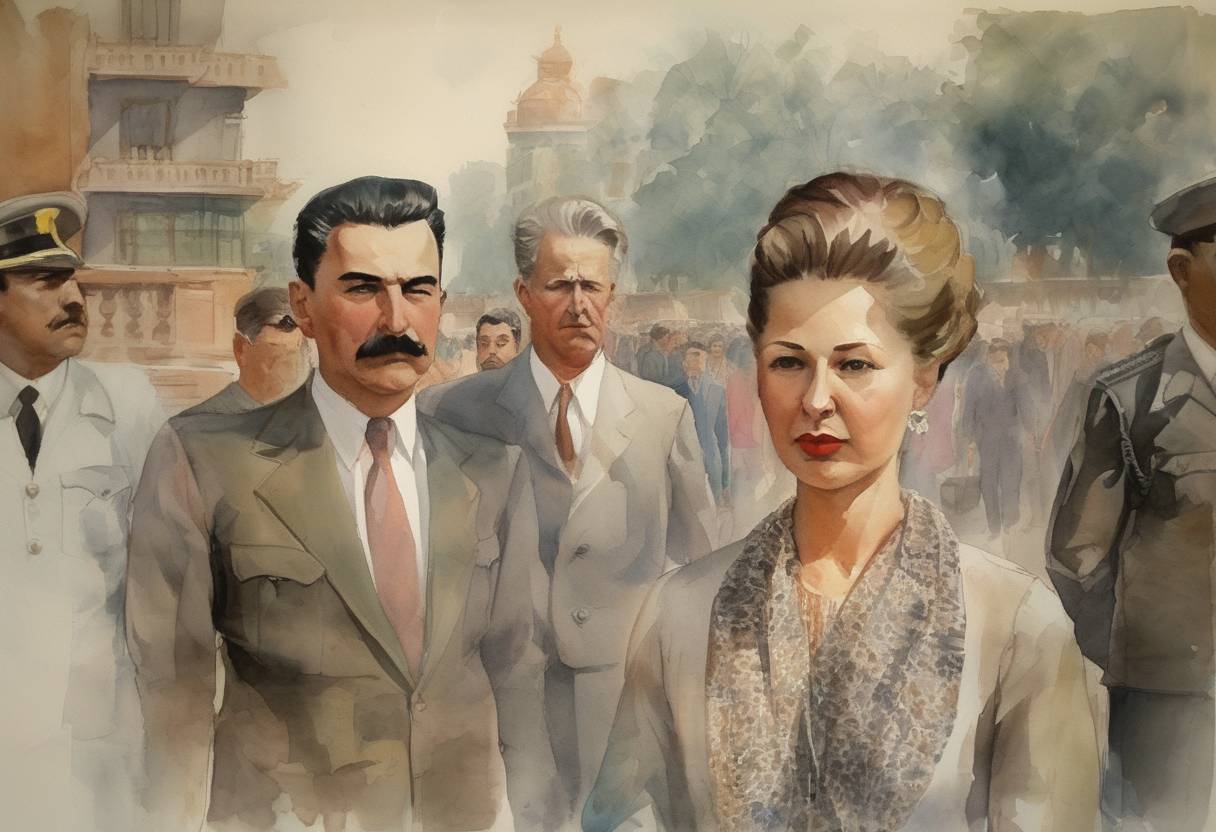
On March 6, 1967, Svetlana Alliluyeva, the daughter of Soviet leader Joseph Stalin, made a dramatic defection to the United States. This event unfolded at the U.S. Embassy in New Delhi, India, marking a significant moment in Cold War history.
Svetlana Alliluyeva was born on February 28, 1926, into the heart of Soviet power. As the only daughter of Joseph Stalin, she lived a life of privilege but also one overshadowed by her father’s notorious regime. Her early life was marked by personal tragedies, including the death of her mother, Nadezhda Alliluyeva, under mysterious circumstances in 1932, and the purges that claimed many of her relatives.
By the 1960s, Svetlana had become increasingly disillusioned with the Soviet system. Her disenchantment was fueled by personal and ideological conflicts, including the oppressive nature of the regime and her own restricted freedom. In 1966, she traveled to India to scatter the ashes of her late husband, Brajesh Singh, an Indian communist whom she had met in Moscow.
While in India, Svetlana seized the opportunity to escape the Soviet Union. On March 6, 1967, she approached the U.S. Embassy in New Delhi, seeking political asylum. Her request was granted, and she was swiftly flown to Rome before making her way to the United States.
Svetlana’s defection was a propaganda coup for the United States during the Cold War. It highlighted the internal dissatisfaction within the Soviet elite and provided a symbolic victory for the West. Upon her arrival in the U.S., she was granted citizenship and published her memoir, “Twenty Letters to a Friend,” which offered insights into her life and the inner workings of the Soviet regime.
Svetlana lived a complex life in the West, marked by multiple marriages and relocations. She eventually returned to the Soviet Union briefly in the 1980s but spent her final years in the United States, passing away in 2011.
Her defection remains a poignant example of the personal and political struggles faced by individuals within totalitarian regimes and underscores the broader ideological battles of the Cold War era.
Source: en.wikipedia.org