The Passage of the Thirteenth Amendment
1865 · Washington D.C., United States
The United States Congress passes the Thirteenth Amendment to the Constitution, abolishing slavery in the United States.
June 19, 1862
The U.S. Congress prohibits slavery in United States territories, nullifying the Dred Scott decision.
Washington D.C., United States | United States Congress
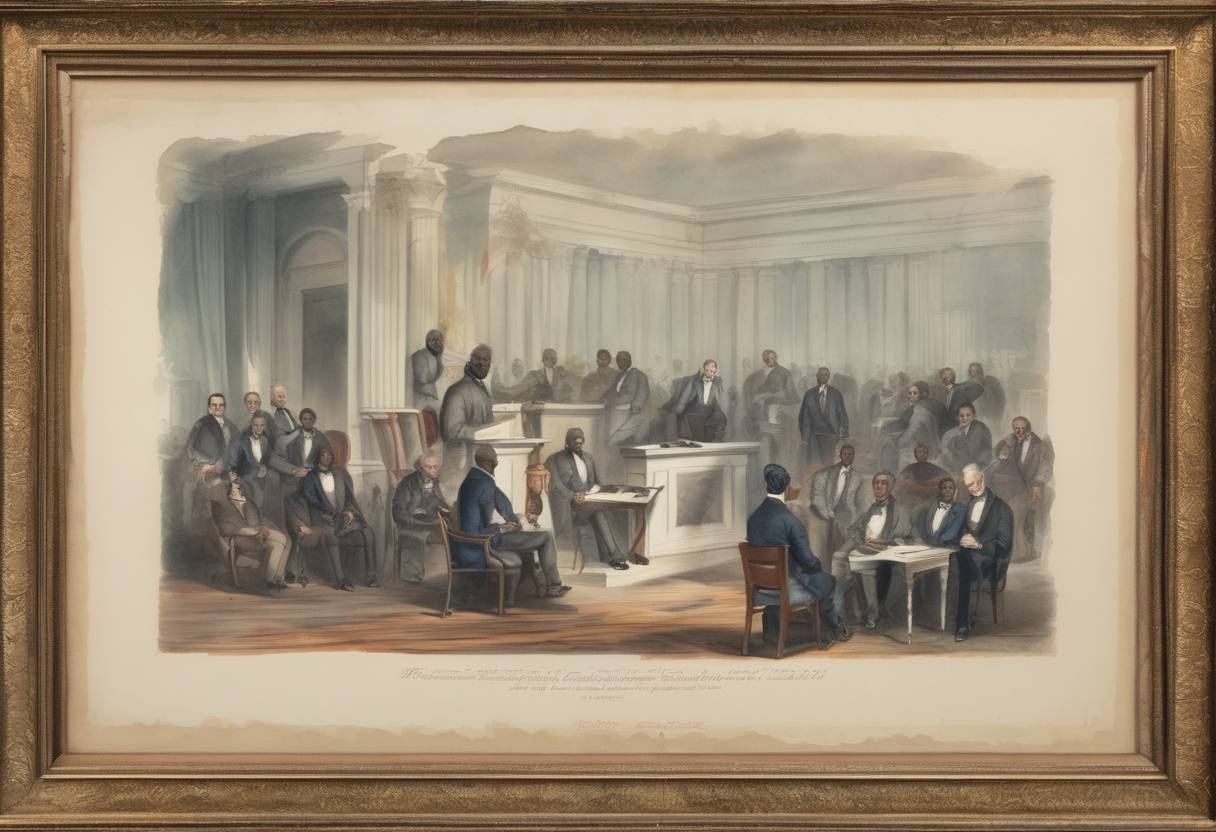
On June 19, 1862, a significant legislative action took place when the United States Congress passed a law prohibiting slavery in all U.S. territories. This decision effectively nullified the implications of the infamous Dred Scott v. Sandford decision of 1857, marking a pivotal moment in the nation’s journey toward the abolition of slavery.
Dred Scott Decision (1857): The Dred Scott case was a landmark Supreme Court decision in which the Court ruled that African Americans, whether enslaved or free, could not be American citizens and therefore had no standing to sue in federal court. Furthermore, the Court declared that the federal government had no power to regulate slavery in the territories acquired after the creation of the United States. This decision exacerbated sectional tensions and was a significant factor leading up to the Civil War.
Civil War (1861-1865): By 1862, the United States was embroiled in the Civil War, a conflict primarily over the issues of slavery and states’ rights. The Union, led by President Abraham Lincoln, was seeking ways to weaken the Confederacy and address the moral and political issues surrounding slavery.
Congressional Action: On June 19, 1862, Congress passed a law that prohibited slavery in all current and future U.S. territories. This was a direct challenge to the Dred Scott decision and a clear statement of the federal government’s stance against the expansion of slavery.
Significance: This legislation was a crucial step in the broader abolitionist movement. It demonstrated the federal government’s commitment to curtailing the spread of slavery and set the stage for further actions, including the Emancipation Proclamation and the eventual passage of the 13th Amendment, which abolished slavery entirely.
Impact on the Civil War: The prohibition of slavery in the territories was part of a series of measures that aimed to weaken the Confederate states, which were heavily reliant on slave labor. It also helped to galvanize support for the Union cause among abolitionists and those opposed to the expansion of slavery.
Path to Emancipation: This legislative action was a precursor to President Lincoln’s Emancipation Proclamation, issued on January 1, 1863, which declared the freedom of all enslaved people in Confederate-held territory. It also laid the groundwork for the eventual ratification of the 13th Amendment in 1865.
Legacy: The nullification of the Dred Scott decision through this law was a significant step toward the recognition of African Americans’ rights and the eventual dismantling of institutionalized slavery in the United States.
In summary, the prohibition of slavery in U.S. territories on June 19, 1862, was a landmark decision that not only countered the Dred Scott ruling but also played a crucial role in the broader efforts to end slavery in America. This legislative act was a testament to the changing attitudes toward slavery and the federal government’s increasing involvement in its abolition.
Source: www.loc.gov