Ivan IV Crowned as the First Tsar of Russia
1547 · Moscow, Russia
Ivan IV, known as Ivan the Terrible, was crowned as the first Tsar of Russia, marking the beginning of the Tsardom of Russia.
January 29, 1676
Feodor III became Tsar of Russia after the death of his father, Tsar Alexis.
Moscow, Russia | Russian Tsardom
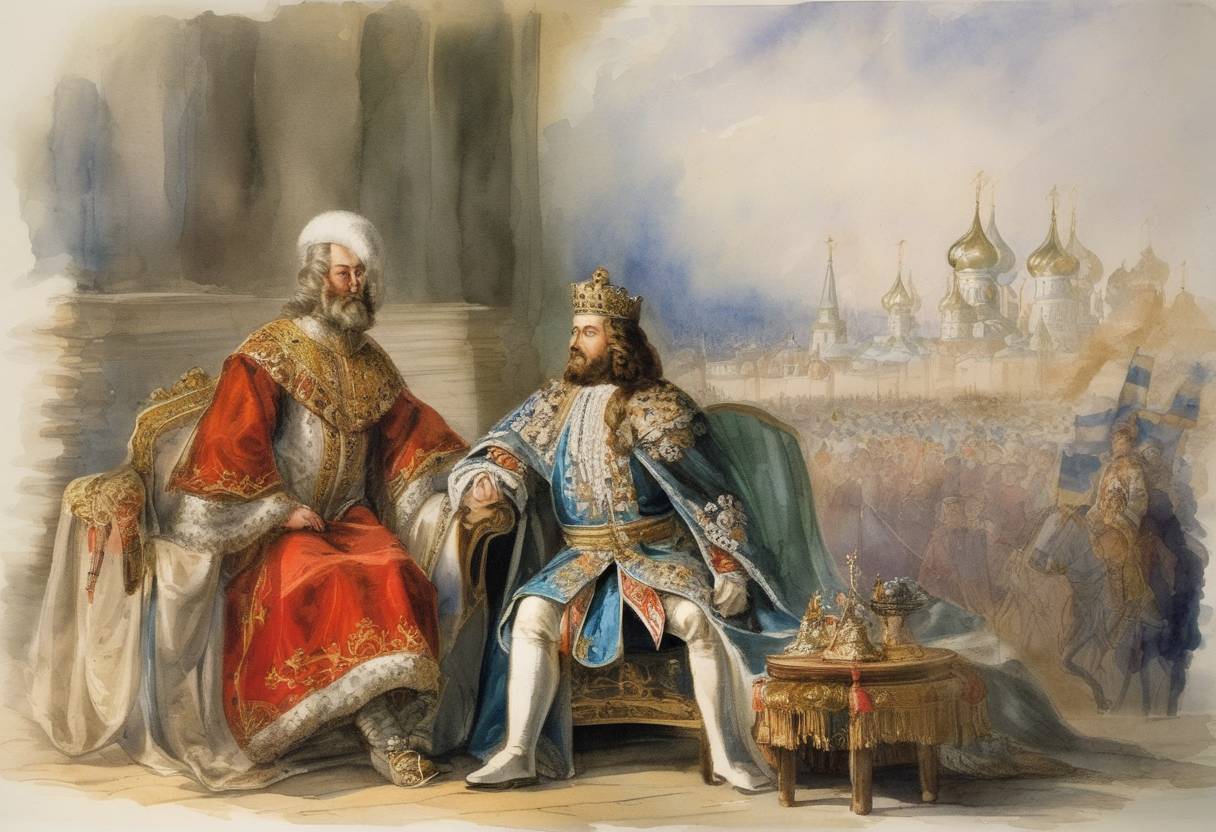
On January 29, 1676, Feodor III ascended to the Russian throne following the death of his father, Tsar Alexis I. This marked a significant transition in the Romanov dynasty, as Feodor III’s reign would introduce a period of reform and modernization in Russian governance and culture, despite his relatively short time in power.
Tsar Alexis I, Feodor’s father, had reigned since 1645 and was known for strengthening the autocratic governance of Russia and dealing with numerous revolts and wars. Alexis I’s policies laid the groundwork for future modernization efforts, which were partially realized during Feodor III’s rule.
Feodor III was the son of Tsar Alexis and Maria Miloslavskaya. Born in 1661, he was the eldest son following the end of the false Tsardom adventure led by False Dmitris and the Times of Trouble. His succession was relatively unchallenged due to his legitimate claim and the support of influential boyars.
Feodor III’s reign, which lasted from 1676 until his death in 1682, was characterized by several important reforms, despite his physical infirmities due to ill health. His tenure is noted for:
Administrative Reforms: Feodor began modernizing the Russian state by reforming the Muscovite service class system. He worked to reduce the power of the boyars, and this included revoking hereditary privileges that allowed them undue power over the serfs and land.
Judicial Reforms: Implemented in 1679 and 1680, these reforms were aimed at modernizing the legal code and reducing corruption. This included the abolition of the outdated mestnichestvo system, which organized state appointments hierarchically based on lineage rather than merit or capability.
Cultural Influence: Feodor patronized the arts and education, fostering a cultural atmosphere that moved Russia closer to the Western European Renaissance model. His court saw a rise in the presence of actors, musicians, and intellectuals from Western Europe, bringing new ideas and customs.
Foreign Affairs: Under his reign, Russia engaged diplomatically with neighboring powers, although his fragile health limited extensive foreign campaigns. However, Russia did manage to restrain Polish influence in Ukraine.
Feodor III’s efforts set crucial precedents for future reforms, particularly those enacted by his successors, such as Peter the Great. Although Feodor did not live to see long-term changes, his reign bridged the gap between the archaic structures of old Russian Tsardom and a pathway toward modernization. His focus on reducing the power of the nobility and his initiatives in cultural enlightenment echoed through subsequent Russian policies.
Upon his death in 1682, his half-brother Ivan V and younger half-brother Peter I (later known as Peter the Great) took the throne, with Peter I ultimately enacting many reforms envisioned during Feodor’s reign, thereby shaping the future of the Russian Empire. Feodor III’s short reign is often viewed as an essential precursor to the major transformations during Peter the Great’s rule.
Source: www.britannica.com