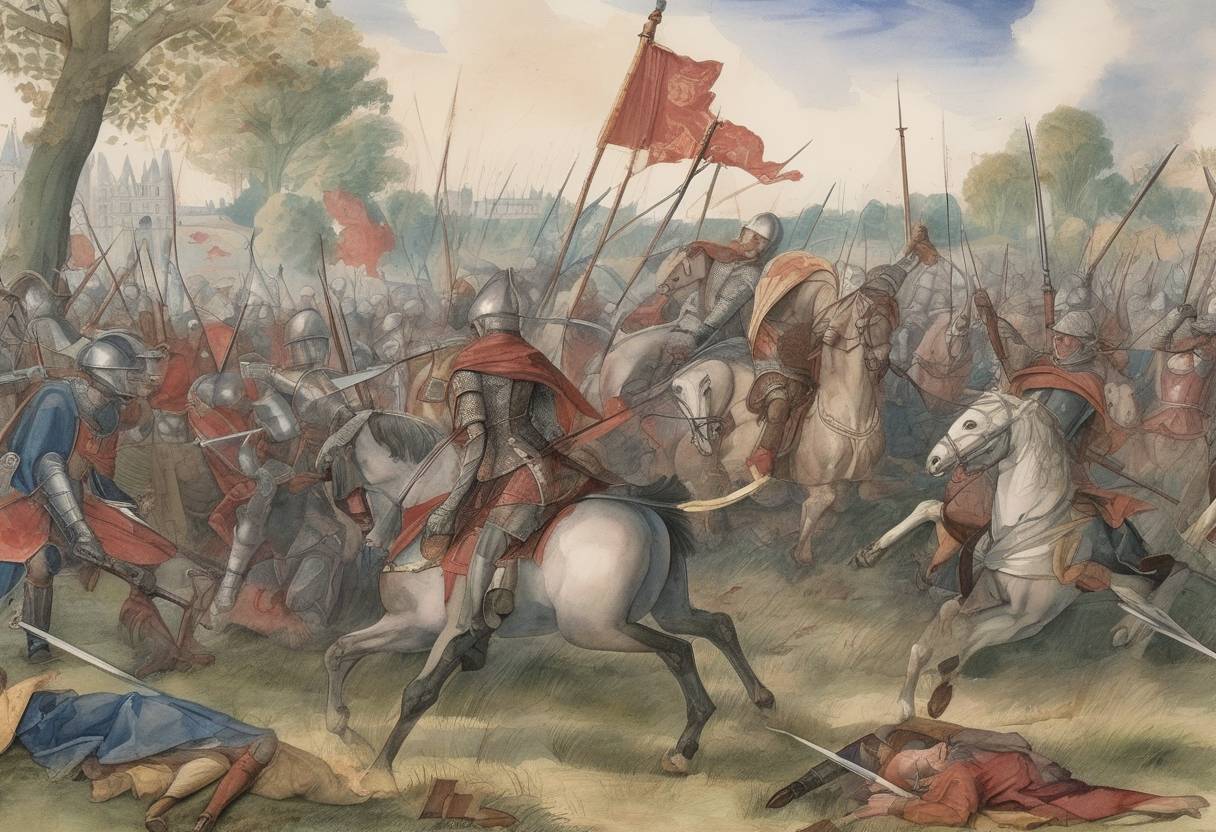
The First Battle of St Albans: May 22, 1455
The First Battle of St Albans, fought on May 22, 1455, is widely regarded as the opening conflict of the Wars of the Roses, a series of dynastic civil wars that plagued England during the 15th century. This battle marked the beginning of a protracted struggle for control of the English throne between the rival houses of Lancaster and York.
Background
The roots of the conflict lay in the complex political and social landscape of 15th-century England. The Lancastrian King Henry VI, whose reign was marked by mental instability and weak leadership, faced growing opposition from the powerful noble factions. The House of York, led by Richard, Duke of York, challenged the Lancastrian hold on the throne, citing Henry’s ineffectiveness and their own legitimate claim to the crown.
Tensions escalated as Richard, Duke of York, sought to assert his influence over the king and the government. The immediate catalyst for the battle was the exclusion of York and his supporters from the king’s council, which was dominated by Lancastrian loyalists, including Edmund Beaufort, Duke of Somerset.
The Battle
The confrontation took place in the town of St Albans, located about 22 miles north of London. Richard, Duke of York, along with his key allies, Richard Neville, Earl of Warwick, and Richard Neville, Earl of Salisbury, led a force of approximately 3,000 men against the Lancastrian army, which was slightly smaller in number.
The battle was relatively brief, lasting only a few hours. The Yorkist forces, employing a surprise attack strategy, managed to breach the town’s defenses and engage the Lancastrian troops in the narrow streets of St Albans. The Lancastrians, caught off guard, were unable to mount an effective defense.
Key figures such as the Duke of Somerset were killed in the fighting, and King Henry VI was captured by the Yorkists. The battle resulted in a decisive Yorkist victory, significantly altering the balance of power in England.
Aftermath and Significance
The First Battle of St Albans had profound implications for the future of England:
- Political Shift: The victory allowed Richard, Duke of York, to assume a dominant position in the English government, effectively controlling the king and the council.
- Escalation of Conflict: The battle set the stage for further hostilities between the Lancastrians and Yorkists, leading to a series of bloody conflicts over the next three decades.
- Symbolic Beginning: It marked the beginning of the Wars of the Roses, named for the emblems of the two rival houses: the red rose of Lancaster and the white rose of York.
The First Battle of St Albans was a pivotal moment in English history, initiating a period of instability and warfare that would eventually lead to the rise of the Tudor dynasty.