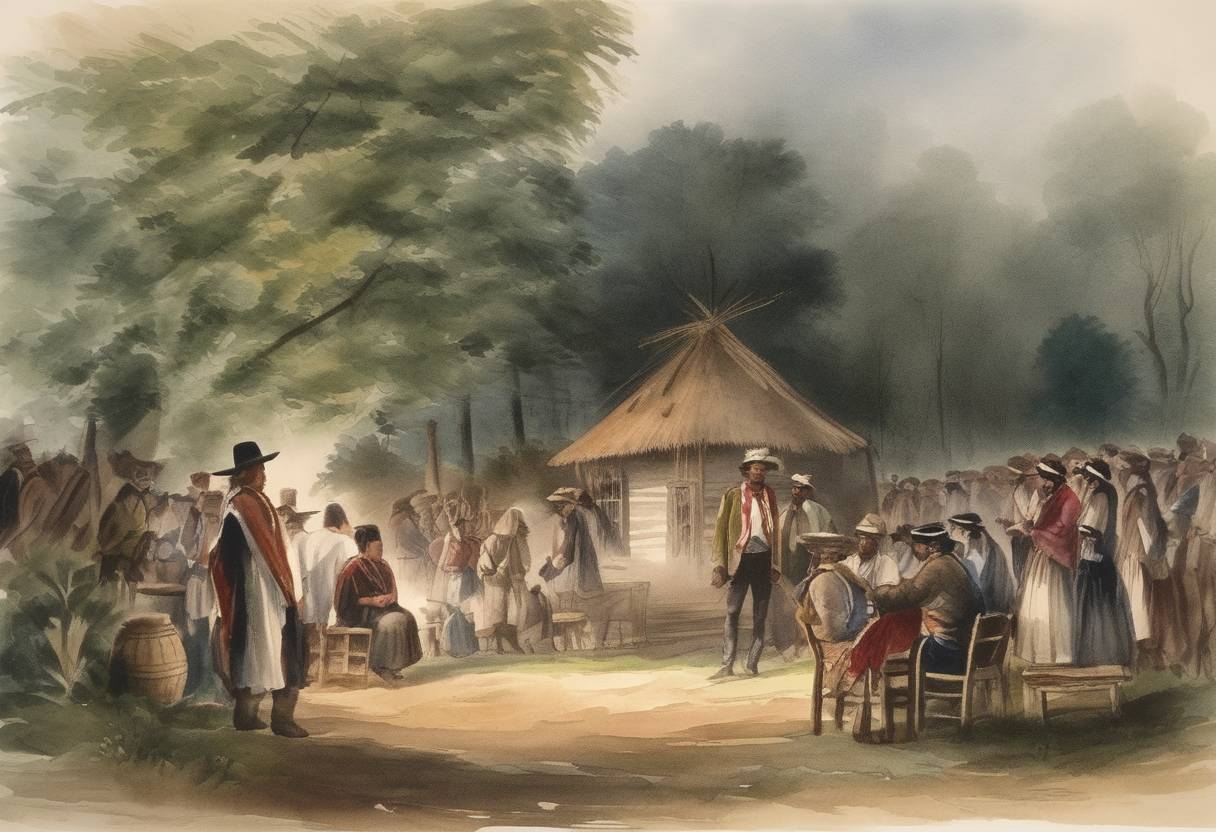
The Treaty of New Echota
On December 29, 1835, the Treaty of New Echota was signed, marking a pivotal moment in the history of the Cherokee Nation and the United States. This treaty, which was not authorized by the Cherokee National Council or Principal Chief John Ross, ceded Cherokee land in the southeastern United States to the U.S. government in exchange for compensation and land in Indian Territory (present-day Oklahoma).
Background
By the early 19th century, the expanding United States sought to acquire lands inhabited by Cherokee, Creek, Seminole, Chickasaw, and Choctaw peoples, collectively known as the “Five Civilized Tribes.” The discovery of gold on Cherokee land in Georgia exacerbated tensions and increased pressure on the Cherokee to relocate. Despite resistance and legal victories, such as the Supreme Court ruling in Worcester v. Georgia (1832) which recognized Cherokee sovereignty, the U.S. government pursued removal policies under the Indian Removal Act of 1830.
Key Provisions
Land Cession: The treaty stipulated the cession of approximately 7 million acres of Cherokee land east of the Mississippi River.
Compensation: In return, the treaty promised the Cherokee people $5 million, funds for transportation, and land in the Indian Territory.
Relocation Provisions: The treaty outlined terms for the relocation process, promising assistance and immediate aid for Cherokee people during their move to the designated territory.
Broad Impact
Despite its far-reaching consequences, the Treaty of New Echota was signed by a small faction of Cherokee people led by Major Ridge, John Ridge, and Elias Boudinot, without the endorsement of the Cherokee governing body. This led to significant internal division and controversy. The ratification of the treaty by the U.S. Senate in 1836 passed by a single vote, demonstrating its contentious nature.
Trail of Tears
The enforcement of the treaty led to the forceful removal of the Cherokee people from their ancestral lands in 1838-1839. This forced trek to the designated Indian Territory came to be known as the Trail of Tears due to the severe hardships endured and the estimated 4,000 Cherokee who perished from hunger, disease, and exposure along the way.
Historical Significance
The Treaty of New Echota and the resulting Trail of Tears highlight the profound and often devastating impacts of U.S. expansionist policies on Native American communities. It also underscores the complexity of internal Cherokee political dynamics and the struggles of indigenous sovereignty in the face of federal and state pressures. The history of the treaty and its aftermath remain central to conversations about justice and reconciliation with Native American peoples in the United States.