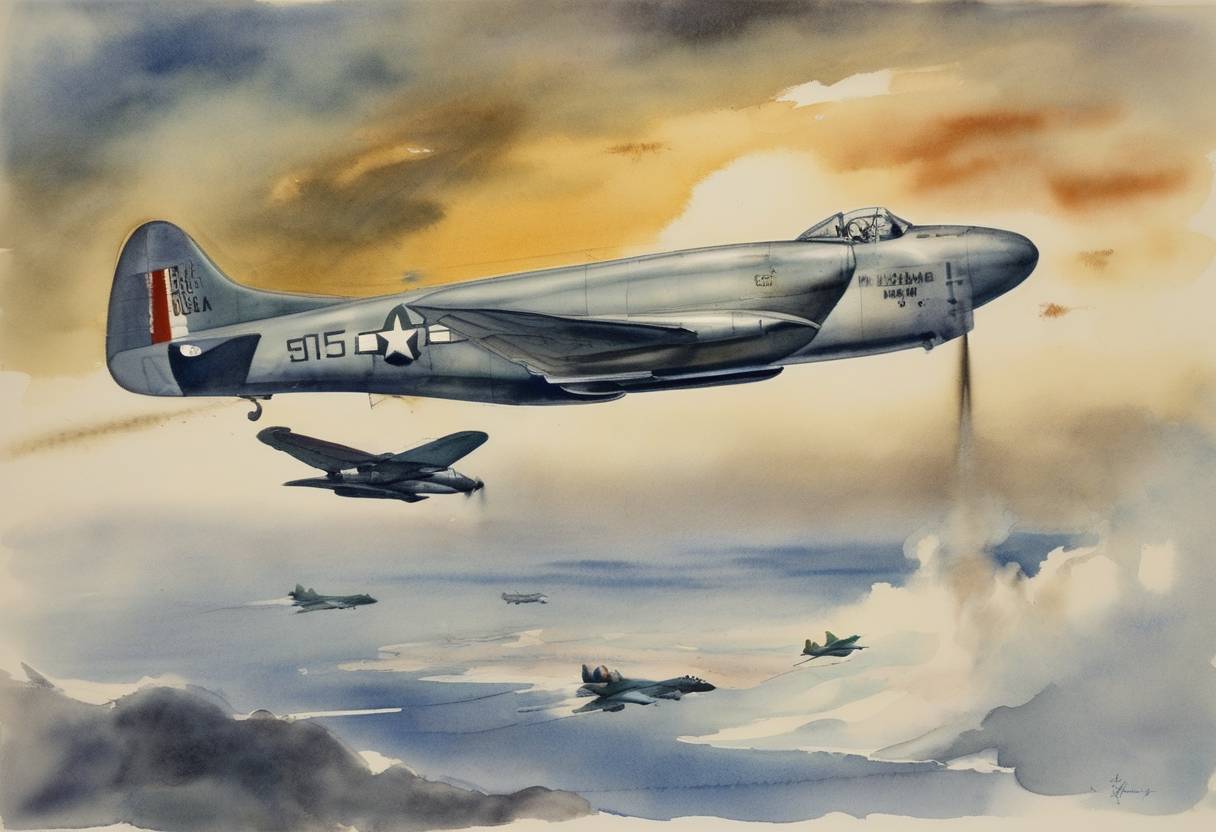
U.S. Military Intervention in the Korean War: June 27, 1950
On June 27, 1950, President Harry S. Truman made a decisive move by ordering the United States Air Force and Navy to participate in the Korean War. This directive was in response to the North Korean invasion of South Korea, which had begun just two days earlier on June 25, 1950. The North Korean People’s Army crossed the 38th parallel, the boundary established after World War II dividing the Korean Peninsula into the Soviet-backed Democratic People’s Republic of Korea (North Korea) and the American-supported Republic of Korea (South Korea).
Key Events Leading Up to the Intervention
Background Tensions: Post-World War II geopolitical tensions and the onset of the Cold War played a crucial role. Korea had been liberated from Japanese occupation and divided into two zones, with the U.S. occupying the south and the Soviet Union the north.
Invasion of South Korea: On the morning of June 25, 1950, North Korean forces launched a well-coordinated attack across the 38th parallel. The move rapidly overwhelmed South Korean forces and aimed at capturing Seoul, the South Korean capital.
United Nations Involvement: Following the invasion, the United Nations Security Council, with the Soviet Union absent from the proceedings, adopted Resolution 82, which condemned the North Korean aggression and called for an immediate cessation of hostilities.
Truman’s Decision to Intervene
In the face of North Korean advances and fearing the spread of communism in Asia—a concern encapsulated in the “Domino Theory”—President Truman decided to intervene. On June 27, 1950, he authorized U.S. naval and air support for South Korea. This decision was part of a broader strategy to contain communism worldwide and uphold the principles outlined by the UN Security Council.
Military Deployment: American air and naval forces were deployed to the Korean Peninsula, providing crucial support to South Korean and UN forces in the region.
Global Implications: Truman’s decision to engage in Korea marked a significant expansion of U.S. foreign policy objectives, setting a precedent for American involvement in conflicts aimed at halting the spread of communism in the Cold War context.
The U.S. intervention was a critical step in the multinational effort that turned what could have been a swift North Korean victory into a protracted and costly conflict, ultimately involving 21 countries under the United Nations Command. The Korean War would continue until July 27, 1953, when an armistice was signed, effectively ending hostilities but not formally concluding the war, as a peace treaty was never signed. This initial intervention laid the groundwork for America’s enduring military and political involvement in the Korean Peninsula, which persists in various forms presently.