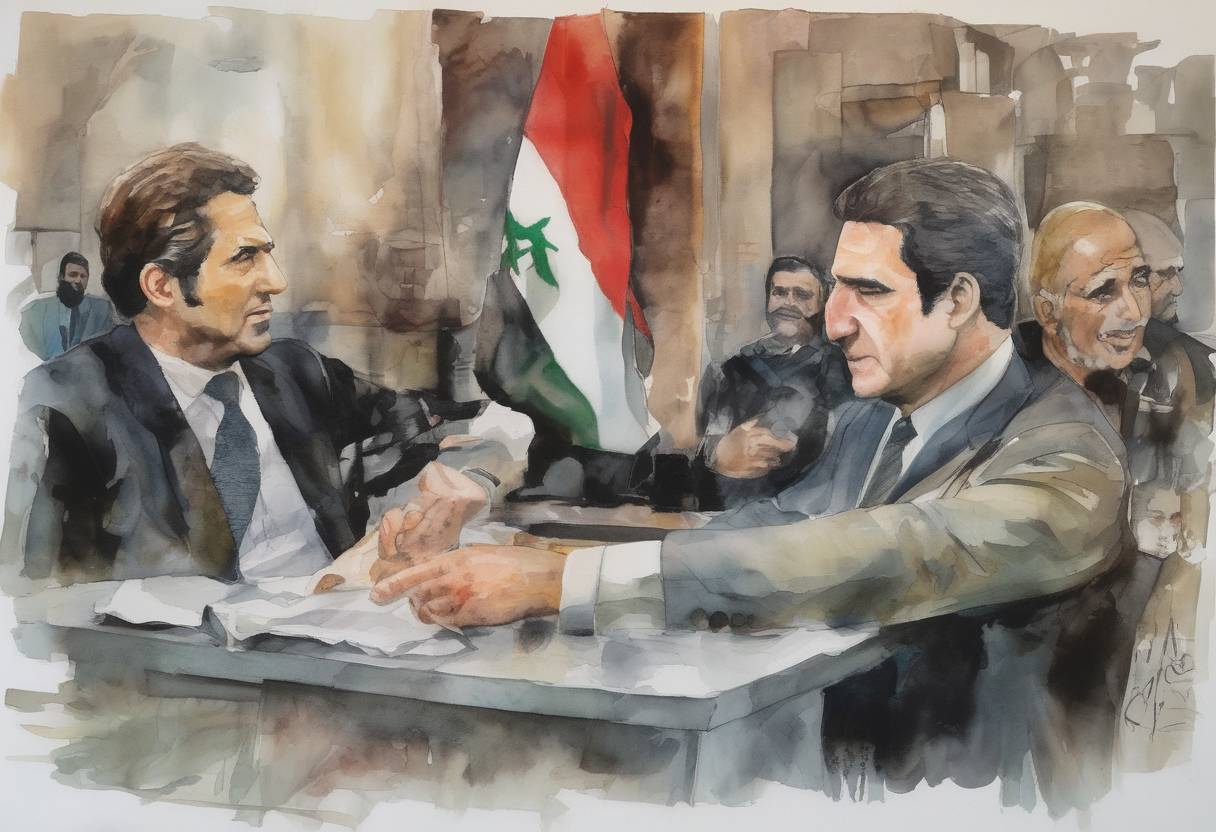
Assassination of Pierre Gemayel: November 21, 2006
On November 21, 2006, Pierre Gemayel, a prominent Lebanese politician and member of the Maronite Christian community, was assassinated in a suburb of Beirut, Lebanon. His death marked a significant moment of political turmoil in the country, exacerbating existing tensions and impacting Lebanon’s fragile political landscape.
Background
Pierre Gemayel was a member of the influential Gemayel family, which has played a significant role in Lebanese politics. He was the son of former President Amine Gemayel and the grandson of Pierre Gemayel, the founder of the Kataeb Party (also known as the Phalange Party). At the time of his assassination, Pierre Gemayel was serving as the Minister of Industry in the Lebanese government.
Lebanon’s political environment in 2006 was highly volatile, characterized by sectarian divisions and external influences. The country was still grappling with the aftermath of the 2005 assassination of former Prime Minister Rafik Hariri, which had led to widespread protests and the eventual withdrawal of Syrian troops from Lebanon, ending a nearly 30-year military presence.
The Assassination
On the day of his assassination, Pierre Gemayel was traveling through the Jdeideh suburb of Beirut when gunmen opened fire on his convoy. He was shot multiple times and succumbed to his injuries shortly thereafter. The attack was carried out in broad daylight, underscoring the audacity of the perpetrators and the precarious security situation in Lebanon.
Gemayel’s assassination sent shockwaves throughout Lebanon and the international community. It intensified fears of renewed sectarian violence and political instability. The killing was widely condemned by Lebanese leaders and foreign governments, who called for calm and restraint.
The assassination also heightened tensions between the pro-Western March 14 Alliance, of which Gemayel was a part, and the pro-Syrian March 8 Alliance, led by Hezbollah. The March 14 Alliance accused Syria and its allies in Lebanon of orchestrating the assassination, although no conclusive evidence was presented.
Broader Historical Significance
Pierre Gemayel’s assassination was part of a series of political killings and attempted assassinations in Lebanon during this period, which targeted anti-Syrian figures. These events underscored the deep-seated political and sectarian divisions within the country and highlighted the influence of external powers in Lebanese affairs.
The assassination further complicated efforts to stabilize Lebanon’s political system and contributed to the ongoing struggle for power between different factions. It also underscored the challenges faced by Lebanon in achieving national unity and sovereignty amidst regional and international pressures.
Conclusion
The assassination of Pierre Gemayel on November 21, 2006, remains a pivotal moment in Lebanon’s recent history. It not only marked a tragic loss for the Gemayel family and the Kataeb Party but also served as a stark reminder of the persistent volatility and complexity of Lebanese politics. The event continues to be a reference point in discussions about Lebanon’s political trajectory and the broader Middle Eastern geopolitical landscape.