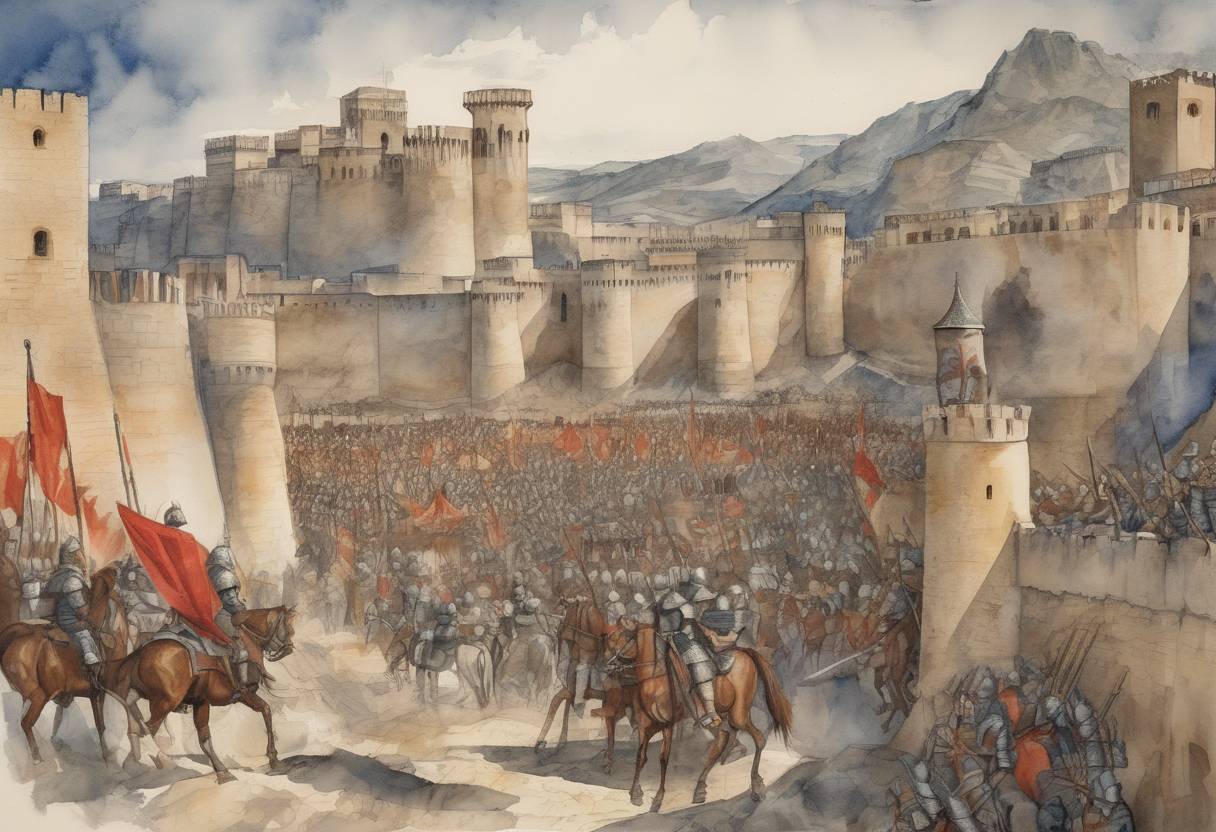
The Siege of Granada Begins: November 25, 1491
The Siege of Granada, which began on November 25, 1491, marked the final phase of the Reconquista, a centuries-long series of campaigns by Christian states to recapture territory from Muslim rulers on the Iberian Peninsula. This event was pivotal in the history of Spain and had significant implications for the future of Europe.
Historical Context
The Reconquista: This was a prolonged period of conflict that began in the early 8th century when Muslim forces, known as Moors, invaded and established control over large parts of the Iberian Peninsula. Over the centuries, Christian kingdoms in the north gradually expanded southward, reclaiming territory.
The Nasrid Kingdom of Granada: By the late 15th century, the Nasrid Kingdom of Granada was the last Muslim stronghold on the peninsula. It had managed to survive due to its strategic alliances and tribute payments to the more powerful Christian kingdoms.
The Catholic Monarchs: Ferdinand II of Aragon and Isabella I of Castile, known as the Catholic Monarchs, were determined to complete the Reconquista. Their marriage in 1469 had united two of the most powerful Christian kingdoms, providing the resources and military strength needed to challenge Granada.
The Siege
Commencement: The siege officially began on November 25, 1491, although military actions had been ongoing for several years. The Catholic Monarchs had systematically captured surrounding territories, isolating Granada.
Military Strategy: The siege involved a combination of direct military assaults and psychological warfare. The Catholic Monarchs employed artillery, a relatively new technology in European warfare, to breach the city’s defenses.
Diplomatic Efforts: Throughout the siege, there were attempts at negotiation. The Catholic Monarchs offered terms of surrender that included religious tolerance and the protection of property for the Muslim inhabitants, which were initially rejected.
Aftermath and Significance
Surrender: On January 2, 1492, after months of siege and dwindling supplies, the city of Granada surrendered. The terms of surrender, known as the Capitulations of Granada, were initially generous, allowing Muslims to continue practicing their religion and preserving their customs.
End of the Reconquista: The fall of Granada effectively ended the Reconquista, bringing nearly 800 years of Muslim rule in Iberia to a close. It marked the consolidation of Spain as a unified Christian kingdom.
Broader Implications: The completion of the Reconquista had significant consequences. It allowed Spain to focus on overseas exploration, leading to Christopher Columbus’s voyage in 1492, which opened the Americas to European colonization. Additionally, the eventual revocation of the Capitulations led to the forced conversion or expulsion of Muslims and Jews, profoundly affecting Spain’s cultural and demographic landscape.
The Siege of Granada was a defining moment in Spanish history, symbolizing the triumph of Christian kingdoms over Muslim rule and setting the stage for Spain’s emergence as a major European power.