The Battle of Gettysburg Begins: July 1, 1863
1863 · Gettysburg, United States
The Battle of Gettysburg begins during the American Civil War, marking a turning point in the conflict.
September 17, 1862
The Battle of Antietam, also known as the Battle of Sharpsburg, was fought during the American Civil War, marking the bloodiest single-day battle in American history.
Sharpsburg, United States | Union and Confederate Armies
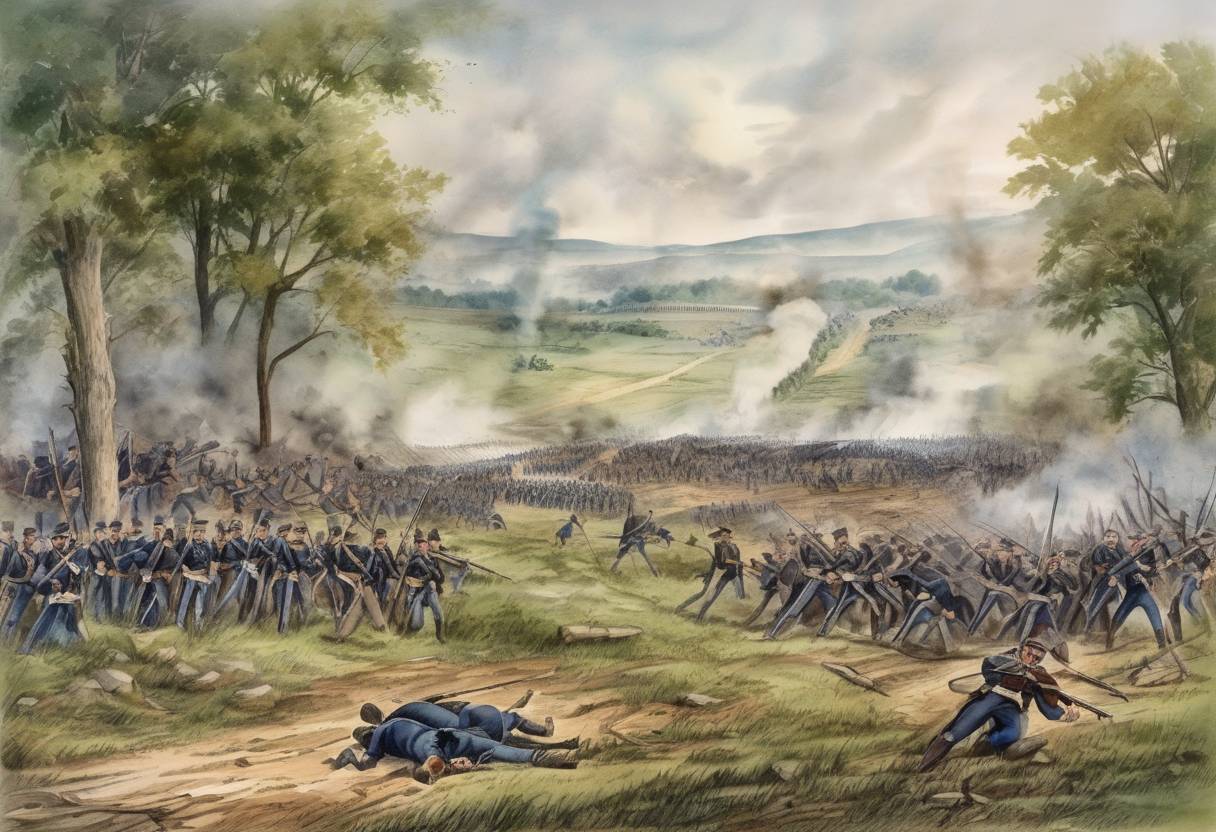
The Battle of Antietam, also known as the Battle of Sharpsburg, took place on September 17, 1862, during the American Civil War. It is renowned as the bloodiest single-day battle in American history, with a combined tally of dead, wounded, and missing at approximately 22,717 soldiers.
The battle occurred near Sharpsburg, Maryland, and Antietam Creek. It was part of the Maryland Campaign, which was Confederate General Robert E. Lee’s first invasion into the North. Lee aimed to shift the war’s focus away from the war-torn Virginia, influence Northern elections, and gain potential recognition and support from European powers.
The battle unfolded in three major phases:
Morning Phase: Fighting began at dawn in the cornfields and woods near the Dunker Church. The Union forces launched a series of attacks against the Confederate left flank, resulting in intense and deadly combat.
Midday Phase: The battle shifted to the center, focusing on a sunken road later known as “Bloody Lane.” Union forces eventually broke through the Confederate center, but failed to capitalize on the breach.
Afternoon Phase: The final phase occurred at the southern end of the battlefield near Burnside’s Bridge. Union forces, led by Major General Ambrose Burnside, struggled to cross Antietam Creek but eventually succeeded, threatening the Confederate right flank. However, Confederate reinforcements under General A.P. Hill arrived just in time to prevent a Union breakthrough.
The Battle of Antietam marked a turning point in the Civil War. It dissuaded European powers from recognizing the Confederacy and bolstered Northern morale. The issuance of the Emancipation Proclamation following the battle added a moral imperative to the Union cause, redefining the war’s purpose and altering its course.
The battle’s legacy is preserved at the Antietam National Battlefield, a site dedicated to remembering the sacrifices made on that fateful day.
Source: en.wikipedia.org