Ahmet Zogu Declares Albania a Kingdom and Becomes King Zog - September 1, 1928
1928 · Tirana, Albania
Ahmet Zogu declares Albania a kingdom and becomes King Zog.
March 13, 1271
Charles I of Anjou is coronated as King of Albania.
Tirana, Albania | Kingdom of Albania
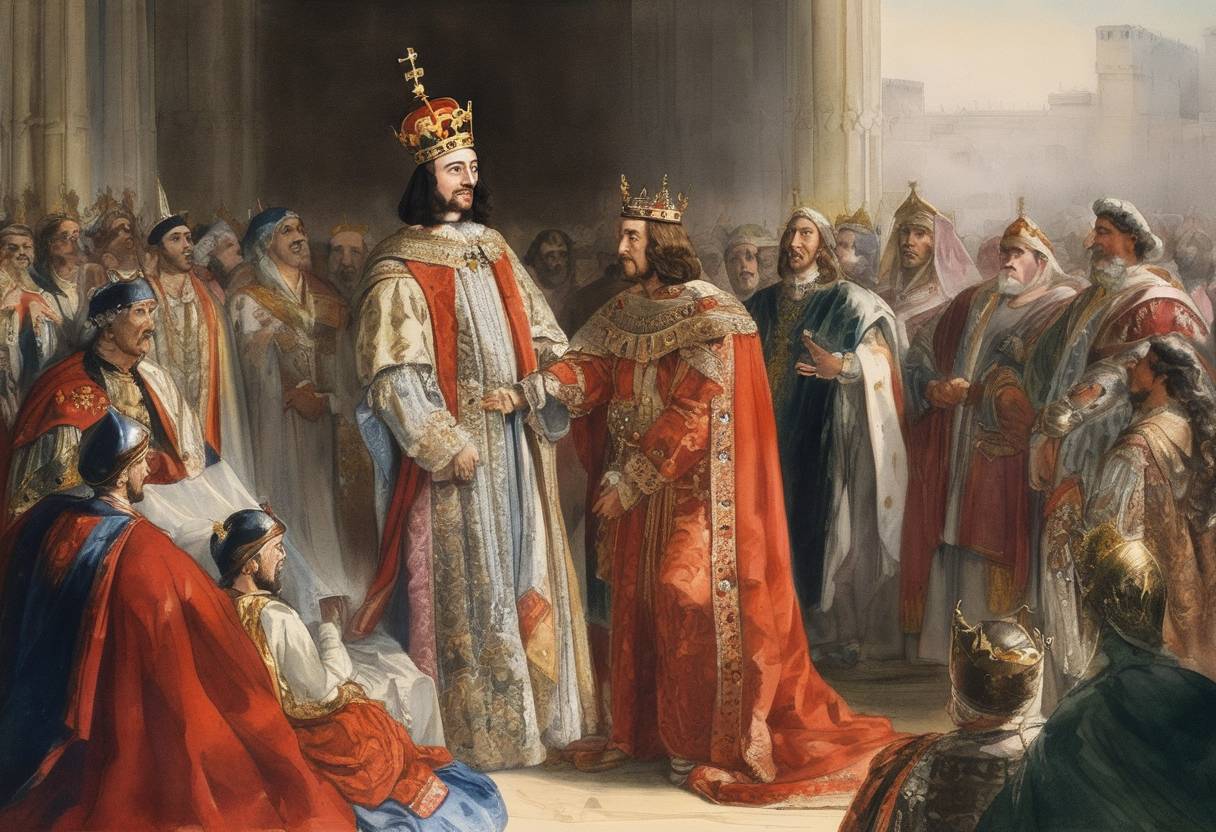
On March 13, 1271, Charles I of Anjou was coronated as King of Albania, marking a significant expansion of his influence in the Balkans. Charles, a member of the influential Capetian House of Anjou, was the brother of King Louis IX of France and had already established himself as a key player in European politics.
Charles I had previously been granted territories in Southern Italy, including the Kingdom of Sicily, as a reward for his support in Papal military campaigns. His rule in Sicily, referred to as the “Kingdom of Naples” after the Sicilian Vespers rebellion, laid the groundwork for his expansion into the Balkans.
The region of Albania during this period was fragmented and sought protection against Byzantine resurgence or Slavic incursions. Seeing this as an opportunity, Charles used both diplomatic and military means to assert his authority. The crown of Albania was effectively offered to him by local nobles who were seeking a strong ruler to unite and protect them.
The coronation took place in the city of Durrës, known then as Durazzo, which was strategically crucial for controlling Adriatic trade routes and exerting influence over the western Balkans. By officially crowning Charles as King of Albania, the nobles secured his promise to defend the region and integrate it into his European domains.
The coronation underscored the complex political dynamics of the era, characterized by the interplay of local and international powers. It solidified Charles’s power in the region and enhanced the profile of the Anjou dynasty, which sought to exert influence across the Mediterranean.
Following his coronation, Charles embarked on a series of campaigns to strengthen his hold over the Albanian territories and extend his reach into neighboring regions. However, his ambitions in the Balkans faced challenges from both the Byzantine Empire and regional aristocracy, leading to frequent conflicts and shifting alliances.
The coronation of Charles I as King of Albania highlighted the broader theme of European monarchs seeking to control key territories for strategic and economic gain. Over time, Charles’s rule in Albania became part of the larger narrative of Balkan political shifts, prefiguring future struggles between Western European powers and regional kingdoms. While his direct control over the region did not last beyond his death, the event exemplified the geopolitical strategies of the medieval Europe era.
Source: en.wikipedia.org