Charles I's Attempted Arrest of Five Members of Parliament - January 2, 1642
1642 · London, England
The King of England, Charles I, orders the arrest of members of Parliament, sparking a confrontation that leads to the English Civil War.
May 12, 1641
The chief advisor to King Charles I, Thomas Wentworth, 1st Earl of Strafford, is executed.
London, England | The English Parliament
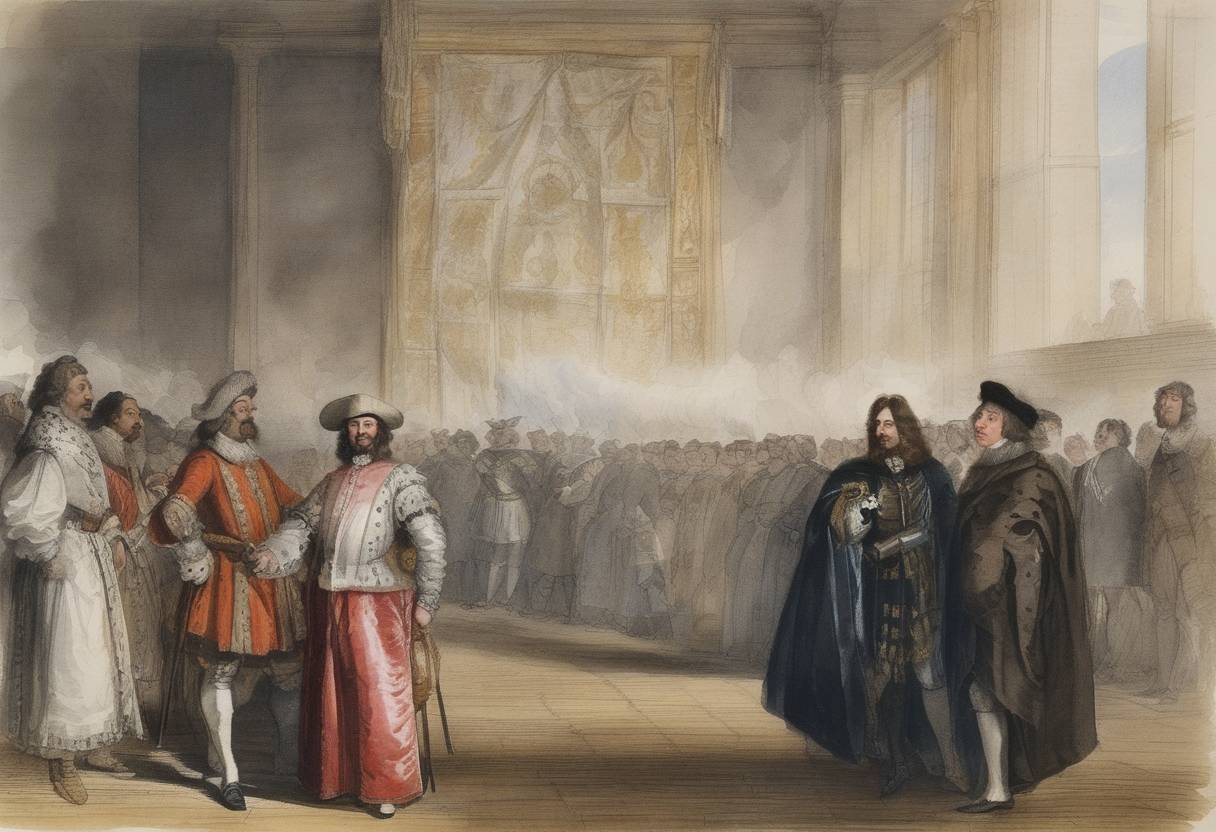
On May 12, 1641, Thomas Wentworth, the 1st Earl of Strafford, was executed at Tower Hill in London. His death marked a significant turning point in the political tensions leading to the English Civil War.
Thomas Wentworth was a notable English statesman and a key advisor to King Charles I. Initially, a supporter of parliamentary governance, Wentworth shifted allegiances, becoming one of Charles I’s staunchest advocates for strong monarchical rule. He was appointed the Lord Deputy of Ireland, where his assertive policies and efficient yet authoritarian governance earned him both respect and enmity.
His tenure was characterized by efforts to strengthen the fiscal and military capacity of Ireland, alongside increasing royal power. Wentworth’s policies, known as “Thorough,” often bypassed traditional rights and privileges, alienating many and nurturing a deep-seated animosity among the nobility and Parliamentarians.
As tensions grew between Charles I and Parliament, Wentworth became a focal point of opposition fury. With the King’s approval, he had attempted to raise an army in Ireland to intimidate English Parliamentarians, further amplifying concerns about royal overreach and abuse of power.
In November 1640, he was arrested and put on trial. His adversaries, recognizing the legal difficulties in securing a straightforward conviction, opted for a Bill of Attainder—a legislative act allowing Parliament to declare a person guilty without trial. Passed by the House of Commons and reluctantly acceded to by Charles I, this move bypassed juridical norms and set a precedent for future political retributions.
Executed before thousands of onlookers, Wentworth is reported to have faced his death with calmness, expressing loyalty to the King to the very end. His execution was seen as a sacrifice by many royalists but a triumph of parliamentary justice by his detractors.
The demise of Wentworth weakened Charles I’s political position, galvanizing parliamentary forces while foreshadowing the escalating conflict that would soon erupt into the English Civil War. This act illustrated the rising power of Parliament in challenging and curtailing monarchical authority, shaping the constitutional landscape of England in the years to come.
Source: en.wikipedia.org