The Fundamental Orders of 1639
1639 · Hartford, United States
The Fundamental Orders, considered by some as the first written constitution that created a government, are adopted in Connecticut.
October 21, 1638
The city of Hartford, Connecticut, was founded by Reverend Thomas Hooker to provide a place for a congregation that separated from a church led by Reverend John Davenport in New Haven.
Hartford, United States | Connecticut Colony
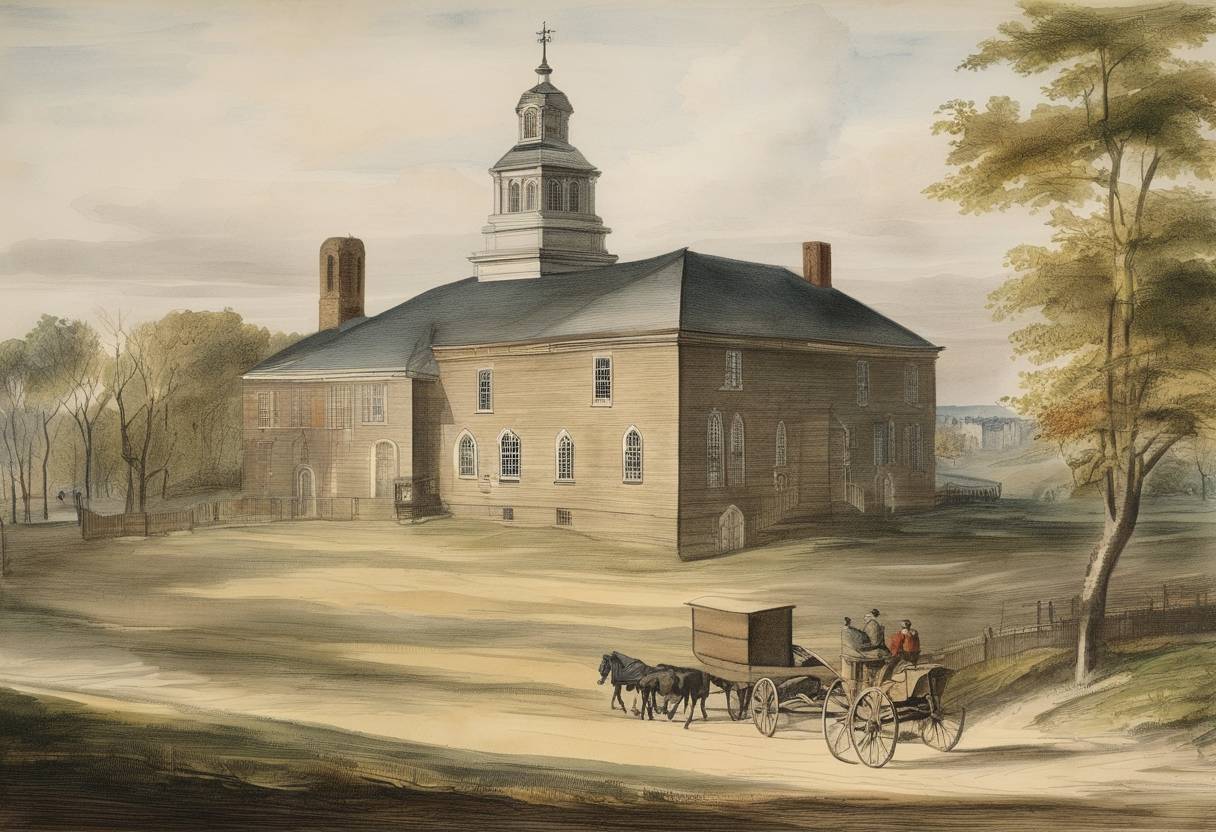
The city of Hartford, Connecticut, was not founded on October 21, 1638, by Reverend Thomas Hooker as commonly misstated. The actual founding of Hartford occurred earlier, in 1635-1636, when Thomas Hooker led a group of about 100 people from Newtown (now Cambridge, Massachusetts) to the banks of the Connecticut River. The movement was primarily motivated by the desire for greater religious freedom and autonomy from the constraints faced within the Massachusetts Bay Colony under different Puritan congregations.
Thomas Hooker: A prominent Puritan minister, Hooker disagreed with certain elements of governance and religious practice in the Massachusetts Bay Colony, leading him and his followers to seek a new settlement.
Religious Dynamics: The move was in part a response to increasing religious tensions, differing theological interpretations, and disputes over governance.
Journey: The group that left with Hooker embarked on a challenging journey through the wilderness, ultimately arriving in an area that became known as Hartford. This journey laid the foundation for the settlement in June 1636.
Establishment: Upon arrival, Hooker and his followers laid the groundwork for a community that would emphasize a broader participation in government, which was later formalized through the Fundamental Orders of 1639—often considered among the first written constitutions that established a representative government.
The establishment of Hartford was a pivotal step in the colonization of Connecticut, serving as a vital hub for trade, governance, and religious reform in the New England colonies. Despite the erroneous date of October 21, 1638, the legacy of Thomas Hooker’s leadership continues to be celebrated for its role in promoting greater democratic governance and laying a foundational stone for what would eventually become the United States.
Source: connecticuthistory.org