Vasco da Gama's Expedition to India: Setting Sail on July 8, 1497
1497 · Lisbon, Portugal
Portuguese explorer Vasco da Gama set sail from Lisbon, Portugal, on a mission to reach India and open a sea route from Europe to the East.
February 12, 1502
Vasco da Gama sets sail from Lisbon, Portugal, on his second voyage to India, further establishing the sea route around the Cape of Good Hope.
Lisbon, Portugal | Portuguese Crown
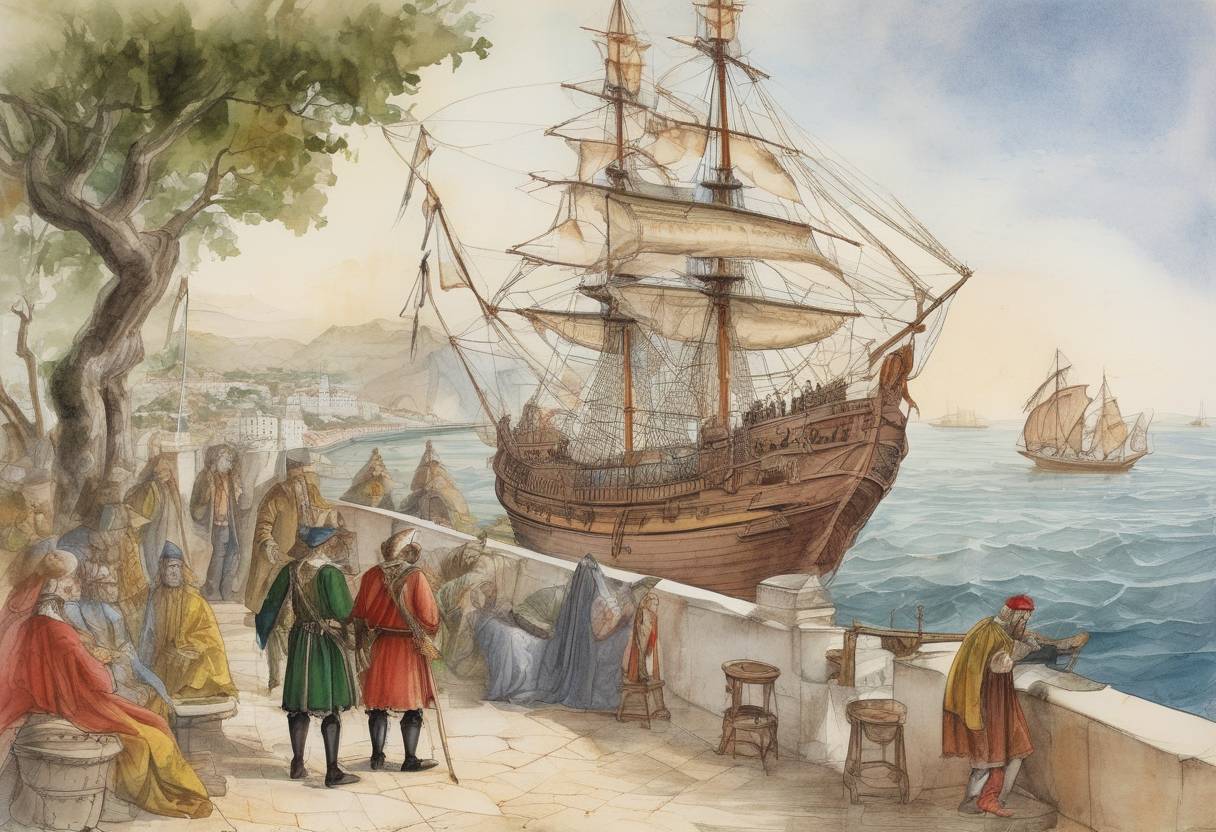
On February 12, 1502, the renowned Portuguese explorer Vasco da Gama embarked on his second voyage to India, setting sail from Lisbon. This expedition was pivotal in solidifying the sea route around the Cape of Good Hope, which had been initially established during his first voyage in 1497-1499.
First Voyage Success: Vasco da Gama’s first voyage to India (1497-1499) was a monumental achievement for Portugal, as it opened a direct maritime trade route to Asia. This route circumvented the overland routes dominated by Middle Eastern and Venetian traders, allowing Portugal to establish a foothold in the lucrative spice trade.
Portuguese Ambitions: Following the success of the first voyage, King Manuel I of Portugal was eager to capitalize on the new trade opportunities. The second voyage aimed to strengthen Portuguese presence in the Indian Ocean and establish a more permanent and influential trading network.
Fleet Composition: Vasco da Gama’s second expedition was significantly larger than his first. It consisted of 10 ships, with a crew of approximately 800 men. This fleet was better equipped and prepared for both trade and potential conflict.
Objectives: The primary goals of the voyage were to secure alliances with local rulers, establish Portuguese trading posts, and assert Portuguese dominance over the Indian Ocean trade routes. Da Gama was also tasked with retaliating against any resistance encountered from local powers or rival traders.
Journey Around the Cape: The fleet successfully navigated the treacherous waters around the Cape of Good Hope, a feat that had become more routine following da Gama’s initial voyage.
Arrival in India: Upon reaching the Indian subcontinent, da Gama engaged in both diplomacy and military action. He negotiated with local rulers and established Portuguese influence in key trading centers.
Conflict and Conquest: The voyage was marked by several confrontations, including aggressive actions against Arab traders and local resistance. Da Gama’s fleet engaged in naval battles to assert control over the trade routes.
Portuguese Dominance: Vasco da Gama’s second voyage was instrumental in establishing Portuguese dominance in the Indian Ocean. It laid the groundwork for a Portuguese colonial empire in Asia, which would last for centuries.
Impact on Global Trade: The successful establishment of a sea route to India had profound implications for global trade. It shifted the center of trade from the Mediterranean to the Atlantic, altering economic and political dynamics in Europe and beyond.
Legacy: Vasco da Gama’s voyages are celebrated as key milestones in the Age of Discovery. They exemplified the era’s spirit of exploration and the quest for new trade routes, which reshaped the world economy and cultural exchanges.
In summary, Vasco da Gama’s second voyage to India on February 12, 1502, was a critical step in the expansion of Portuguese influence and the establishment of a new era in global trade and exploration.
Source: en.wikipedia.org