The Passage of the Thirteenth Amendment
1865 · Washington D.C., United States
The United States Congress passes the Thirteenth Amendment to the Constitution, abolishing slavery in the United States.
April 16, 1862
The United States Congress passes the District of Columbia Compensated Emancipation Act, ending slavery in Washington D.C.
Washington D.C., United States | United States Congress
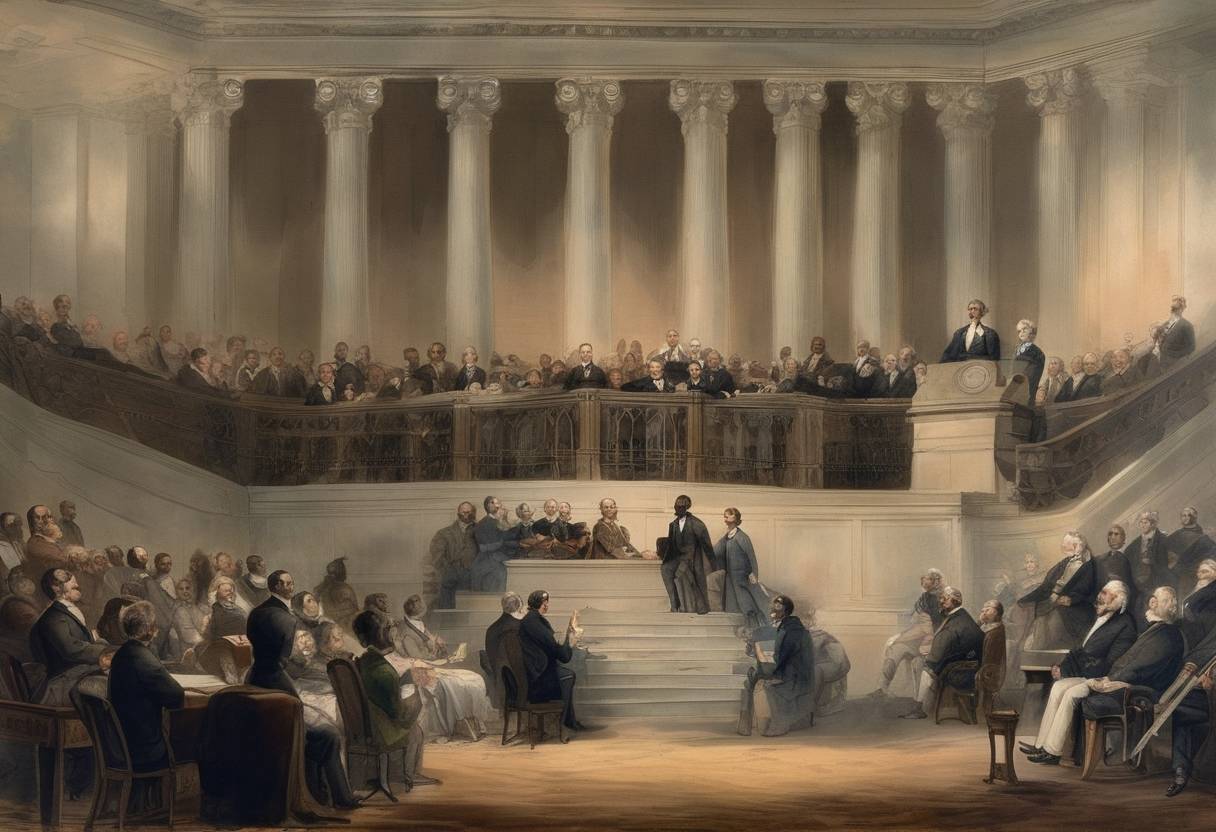
On April 16, 1862, the United States Congress passed the District of Columbia Compensated Emancipation Act, marking a pivotal step towards the abolition of slavery in the nation’s capital. This significant legislation was enacted during the American Civil War and was a precursor to broader emancipation efforts across the United States.
Prior to this act, Washington D.C. retained slavery despite being the seat of the federal government. The city presented a contradiction, symbolizing freedom while simultaneously practicing human bondage. Abolitionists had long campaigned for an end to slavery in the district, and the political climate of the Civil War provided an opportunity to advance this cause.
The Act provided for the immediate emancipation of enslaved individuals in Washington D.C. It included several key provisions:
Compensation: Slave owners would receive financial compensation for the loss of enslaved people, a feature designed to win support from those who might otherwise oppose emancipation.
Total Compensation Amount: The government allocated up to \(1 million to compensate owners, with a ceiling of \)300 per emancipated individual.
Colonization Option: It provided for voluntary colonization, offering funds to support the migration of freed individuals to African nations or other locations outside the United States.
Freedom to the Enslaved: Approximately 3,100 enslaved persons were freed immediately as a result of the act.
The District of Columbia Compensated Emancipation Act was the first instance of the federal government providing for the emancipation of enslaved people and compensating former owners. It set an important precedent for subsequent legislative efforts, including the Emancipation Proclamation issued by President Abraham Lincoln on January 1, 1863, and the eventual passage of the Thirteenth Amendment in 1865, which permanently abolished slavery in the United States.
The decision to compensate slave owners was controversial but reflected the political and social complexities of the period. Moreover, the act symbolizes a significant moral and constitutional shift in the country’s stance towards slavery. Each year, April 16 is commemorated in Washington D.C. as Emancipation Day, celebrating the end of legal slavery in the nation’s capital.
Source: en.wikipedia.org