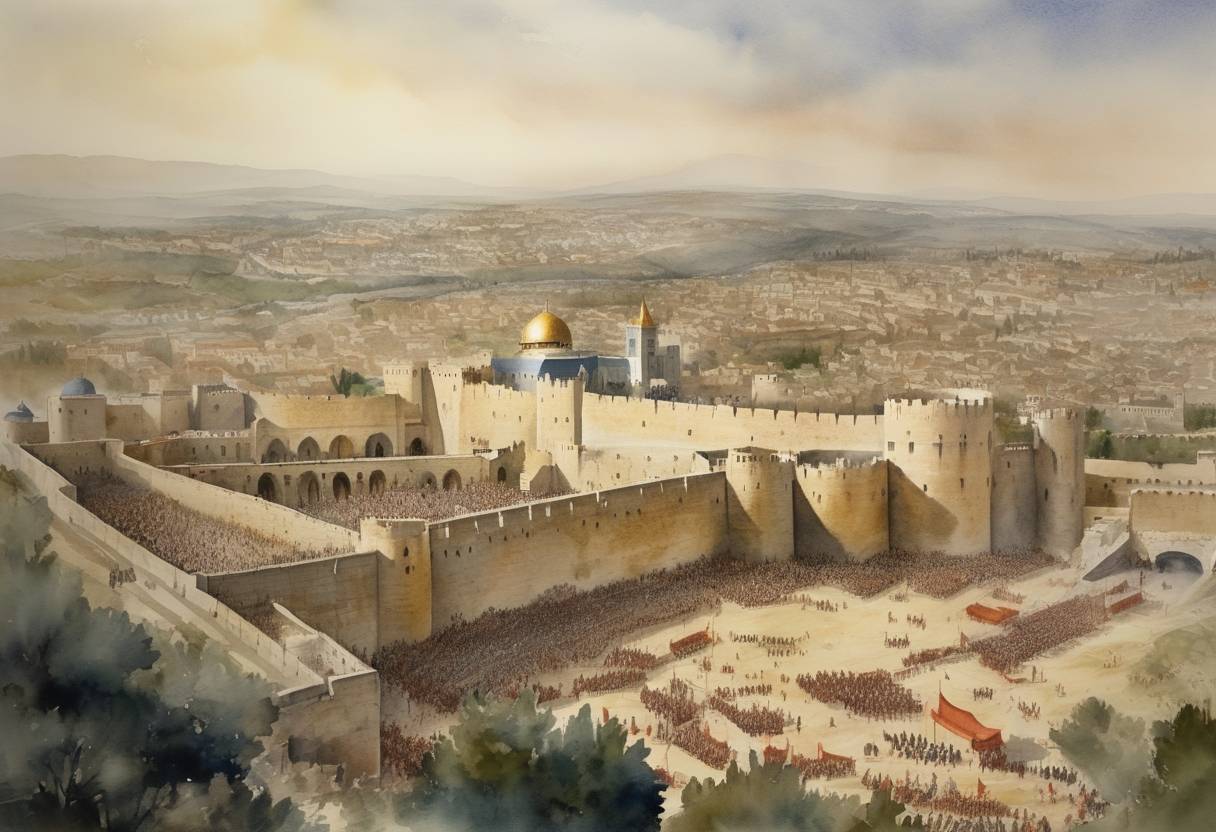
Siege of Jerusalem: July 8, 1099
On July 8, 1099, during the First Crusade, Christian armies commenced the Siege of Jerusalem, aiming to reclaim the city from Muslim control. This event was a critical juncture in the Crusaders’ campaign to capture the Holy Land.
Context and Prelude to the Siege
The First Crusade was initiated in 1096 following Pope Urban II’s call in 1095 for a military expedition to aid Byzantine Christians and to reclaim Jerusalem. The Crusaders, comprising various European noble divisions, marched through arduous routes plagued by numerous battles and hardships.
By the summer of 1099, the Crusading forces, having successfully conquered Anadolu Selçuklu territories and various Levantine cities, arrived at the gates of Jerusalem. The city was then under the control of the Fatimid Caliphate, a Shia Muslim regime based in Egypt, which had captured Jerusalem from the Seljuk Turks only a year prior, in 1098.
Key Events of the Siege
The Approach and Initial Efforts
The crusaders reached Jerusalem in early June, blockading the city by July. The Christian army numbered approximately 1,200 knights and about 12,000 soldiers in total. The siege faced immediate logistical challenges, including a scarcity of food and water. These conditions were exacerbated by the harsh summer climate.
On July 8, the Crusaders held ritual processions around the city and performed acts of penance in hopes of securing divine favor. This public display of devotion was intended to boost morale and seek spiritual intervention in their military endeavors.
Military Tactics and the Breakthrough
On the following days, Crusaders constructed siege towers, battering rams, and ladders. These were crucial in overcoming Jerusalem’s formidable fortifications. Key assaults broke out on July 10 and intensified on July 15, with a critical penetration point achieved at the northern wall.
Consequences and Aftermath
The successful capture of Jerusalem on July 15 was a hallmark victory for the Crusaders, solidifying their control over key territories in the Holy Land. The siege culminated in profound violence, with accounts describing large-scale massacres of the city’s Muslim inhabitants and the Jewish community, reflecting the era’s brutal wartime conduct.
The conquest had lasting repercussions, establishing the Kingdom of Jerusalem as a Crusader state and altering the political and religious landscape of the region. It incited further crusading ventures extending into subsequent centuries.
The First Crusade’s success sparked a series of follow-up crusades, solidifying Christendom’s influence in the Holy Land for nearly two centuries, despite eventual Muslim reconquests and the considerable toll on both sides. The events of July 8-15, 1099, remain significant in understanding the broader narrative of Christian-Muslim relations during the medieval period.