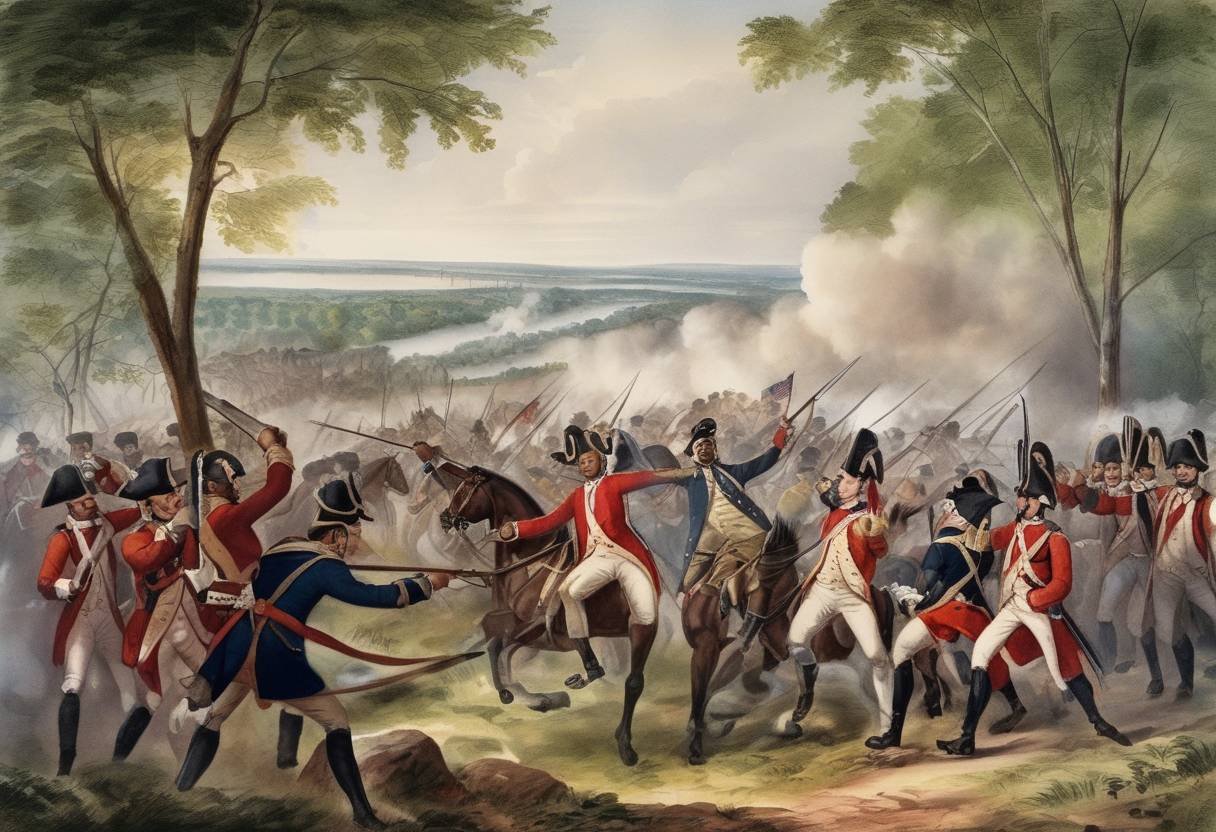
The Battle of Harlem Heights: September 16, 1776
The Battle of Harlem Heights occurred during the American Revolutionary War on September 16, 1776, in what is now the Upper West Side of Manhattan, New York City. It represented a crucial morale-boosting victory for the Continental Army, commanded by General George Washington, against the British forces.
Background
After the Continental Army’s defeat in the Battle of Long Island in late August 1776, Washington and his troops retreated across the East River to Manhattan. The occupation of New York by British forces posed a significant threat to the survival of the Continental Army. Additional maneuvering brought Washington’s troops northward, where they occupied a defensive position on Harlem Heights, a high ground area where they could better observe British movements.
The Battle
On the morning of September 16, British forces under the command of General Sir William Howe sought to test the American defenses by sending light infantry and Hessian riflemen to engage the Continental Army. The encounter began when American troops under Lieutenant Colonel Thomas Knowlton engaged British troops in a skirmish meant to draw them into a prepared field of battle.
Washington seized upon this opportunity, launching an aggressive counterattack against the British. He deployed additional forces, including riflemen under Knowlton and troops under Major Andrew Leitch, to outflank the British from the sides. The battle saw skirmishes through fields and woodlands, ultimately resulting in a withdrawal of British forces.
Aftermath
This battle, while tactically minor compared to larger engagements, held significant strategic and psychological importance. It marked the first instance during the New York Campaign where American troops had driven back British forces. Through strategic decision-making and well-coordinated attacks, Washington’s forces demonstrated their resilience, providing the Continental Army with a sorely needed boost in morale.
The victory at Harlem Heights did not alter the overall strategic position significantly, but it slowed British momentum and provided confidence to American troops in their capability to challenge the might of the British Army.
Significance
The Battle of Harlem Heights served as an inspiring event for the Continental Army during a time of retreat and adversity. It brought to the forefront the leadership of General Washington and contributed to the belief in the possibility of American independence despite overwhelming odds.