Definition of the Meter by the 17th General Conference on Weights and Measures
1983 · Sèvres, France
The meter is defined as the distance light travels in a vacuum in 1/299,792,458 of a second, by the 17th General Conference on Weights and Measures.
September 28, 1889
The first General Conference on Weights and Measures (CGPM) is held in Paris, establishing key units of measurement.
Paris, France | General Conference on Weights and Measures
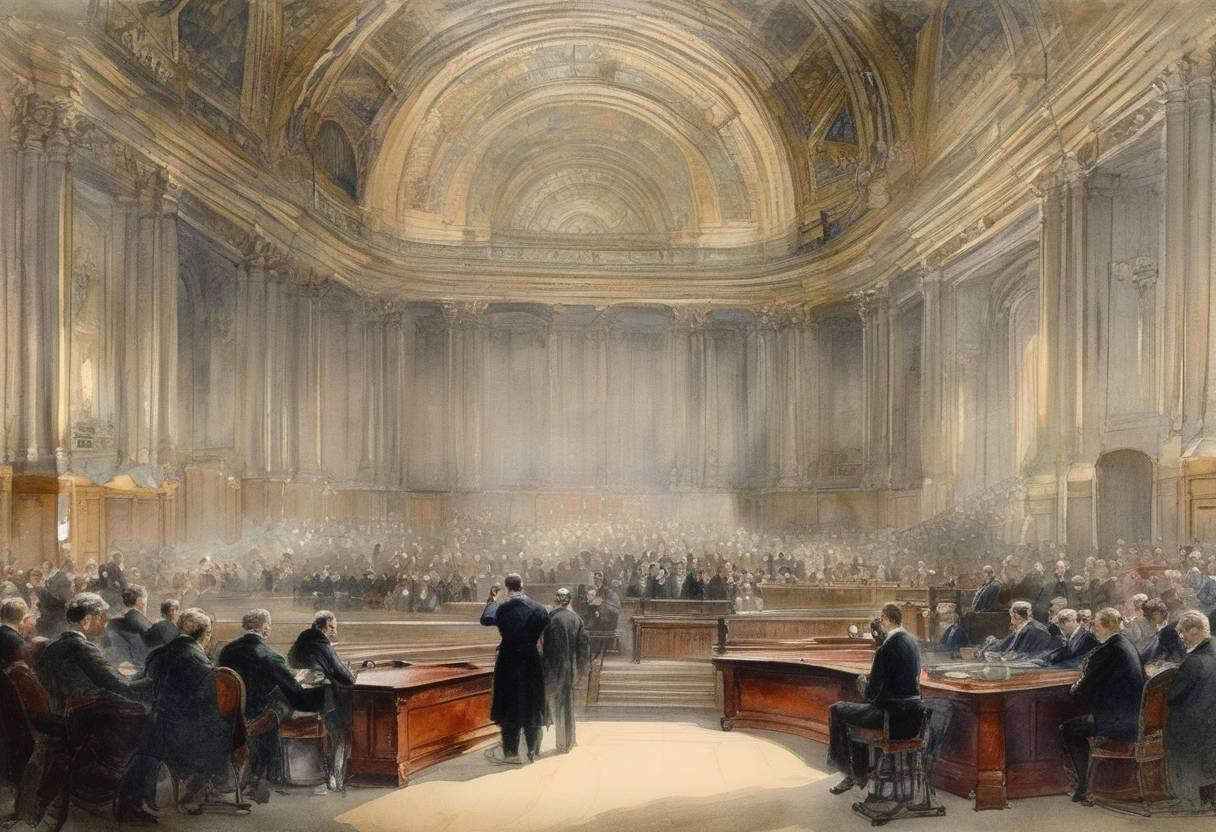
The first General Conference on Weights and Measures (CGPM) was held on September 28, 1889, in Paris, France. This pivotal event marked a significant milestone in the history of science and engineering, laying the foundation for the International System of Units (SI).
The 19th century was a period where scientific and industrial advancements necessitated a standardized system of measurement. Discrepancies in measurement systems between countries posed challenges in trade, scientific research, and technological development. In response, the Meter Convention, an international treaty, was signed in 1875 by 17 nations, leading to the establishment of the International Bureau of Weights and Measures (BIPM). The first CGPM was convened as a direct consequence of this treaty.
The implementation of global standards through the CGPM has had profound effects. By setting concrete definitions and maintaining international prototypes of the metre and kilogram, the conference facilitated easier scientific collaboration and industrial advancement. These standards provided the necessary precision for technological innovation, international trade, and scientific research, which continue to underpin critical aspects of modern society.
Subsequent meetings of the CGPM have built upon the principles established in 1889, continually refining and updating units of measurement to align with scientific advancements. This has evolved into what is now known as the International System of Units (SI), which remains the globally accepted standard for measurements today.
In sum, the first General Conference on Weights and Measures in 1889 was foundational in the pursuit of international uniformity in measurement, a legacy that continues to influence numerous fields and industries.
Source: en.wikipedia.org