Launch of Syncom 2: The First Geostationary Communication Satellite
1963 · Cape Canaveral, United States
The Syncom 2 satellite was launched by NASA, becoming the world's first geostationary communication satellite.
April 1, 1960
The United States launched TIROS-1, the world's first successful weather satellite, marking a new era in meteorological observation.
Cape Canaveral, United States | NASA
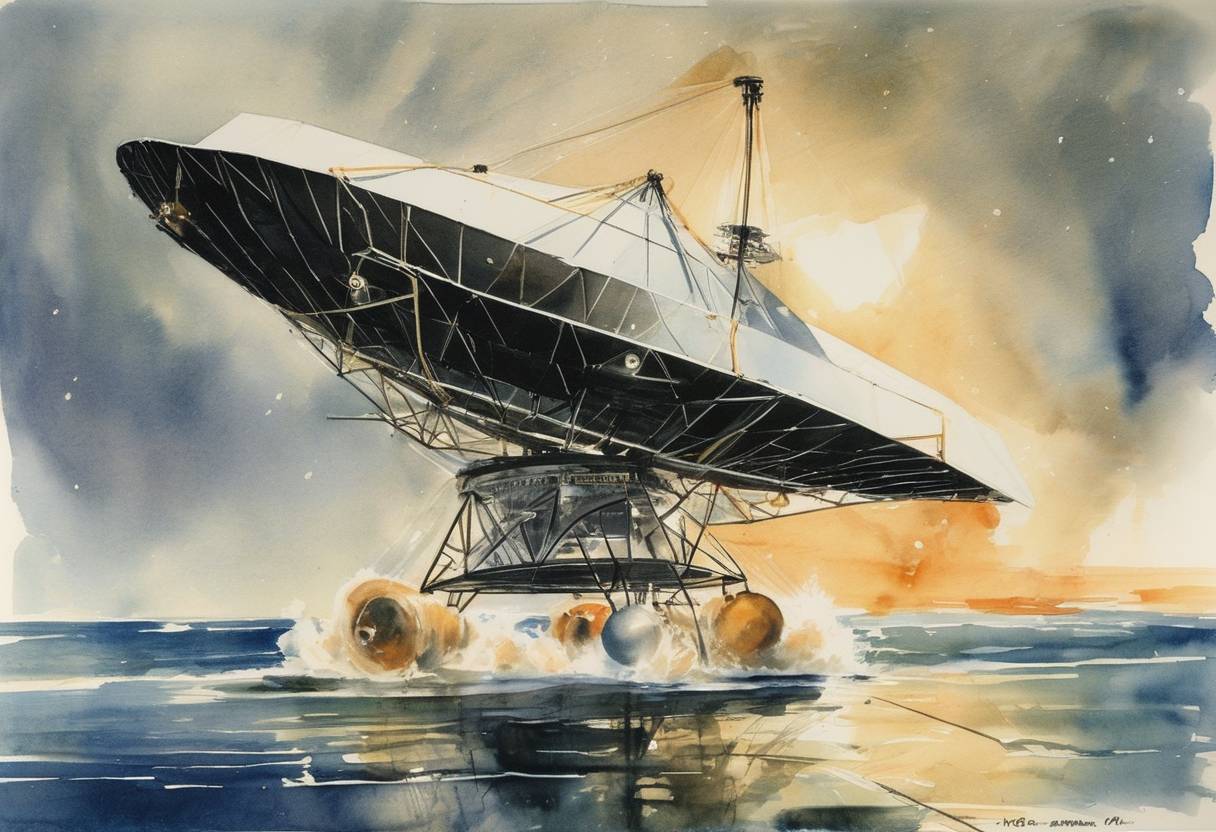
On April 1, 1960, the United States successfully launched the Television Infrared Observation Satellite (TIROS-1), the first successful weather satellite. This event marked the beginning of a revolutionary era in meteorological observation and forecasting.
During the late 1950s, technological advancements in rocketry and telecommunications paved the way for new scientific endeavors in space. The United States, motivated by both scientific curiosity and geopolitical factors, invested in satellite technology to enhance weather prediction capabilities.
TIROS-1, developed by the National Aeronautics and Space Administration (NASA) in collaboration with the United States Weather Bureau and the Radio Corporation of America (RCA), was designed to test the feasibility of monitoring Earth’s weather from space.
TIROS-1 was an experimental satellite equipped with two television cameras that captured and transmitted images of Earth’s cloud cover. Weighing about 122 kilograms (270 pounds), it was powered by 9,200 solar cells, allowing continuous operation. The satellite was launched aboard a Thor-Able rocket from Cape Canaveral, Florida, into a near-polar orbit.
The primary goal of TIROS-1 was to assess the practicality of using satellite technology for meteorological data collection and to improve weather prediction. Its successful deployment confirmed that satellites could provide comprehensive and timely global weather data.
During its 78-day mission, TIROS-1 transmitted over 22,000 images back to Earth, fundamentally transforming meteorologists’ understanding and prediction of large-scale weather patterns. These images provided unprecedented views of cloud formations and storm systems, leading to significant advancements in weather forecasting.
The success of TIROS-1 laid the groundwork for subsequent meteorological satellite programs, both in the United States and internationally. It demonstrated the importance of satellite data for accurate weather forecasting and inspired the development of a series of increasingly sophisticated weather satellites.
As a result, global meteorological services evolved significantly, improving the ability to predict severe weather events, saving lives, and mitigating economic loss. The TIROS program itself expanded with multiple generations of satellites, evolving eventually into the NOAA’s ongoing series of operational satellites.
TIROS-1’s launch was a pivotal moment, ushering in the modern age of satellite meteorology which continues to advance through continuous innovation and international collaboration.
Source: www.nasa.gov