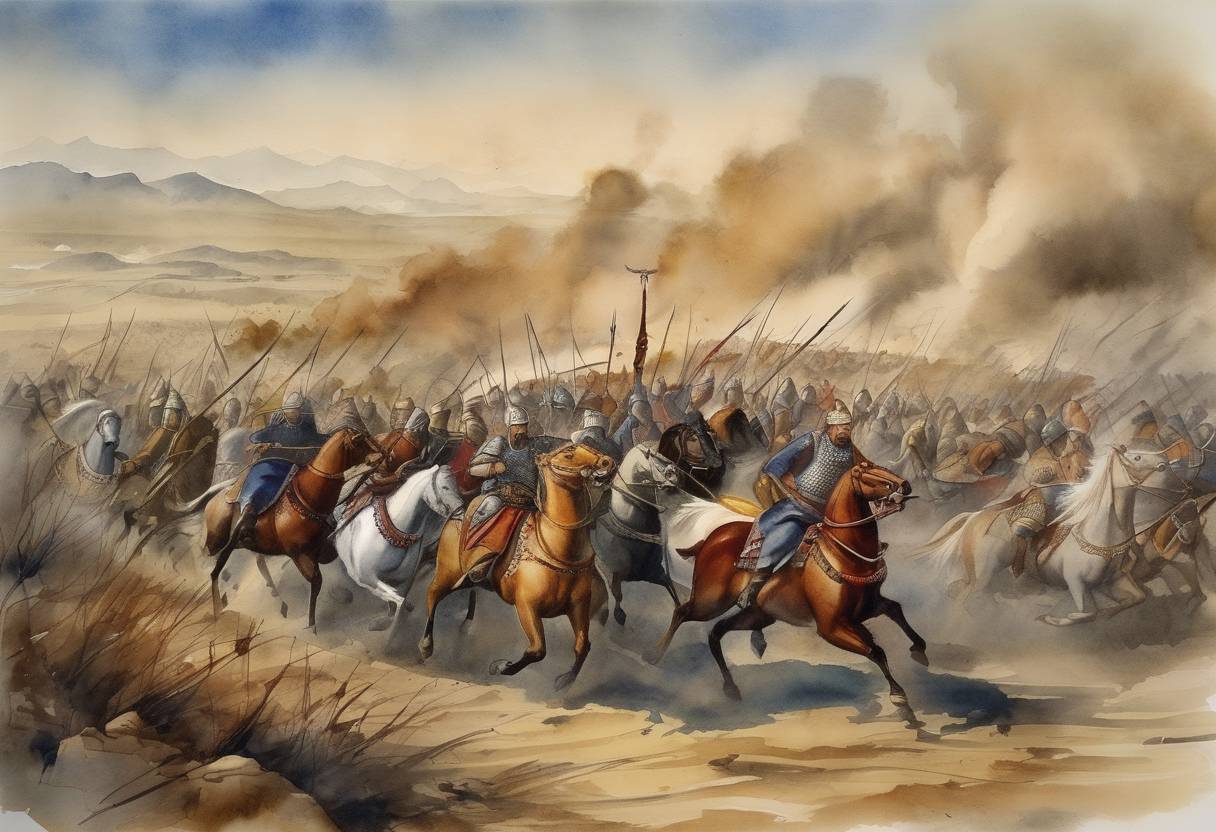
Battle of Köse Dağ - July 1, 1243
The Battle of Köse Dağ, which occurred on July 1, 1243, marked a significant turning point in the history of Anatolia as the Seljuk Turks faced a decisive defeat by the Mongol Empire. This battle took place near what is today northeastern Turkey, between the cities of Erzincan and Sivas.
Historical Context
During the early 13th century, the Mongol Empire, under the leadership of Genghis Khan, began its rapid and expansive conquests across Asia and into Europe. By 1243, the Mongols, now led by Batu Khan and the general Subutai, had shifted their attention towards the Anatolian region, primarily controlled by the Seljuk Sultanate of Rum.
The Seljuk Sultanate was experiencing internal strife and weakening authority as the power dynamics within its territories were destabilized. Kaykhusraw II was the ruling sultan of the Seljuks at the time, and his leadership faced several challenges, not least the threat of Mongol incursion.
The Battle
The Mongols, commanded by Bayju, moved into Anatolia with a highly disciplined and formidable fighting force known for their innovative military tactics and superior cavalry. In response, the Seljuks attempted to muster an army to counter the Mongol advance but were plagued by internal divisions and strategic disorganization.
On the day of the battle, the Seljuk forces were poorly coordinated. The lack of a coherent strategy and unity among the Seljuk commanders contributed significantly to their defeat. The Mongols exploited these weaknesses, leveraging their tactical superiority and mobility to overwhelm the Seljuk army.
Consequences
The outcome of the Battle of Köse Dağ was a decisive Mongol victory. The defeat effectively marked the fall of the Seljuk Sultanate’s supremacy in Anatolia. Following the battle, the Mongols imposed heavy tributes on the Seljuks, asserting dominance over the region.
As a result, the political landscape of Anatolia dramatically shifted. The Seljuk Sultanate, once a dominant power, became a vassal to the Mongols. The ensuing period marked the gradual decline of Seljuk influence and paved the way for the rise of other Turkish principalities and the eventual emergence of the Ottoman Empire.
Historical Significance
The Battle of Köse Dağ is a critical event in the broader history of the Mongol conquests, demonstrating the far-reaching influence of the Mongol Empire. It reshaped the regional dynamics of Anatolia, facilitating the fragmentation that allowed new power structures to form, which would have lasting impacts on the region’s political and cultural evolution.