1909 · Ottawa, Canada
The strategic St. Lawrence Seaway agreement was concluded.
January 28, 1947
In Canada, the Royal Commission on Arts, Letters and Sciences was established to investigate federal support for the arts and to propose recommendations for future cultural policy.
Ottawa, Canada | Canadian Government
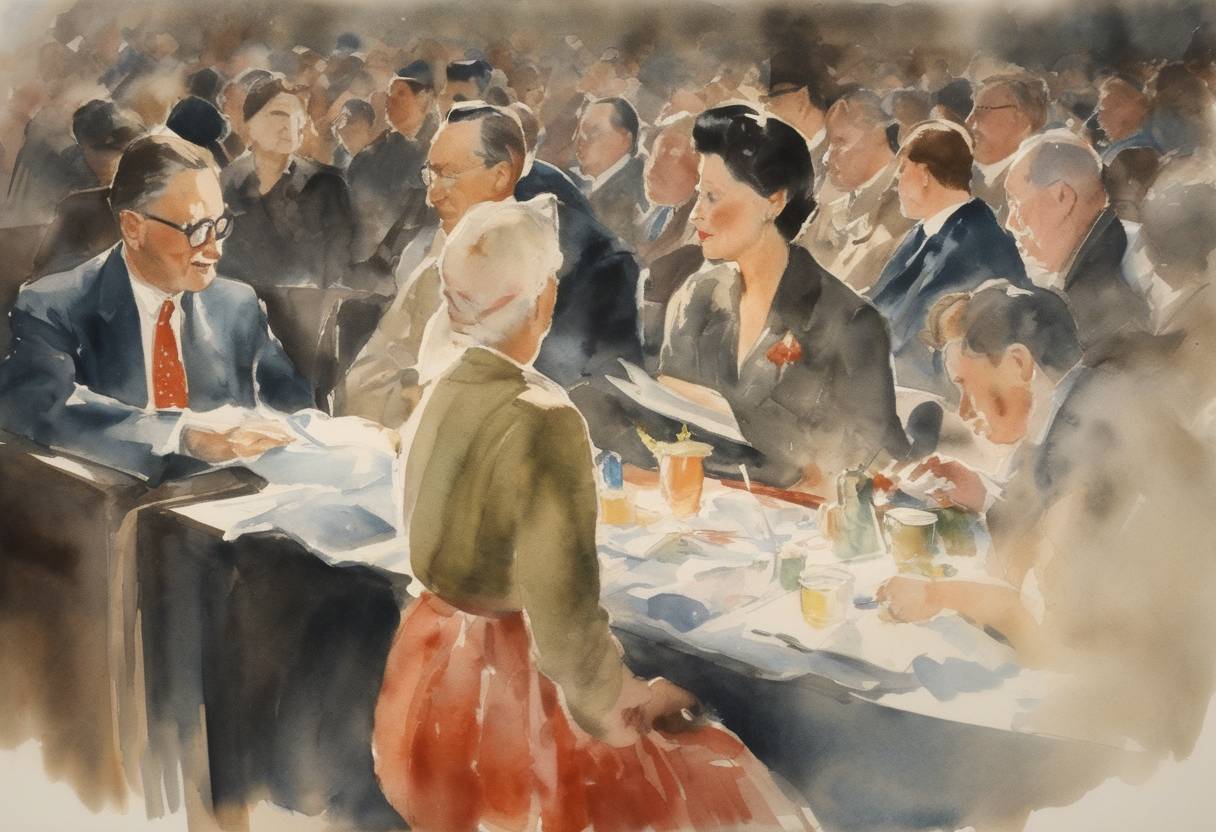
The Royal Commission on Arts, Letters and Sciences was officially established in Canada on January 28, 1947. Often referred to as the Massy Commission, this group was initiated by Prime Minister William Lyon Mackenzie King to explore ways to enhance and formalize federal support for the arts, letters, and sciences across Canada.
Post-War Cultural Environment: In the aftermath of World War II, there was a broad recognition of the importance of cultural and scientific development for national identity and unity. With a rapidly changing global landscape, Canadian leaders saw the need to bolster cultural initiatives as part of this broader vision.
Federal Involvement: Prior to the commission, federal involvement in arts and culture was minimal. The establishment of the Massy Commission represented a concerted effort to evaluate existing support mechanisms and to propose robust structures to promote arts at a national level.
Investigating Arts and Cultural Policies: To assess the current state of arts, letters, and sciences in Canada and to evaluate the effectiveness of existing support systems.
Developing Recommendations: To propose actionable recommendations for federal cultural policy that would foster greater participation and appreciation of arts and sciences nationwide.
National Cohesion: Aimed at strengthening Canadian cultural identity and ensuring that arts and sciences played a prominent role in public life.
Cultural Policy Framework: The commission’s recommendations laid the groundwork for several key institutions and policies. These included the establishment of the Canada Council for the Arts in 1957, which became a cornerstone for federal arts funding and support.
Legacy: The establishment of this commission marked a turning point in federal cultural policy, reflecting a commitment to nurturing and supporting Canadian culture. Its work helped stimulate widespread public interest and investment in Canada’s cultural sectors.
The Massy Commission’s work signaled a new era in which the Canadian government took a proactive role in supporting cultural activities, recognizing their importance in national development and identity.
Source: www.thecanadianencyclopedia.ca