Posthumous Execution of Oliver Cromwell's Remains - January 30, 1661
1661 · London, England
Oliver Cromwell's remains were exhumed and subjected to a posthumous execution.
May 25, 1660
The Restoration of the English monarchy begins as Charles II returns to England from his exile, following the Interregnum that followed the English Civil War and the Puritan Commonwealth led by Oliver Cromwell.
Dover, England | English Monarchy
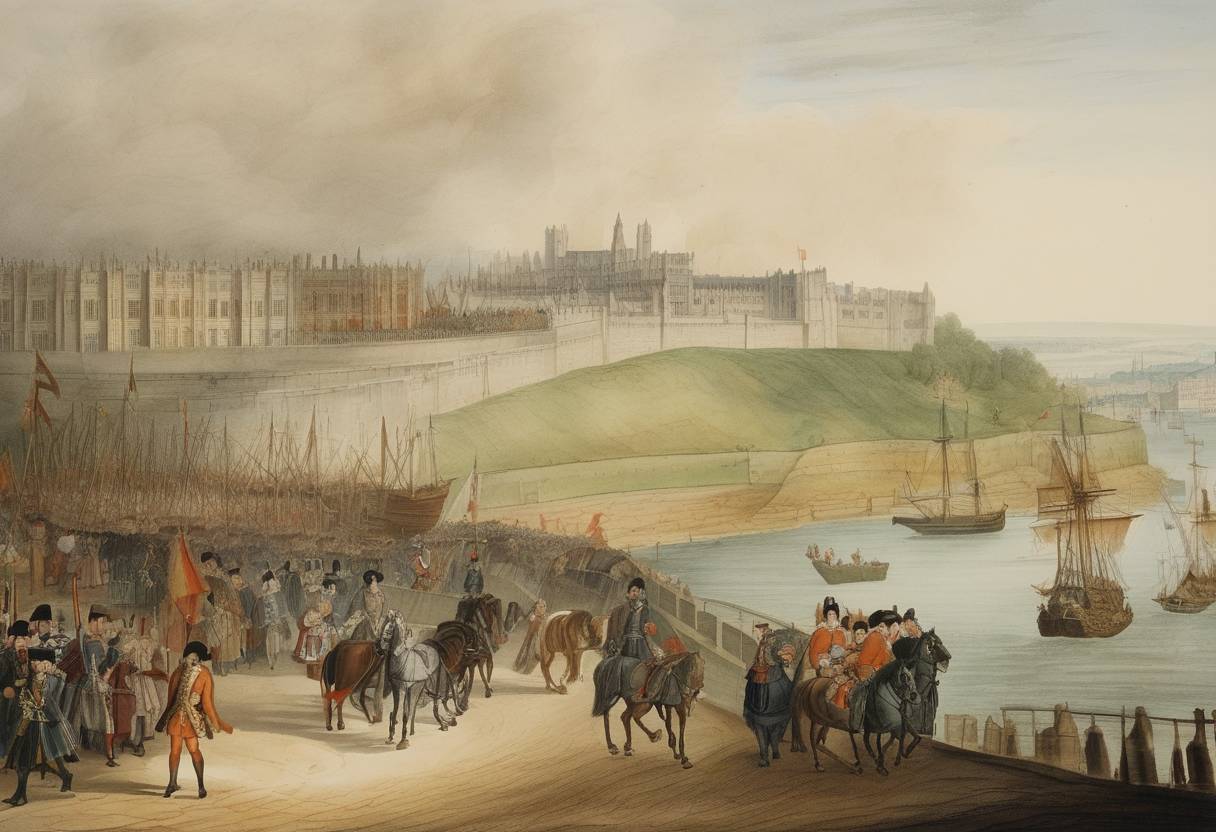
On May 25, 1660, Charles II landed at Dover, marking a pivotal moment in English history known as the Restoration of the Monarchy. This event ended the period known as the Interregnum, which followed the tumultuous English Civil War and the subsequent rule of the Puritan Commonwealth under Oliver Cromwell.
The English Civil War (1642–1651) was a series of armed conflicts and political machinations between Parliamentarians and Royalists. The war culminated in the trial and execution of King Charles I in 1649, which led to the establishment of the Commonwealth of England under the leadership of Oliver Cromwell. Upon Cromwell’s death in 1658, his son Richard Cromwell inherited the position of Lord Protector but lacked the political acumen and authority to maintain the firm leadership his father had wielded.
Discontent with the military and administrative governance of the Commonwealth grew, leading to instability and eventually paving the way for the monarchy’s restoration.
Collapse of the Protectorate: Richard Cromwell’s inability to control the army and manage the republic led to his resignation and political turmoil.
General George Monck’s Role: Recognizing the growing dissatisfaction with the current government, General George Monck, who commanded the English army in Scotland, marched his forces into England to restore order and potentially negotiate the monarchy’s return.
The Convention Parliament: Influenced by Monck, the newly formed Convention Parliament (April 1660) was more sympathetic to the Royalist cause and took decisive steps towards restoring the monarchy.
Declaration of Breda: Charles II, in exile in the Netherlands, issued the Declaration of Breda in April 1660, promising amnesty for his father’s opponents, religious tolerance, and acknowledgment of the existing land settlements. This declaration reassured Parliament and the public of his conciliatory intentions.
On May 25, 1660, Charles II finally set foot on English soil in Dover, greeted warmly by a populace eager for stability after years of civil war and republican rule. This symbolic return was orchestrated by General Monck and supporters of the monarchy.
Official Restoration: On May 29, 1660, just days after his return, Charles II entered London to enthusiastic celebrations, officially restoring the monarchy.
Long-Term Impact: The Restoration marked the beginning of a new chapter in English history. It reinstated the cultural and political frameworks associated with monarchy, which included a more ceremonial king with limited powers as arranged by Parliament.
The Restoration also precipitated legislative changes, such as the re-establishment of the Church of England. The period that followed saw a flourishing of arts and culture, often referred to as the “Restoration period.”
This crucial moment on May 25, 1660, effectively reshaped the English political landscape, emphasizing the resilience of monarchy as a stabilizing force during a time of social and political chaos.
Source: www.britannica.com