Formation of the Yukon Territory: June 13, 1898
1898 · Dawson City, Canada
The Yukon Territory was officially formed in Canada, separating it from the Northwest Territories, in response to the Klondike Gold Rush.
July 17, 1897
The Klondike Gold Rush begins when prospectors George Carmack, Dawson Charlie, and Skookum Jim find gold in Bonanza Creek, setting off one of the greatest gold rushes in history.
Dawson City, Canada | individual prospectors
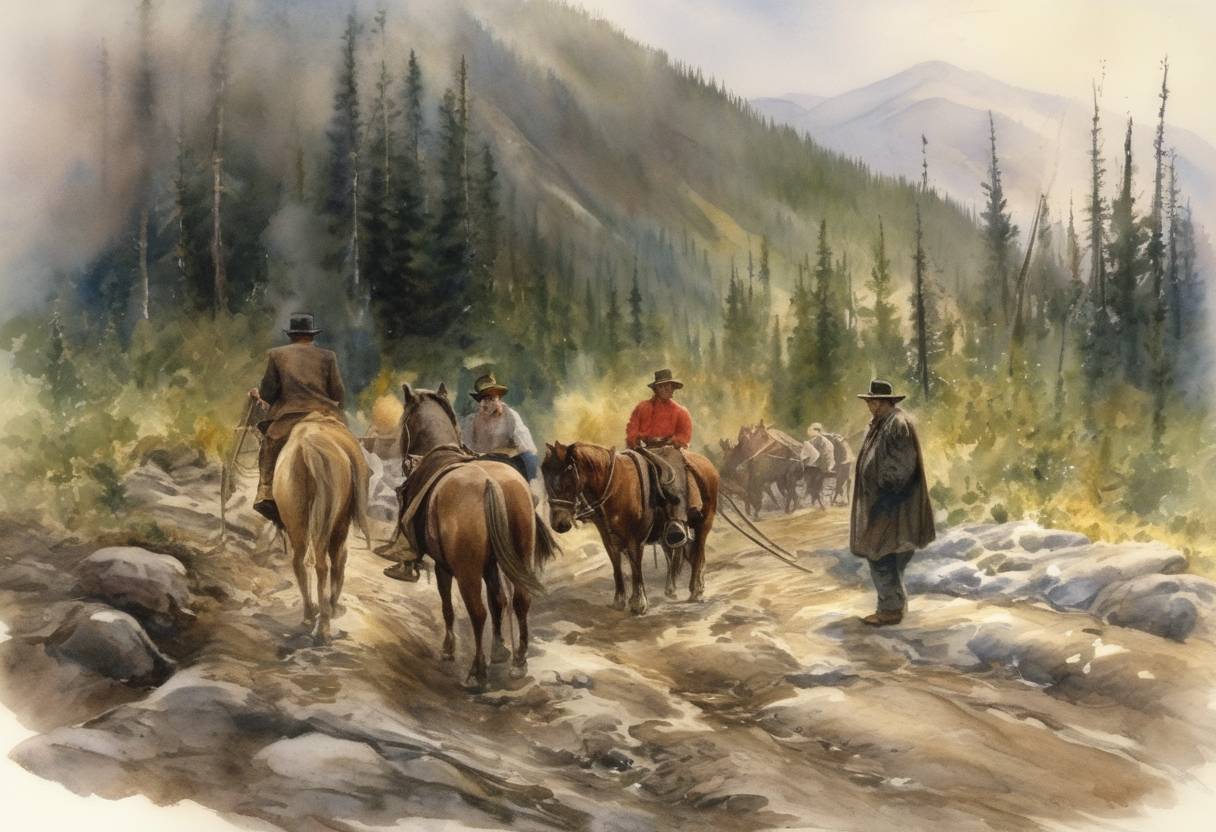
The Klondike Gold Rush, one of the most significant gold rushes in history, was set in motion by the discovery of gold on August 16, 1896, not on July 17, 1897. Prospectors George Carmack, Skookum Jim Mason, and Dawson Charlie found gold in Bonanza Creek, a tributary of the Klondike River in the Yukon region of Canada. This discovery triggered a massive migration of prospectors in search of fortune.
Though the initial find occurred in 1896, it wasn’t until July 17, 1897, that the broader world became aware of the discovery. This was when the steamer Portland arrived in Seattle from the Yukon, with miners on board carrying substantial quantities of gold. This event ignited what became known as “Klondike Fever,” prompting an influx of approximately 100,000 prospectors to the region.
Prospectors faced harsh conditions and an arduous journey to the Klondike. Many traveled by foot overland or navigated via treacherous river routes. The two most famous routes were the Chilkoot and White Pass trails, both of which posed significant dangers, including severe weather and landscapes.
The Klondike Gold Rush had lasting impacts on the Yukon and led to the establishment of multiple towns, including Dawson City. While only a fraction of those who ventured there found significant wealth, the rush left an enduring mark on Canadian and American history, shaping the development of the Yukon and influencing economic and cultural changes. This period also marked a shift in the demographics and infrastructure of the region, fostering greater exploration and settlement of the Canadian North.
The rush officially ended in 1899 when word spread of a new gold discovery in Nome, Alaska, drawing many away from the Klondike. Nonetheless, the Klondike Gold Rush remains a testament to the enduring human spirit and the relentless pursuit of wealth and adventure.
Source: en.wikipedia.org