The Hay-Bunau-Varilla Treaty: November 18, 1903
1903 · Washington, D.C., United States
The Hay-Bunau-Varilla Treaty was signed, granting the United States the rights to build the Panama Canal.
April 11, 1899
The Treaty of Paris, which officially ended the Spanish-American War, was proclaimed by President William McKinley, following its ratification by the United States Senate. The treaty led to the cession of Puerto Rico, Guam, and the Philippines to the United States.
Washington, D.C., United States | United States Government
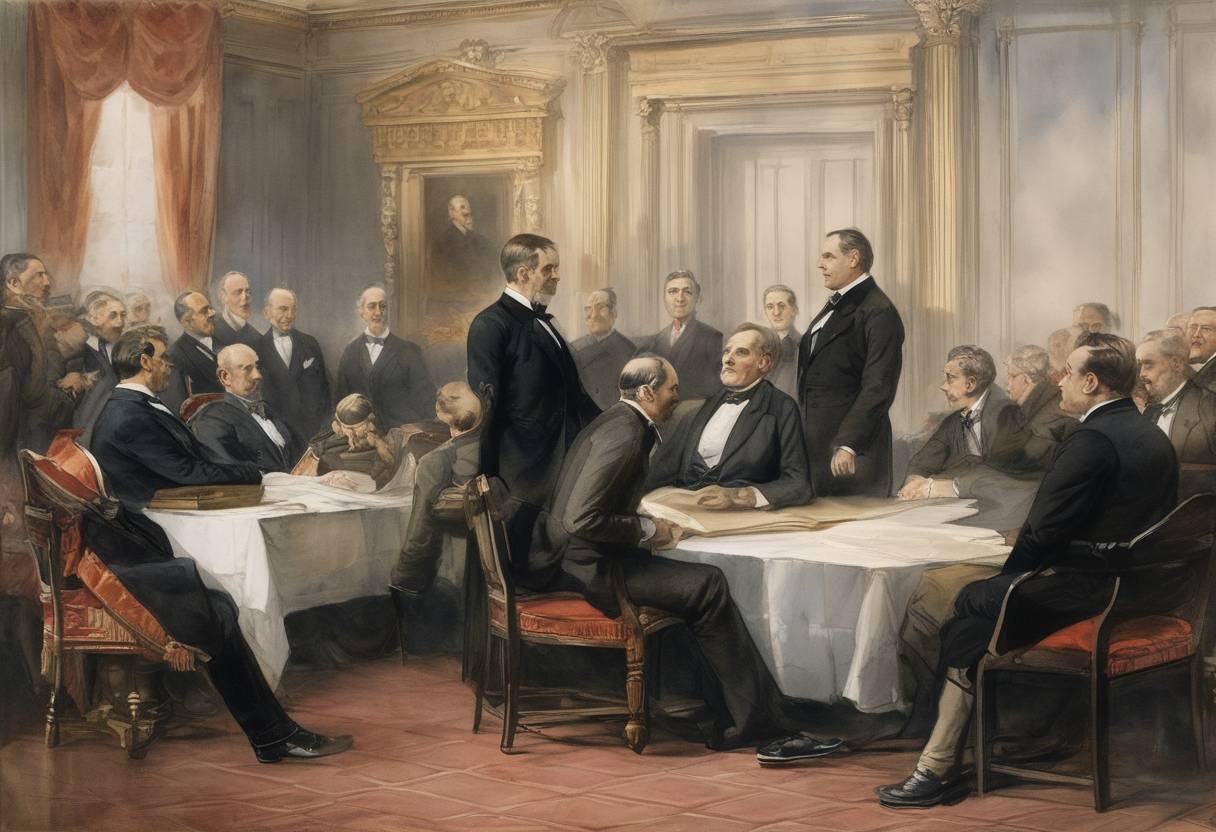
On April 11, 1899, President William McKinley proclaimed the ratification of the Treaty of Paris by the United States Senate, an act that officially ended the Spanish-American War. This day marked a significant turning point in American foreign policy and territorial expansion.
The Spanish-American War, a conflict fought between the United States and Spain from April to August 1898, was primarily sparked by American support for Cuba’s ongoing struggle for independence and the mysterious explosion of the USS Maine in Havana Harbor. The brief but consequential war ended with a U.S. victory and significant territorial negotiations.
Signed on December 10, 1898, in Paris, the treaty outlined several crucial terms:
Cession of Territories: Spain ceded Puerto Rico, Guam, and the Philippines to the United States. This expanded U.S. influence into the Caribbean and the Pacific, showing a shift towards imperial policy.
Cuban Independence: Although Cuba was to become formally independent, the United States retained significant control over its affairs through the Platt Amendment in the years following.
Financial Compensation: The treaty stipulated that the United States would pay Spain $20 million for the Philippines.
The treaty required ratification by the U.S. Senate, which was achieved on February 6, 1899, after intense debate over the morality and implications of imperial expansion. Many Americans opposed the annexation of the Philippines, which sparked a debate over imperialism and American values.
On April 11, 1899, following its ratification, President McKinley’s proclamation of the treaty made it officially recognized in the United States, confirming the country’s new territorial acquisitions and its emerging status as a global power.
Economic and Strategic Impact: The acquisition of new territories opened new markets and military bases, enhancing U.S. economic and strategic interests.
Philippine-American War: The annexation of the Philippines led to the Philippine-American War (1899-1902), a conflict fueled by the Filipino desire for independence and resistance to American rule.
Imperialism Debate: The treaty and subsequent annexations fueled an ongoing debate over American imperialism, isolationism, and the nation’s role on the world stage.
The proclamation of the Treaty of Paris was a pivotal moment that shaped American foreign policy for decades, establishing the United States as a newly assertive power with significant overseas possessions.
Source: www.history.com