The Death of King Edward III and the Ascension of Richard II
1377 · London, England
King Edward III of England died, marking the end of his 50-year reign and the beginning of the reign of his grandson, Richard II.
February 2, 1327
King Edward III of England was declared King of England, following the abdication of his father, Edward II.
London, England | English Monarchy
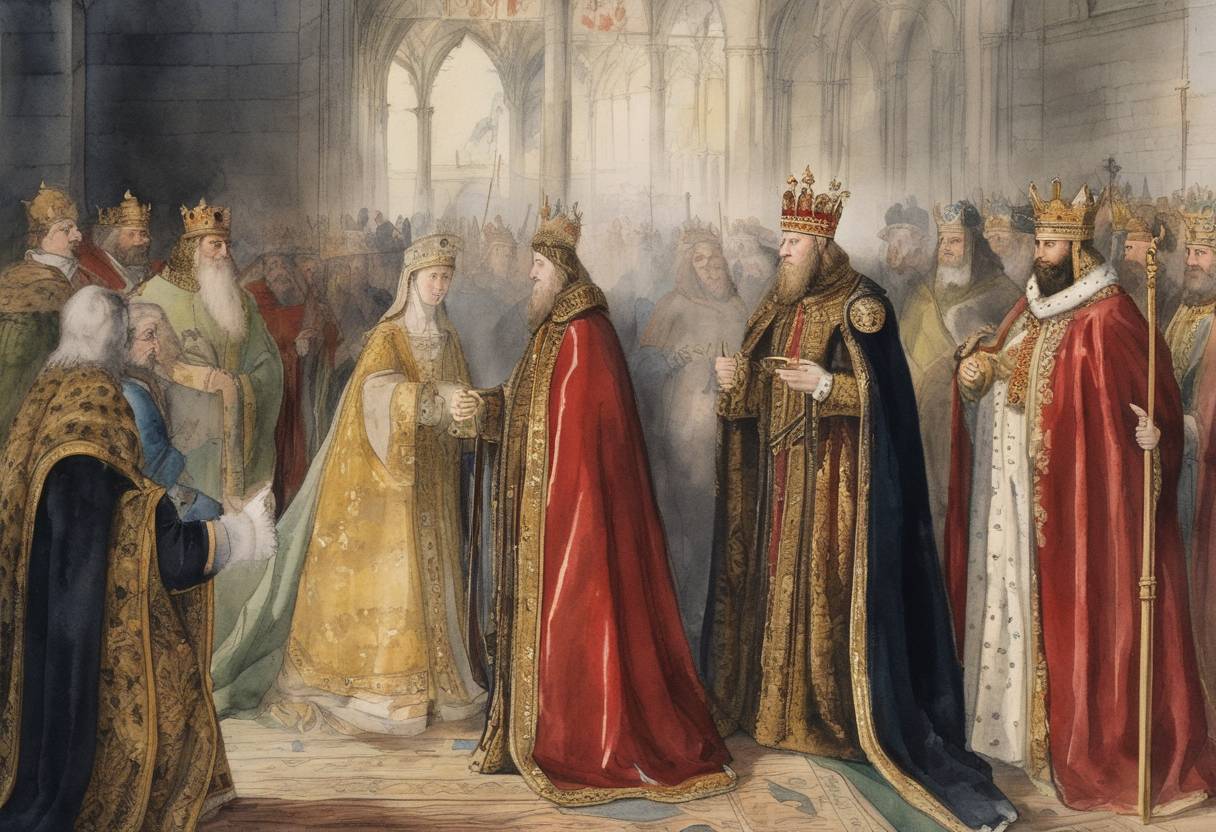
On February 2, 1327, Edward III was officially declared King of England, following the abdication of his father, King Edward II. This pivotal event marked a significant transition in the Plantagenet dynasty, influenced by political turmoil and intense familial discord.
Edward II’s reign, fraught with military failures and unpopular political alliances, precipitated widespread dissatisfaction among England’s nobility. His perceived favoritism toward various courtiers, most notably Piers Gaveston and later Hugh Despenser the Younger, alienated many powerful barons. These tensions reached a breaking point, leading to the orchestrated deposition of Edward II.
In January 1327, Edward II was compelled to abdicate the throne in favor of his young son, Edward III, who was just fourteen years old at that time. The critical maneuver was facilitated by Isabella of France, Edward II’s estranged queen, and her ally, Roger Mortimer. Both had recently returned from France with an invasion force, capitalizing on the internal strife to seize power.
Edward III’s coronation took place as unrest and unpopularity of his father’s regime weighed heavily on the kingdom. The new king’s immediate years were governed by a regency council dominated by Isabella and Mortimer, who held substantial influence over him until he reached majority age.
Edward III’s accession to the throne under such turbulent circumstances set the stage for a reign that would eventually see the restoration of royal prestige and power. One of the most consequential developments during Edward III’s rule was the initiation of the Hundred Years’ War against France, resulting from complex claims to the French throne and long-standing territorial disputes.
The young king later distanced himself from his mother’s and Mortimer’s control, asserting his independence in 1330. This liberation from regency was marked by Mortimer’s execution and Isabella’s enforced retirement. Edward III went on to reign until 1377, earning recognition for his military prowess and the gradual strengthening of the monarchy’s position in England and abroad.
Thus, Edward III’s declaration as king not only resolved the immediate crisis but also laid the groundwork for future dynastic endeavors and conflicts that would profoundly shape English and European history.
Source: www.britannica.com