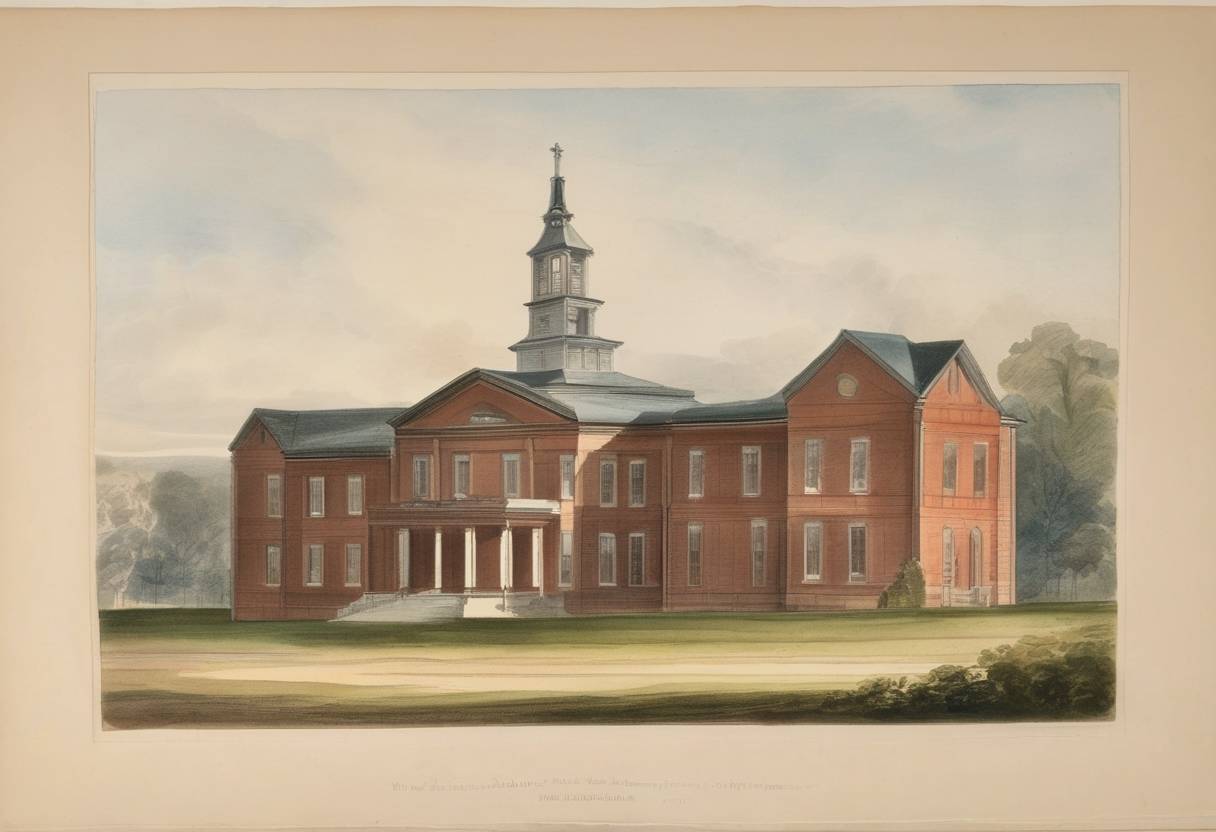
Opening of Mount Holyoke Female Seminary
On November 8, 1837, Mount Holyoke Female Seminary officially opened its doors in South Hadley, Massachusetts. This institution became one of the earliest higher education facilities specifically for women in the United States, marking a significant milestone in educational reform and women’s rights.
Founding by Mary Lyon
The seminary was founded by Mary Lyon, a pioneer in women’s education, who operated under the belief that women should have access to a curriculum equivalent to that provided to men. Lyon’s vision was radical for her time, stressing the importance of rigorous academic training alongside traditional subjects like domestic science.
Academic and Social Impact
Mount Holyoke Female Seminary drew attention for its demanding academic program, which included subjects such as mathematics, science, and philosophy. Designed to challenge the prevailing norms that limited women’s education to basic literacy and domestic skills, the curriculum at Mount Holyoke sought to equip women to be educators, missionaries, and informed citizens.
Challenges and Innovations
At its inception, Mount Holyoke faced financial and societal challenges. Nonetheless, it implemented several innovative practices, such as a revolving fund to assist students unable to afford tuition. This included work-study programs, allowing students to contribute to the institution through labor.
Legacy
Mount Holyoke Female Seminary set a precedent for women’s education, inspiring the establishment of similar institutions. It eventually transitioned into Mount Holyoke College, part of the prestigious Seven Sisters colleges, which continue to promote the advancement of women in higher education.
Significance
The opening of Mount Holyoke Female Seminary represented a crucial step in the broader movement towards gender equality in education. It played an integral role in demonstrating the capabilities of women scholars and fueled ongoing advocacy for women’s rights across various sectors.